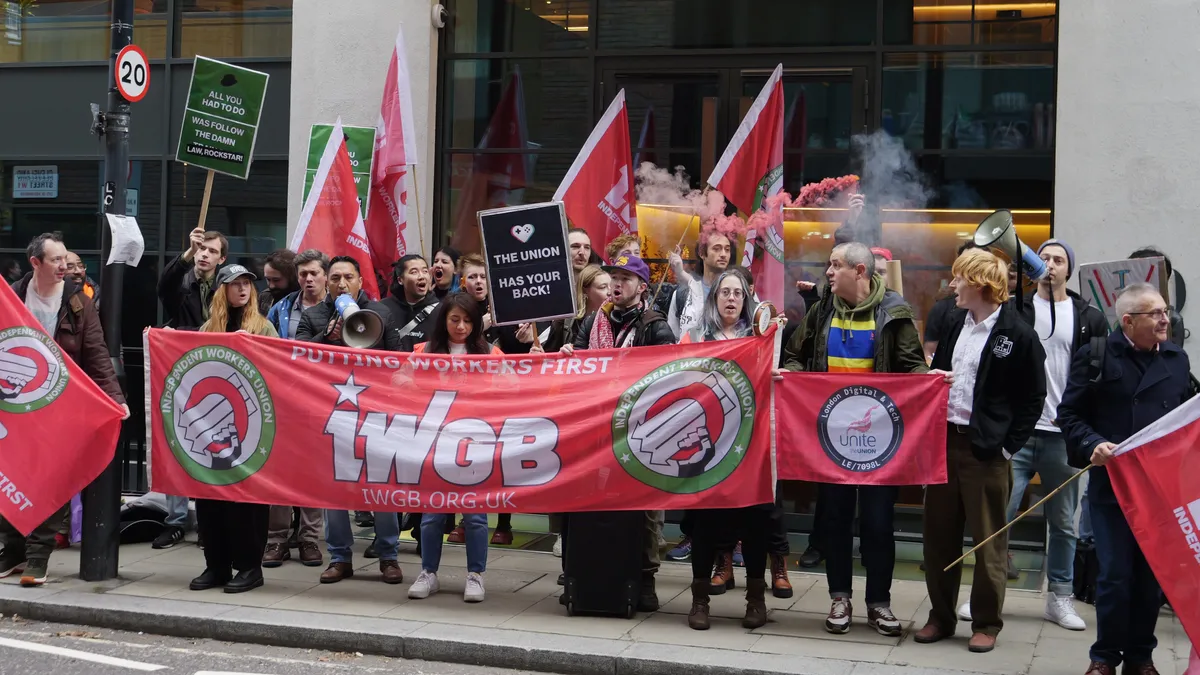
LONDON, UK – Rockstar Games, the renowned developer behind blockbuster franchises like Grand Theft Auto and Red Dead Redemption, finds itself at a pivotal juncture in its relationship with its workforce. The Rockstar Game Workers Union (RGWU), operating under the umbrella of the Independent Workers’ Union of Great Britain (IWGB), has formally requested voluntary union recognition from the company’s UK operations. This bold move signals a significant escalation in workers’ efforts to secure collective bargaining rights, aiming to address critical issues such as pay transparency, flexible working arrangements, and equitable overtime practices.
The request for recognition unfolds against a backdrop of simmering labor discontent within the highly lucrative, yet often demanding, video game industry. For Rockstar, this development is particularly sensitive, occurring concurrently with a high-stakes legal dispute stemming from the dismissal of dozens of employees last year – a move the IWGB has vehemently labeled as "union busting." The union’s push for formal recognition represents a crucial step in cementing workers’ power and ensuring a meaningful voice in shaping their working conditions at one of the world’s most influential gaming studios.
The Push for Recognition: A New Era for Rockstar Workers
The formal request for voluntary union recognition marks a critical inflection point for Rockstar Games and its UK employees. This concerted effort by the Rockstar Game Workers Union, supported by the broader Independent Workers’ Union of Great Britain (IWGB), signifies a growing demand for greater transparency, fairness, and worker agency within a sector often criticized for its intense development cycles and sometimes opaque employment practices.
A Formal Request for Dialogue
At the heart of the union’s recent action is a clear set of demands designed to foster a more equitable and sustainable working environment. The RGWU has specifically called upon Rockstar to engage in collective bargaining to address issues of pay transparency, flexible working policies, and the fair management of overtime. These are not isolated concerns; they echo long-standing grievances within the video game industry, where the pursuit of perfection and adherence to strict release schedules often lead to prolonged periods of "crunch" – intense, mandatory overtime that can significantly impact employee well-being and personal lives.
By seeking formal recognition, the RGWU aims to establish a structured dialogue with management, moving beyond informal negotiations to legally binding agreements. This would empower workers with a collective voice to negotiate better terms and conditions, ensuring that the immense success generated by their creative and technical contributions is reflected in their treatment and compensation. The focus on pay transparency is particularly salient in an industry where salary disparities can be significant and often shrouded in secrecy, hindering employees’ ability to assess fair compensation for their skills and experience. Similarly, flexible working arrangements are increasingly seen as essential for modern workplaces, promoting work-life balance and accommodating diverse employee needs, while fair overtime policies aim to prevent exploitation and ensure adequate compensation for extra hours worked.
Years in the Making: The Genesis of the Union
While the Rockstar Game Workers Union was officially established just last month, its roots run much deeper. The IWGB has been actively organizing at Rockstar’s UK sites since 2019, building a significant base of support across the developer’s diverse locations in Edinburgh, Dundee, Lincoln, Leeds, and London. This long-term, strategic approach underscores the deep-seated nature of the issues at hand and the sustained commitment of workers to advocate for their rights.
The union’s growth and sustained organizing efforts have not been without impact, even prior to formal recognition. The IWGB noted that Rockstar has already implemented improvements to workers’ conditions, including "unprecedented average pay rises and financial incentives for crunch for the first time ever." This demonstrates the tangible influence that collective action can exert, even in its nascent stages. The introduction of financial incentives for crunch, while not a substitute for preventing excessive overtime, acknowledges the extraordinary effort demanded during peak development periods and represents a shift from previous practices where such efforts were often uncompensated or minimally recognized. These pre-emptive concessions by Rockstar can be interpreted as an acknowledgement of the growing union sentiment and a strategic move to potentially pre-empt more forceful demands, or as a genuine effort to improve conditions in response to internal feedback. Regardless of the motivation, they highlight the increasing power of organized labor within the company.
Rockstar’s Stance and the Industry Landscape
The formal request for union recognition places Rockstar Games in a delicate position, balancing its public image as an industry leader with the internal pressures of a growing labor movement. The company’s response, while open to dialogue, reflects a cautious approach, emphasizing its existing commitment to employee welfare and competitive practices. This situation also shines a spotlight on the broader trends within the UK and global gaming industry, where unionization is steadily gaining traction.
Corporate Response: A Promise of Dialogue
In a statement provided to IGN, Rockstar articulated its official position, stating: "We strive to make the best games possible by giving our talented teams world-class work environments and ongoing career opportunities." The company further asserted: "We have fostered a culture which is focused on teamwork, excellence, and kindness, and where we support and reward the team across all levels of the business through competitive compensation and benefits policies." Emphasizing its positive internal environment, Rockstar concluded: "We are proud that as a result, our employee retention is well above the industry standard. We have received a request from a union seeking to discuss voluntary recognition. We value an open and constructive dialogue with all stakeholders and will arrange to meet."
Rockstar’s statement carefully frames the company as a benevolent employer, highlighting its provision of "world-class work environments" and "competitive compensation." The assertion of "well above industry standard" employee retention is a key point, aiming to counteract any perception of widespread dissatisfaction. While acknowledging the union’s request and promising a meeting, the language remains measured and does not explicitly endorse recognition, instead opting for a commitment to "open and constructive dialogue." This response is typical of corporations facing unionization efforts, aiming to reassure employees and the public while maintaining managerial prerogative. The emphasis on individual "career opportunities" and "rewarding the team" can also be seen as an attempt to underscore existing benefits, potentially implying that a union might be unnecessary or redundant. However, the willingness to meet, rather than outright rejection, suggests an understanding of the gravity of the situation and the potential for negative repercussions if the request is dismissed without consideration.
A Precedent in the UK Gaming Sector
Should Rockstar formally recognize the RGWU, it would mark a significant milestone for the UK’s video game industry, making it only the second developer in the country to do so. The precedent was set by ZA/UM, the studio behind the critically acclaimed Disco Elysium, whose UK staff achieved union recognition through the Workers’ Alliance in October 2025. This development at ZA/UM, which followed a period of layoffs, cancellations, and internal controversy, underscored the increasing urgency for workers to secure greater protections and a collective voice in the face of corporate restructuring and challenging work environments.
The potential recognition of the RGWU at Rockstar would send a powerful message across the entire UK gaming landscape and beyond. It would demonstrate that even at the largest, most successful studios, workers are organizing and demanding a seat at the table. This trend is not confined to the UK; globally, there has been a noticeable uptick in unionization efforts within the tech and gaming sectors. From the formation of the Alphabet Workers Union at Google to the high-profile disputes at Activision Blizzard, employees are increasingly seeking collective bargaining to address issues ranging from workplace culture and diversity to job security and compensation. The success of these movements, particularly at major industry players like Rockstar, could inspire further organizing efforts, fundamentally reshaping labor relations in an industry historically characterized by its informal, often creator-driven, and sometimes exploitative, practices. The growing acceptance of unions in this creative sector signals a maturing industry grappling with the realities of large-scale corporate operations and the need for robust worker protections.
The Shadow of Legal Conflict: Unfair Dismissals and Union Busting Allegations
The request for union recognition does not occur in a vacuum; it is deeply intertwined with a contentious legal battle between the IWGB and Rockstar Games. This ongoing dispute centers on the dismissal of 34 employees last year, an event that has ignited accusations of union busting and brought the company’s labor practices under intense scrutiny.
The Disputed Dismissals of 34 Employees
At the core of the ongoing legal imbroglio are the dismissals of 34 employees across Rockstar’s UK and Canadian offices in 2023. The Independent Workers’ Union of Great Britain has vehemently asserted that these dismissals constitute a clear case of "union busting," arguing that the affected individuals were targeted due to their involvement in organizing activities or their association with the nascent union movement within the company. This serious accusation posits that Rockstar intentionally sought to undermine or eliminate union activity by terminating key personnel or those perceived to be sympathetic to the union cause.
Rockstar, however, has presented a starkly different narrative. The company contends that the dismissals were a direct consequence of staff allegedly leaking "confidential information in a public forum," specifically identifying a Discord server operated by the IWGB as the site of these breaches. This counter-argument frames the terminations as a necessary measure to protect proprietary company information and maintain operational security, rather than an attempt to suppress unionization. The dispute thus boils down to conflicting interpretations of the events: was it legitimate corporate action to prevent information leaks, or was it a retaliatory measure against organizing workers? The answer to this question will have profound implications for both the individuals involved and the broader landscape of labor rights within the gaming industry.
A Protracted Legal Battle
Following the dismissals, the IWGB wasted no time in filing formal legal claims against Rockstar, setting in motion a protracted legal battle that promises to be both complex and closely watched. The severity of the allegations and the profile of the company involved led to the issue being raised in UK Parliament, highlighting the significant public and political interest in the case. This parliamentary intervention underscores the gravity of union busting claims and the potential for such disputes to transcend typical corporate-labor disagreements, drawing attention from national lawmakers concerned with fundamental employment rights.
The legal process is now on a defined, albeit lengthy, trajectory. A final employment tribunal hearing is scheduled for September 2026, a distant date that speaks to the intricate nature of employment law and the judicial backlog. At this hearing, a tribunal will ultimately decide "whether workers were unlawfully fired for trade union activity." This determination will be crucial. If the tribunal finds in favor of the IWGB, it would not only vindicate the dismissed employees but also deliver a significant blow to Rockstar’s reputation and potentially incur substantial penalties. Conversely, a ruling in favor of Rockstar would strengthen the company’s position and potentially dampen future unionization efforts. Regardless of the outcome, this extended legal conflict adds a layer of tension and uncertainty to the current request for union recognition, making the stakes incredibly high for all parties involved. The timeline of events leading up to this point, detailing the twists and turns of the dispute, remains a critical reference for understanding the full scope of the controversy.
Voices from the Frontlines: Union Leadership and Worker Perspectives
The campaign for union recognition at Rockstar Games is spearheaded by dedicated individuals who bring both strategic vision and deeply personal experiences to the forefront. Their statements provide crucial insight into the motivations behind the union’s actions and the aspirations of the workers they represent.
Alex Marshall on Accountability and Affordability
Alex Marshall, President of the IWGB, articulated the union’s position with a clear call for accountability from Rockstar. "Applying for union recognition is the next step in strengthening their presence in the workplace," Marshall stated, emphasizing the strategic importance of this move. He directly challenged Rockstar’s previous assertions, adding, "Rockstar has maintained that it respects workers’ trade union rights. This is now an opportunity for it to demonstrate that in practice." This statement underscores the union’s expectation that Rockstar’s professed values should translate into concrete actions, specifically by engaging in good faith with the recognition request.
Marshall also drew a pointed connection between the union’s demands and Rockstar’s colossal financial success, leveraging the anticipated revenue from the upcoming Grand Theft Auto 6. "Grand Theft Auto 6 has reportedly already generated more than $3 billion in preorder sales," he noted, a figure that highlights the studio’s immense profitability. He concluded with a powerful argument for fairness: "Rockstar bosses can easily afford to sit around the table with the people whose hard work created these games, and give them a meaningful voice in their workplace." This juxtaposition of staggering corporate wealth with the basic demands for worker voice and fair conditions serves to amplify the moral and economic arguments for union recognition, framing it not just as a right, but as an easily achievable act of corporate responsibility given the studio’s financial might.
Shanti Easton-Steel: Honouring the Struggle
Providing a vital perspective from within the ranks, Shanti Easton-Steel, a production co-ordinator at Rockstar North, articulated the profound significance of this moment for the union and its members. "This is a landmark moment for the Rockstar Game Workers Union, and hopefully for the industry as a whole," Easton-Steel declared, recognizing the broader implications of their struggle. Her words reflect a collective sense of achievement and purpose, acknowledging the arduous journey that has led to this point.
Easton-Steel also paid poignant tribute to the collective effort, especially acknowledging those who paid a heavy price for their involvement. "It’s thanks to the hard work of so many of our members – both those currently with us and those who were fired last October – that we are now in a strong enough position to pursue formal recognition," she explained. This statement powerfully links the current progress to the sacrifices made by the 34 dismissed employees, whose terminations are at the heart of the ongoing legal dispute. She articulated a clear path forward for honoring their contribution: "Whilst it’s painful that our dismissed colleagues are not here to share this milestone moment, the best way we can honour their contribution now is by succeeding in the fight they helped us to start, and making them proud to have been a part of it." Her words imbue the union’s recognition campaign with a profound sense of legacy and solidarity, transforming it into a fight not just for current members, but also for those who were unjustly removed, whose struggles paved the way for this pivotal moment.
Broader Implications for the Gaming Industry
The developments at Rockstar Games extend far beyond the confines of a single studio. They represent a microcosm of a larger, evolving narrative within the creative and tech industries, signaling a significant shift in labor relations and worker empowerment. The outcome of the RGWU’s recognition bid and the ongoing legal battles will undoubtedly reverberate throughout the global gaming landscape.
The Shifting Tides of Labor Relations
The past decade has witnessed a palpable shift in labor relations across the tech and creative sectors. Historically characterized by a somewhat informal, "passion-driven" work culture, the video game industry, in particular, has increasingly come under scrutiny for issues such as "crunch" — the demanding, often unpaid, extended work hours leading up to game releases — along with job insecurity, significant pay disparities, and a pervasive lack of transparency in decision-making processes. These challenges have fueled a growing disillusionment among workers, leading many to seek greater protections and a collective voice through unionization.
The high-profile nature of studios like Rockstar Games means that any developments there carry considerable weight. When employees at a company responsible for some of the most successful and culturally impactful entertainment products in history begin to organize, it sends a powerful message that no company, regardless of its size or market dominance, is immune to calls for fair labor practices. This trend is part of a broader global movement, from the nascent unionization efforts at major tech giants to the established presence of unions in European media and creative industries. Workers are no longer content with the promise of "working in games" as sufficient compensation for demanding conditions; they are demanding professional standards, equitable treatment, and a say in their working lives, transforming what was once a niche industry into a more mature sector grappling with the complexities of large-scale corporate employment.
Potential Outcomes and Future Scenarios
The path ahead for Rockstar Games and the RGWU presents several distinct scenarios, each with significant implications. If Rockstar Games chooses to voluntarily recognize the union, it could usher in a new era of collaborative labor relations. This would likely lead to improved worker conditions, including greater pay transparency, more predictable working hours, and robust mechanisms for addressing grievances. Such a move could also enhance Rockstar’s public image, positioning it as a progressive employer in an industry often criticized for its labor practices. Furthermore, it could set a powerful precedent, encouraging unionization efforts at other major studios and accelerating the trend towards more organized labor across the entire gaming sector.
Conversely, if Rockstar refuses to recognize the union voluntarily, the situation is likely to escalate. The IWGB has indicated its preparedness to take the matter to the Central Arbitration Committee (CAC), a UK government body responsible for resolving disputes over union recognition. This could lead to a legally mandated recognition process, potentially forcing Rockstar’s hand. A refusal could also trigger further industrial action, including strikes, and intensify negative public relations, potentially impacting recruitment and consumer perception. The ongoing legal dispute over the dismissed employees adds another layer of complexity. The outcome of the September 2026 employment tribunal hearing, regardless of the recognition decision, will be a landmark moment. If the tribunal finds that the workers were unlawfully fired for union activity, it would severely damage Rockstar’s credibility, incur significant financial penalties, and embolden unionization efforts across the industry. Conversely, a ruling in Rockstar’s favor, while a victory for the company, would not necessarily quell the broader demand for worker representation, as the underlying issues driving unionization would likely persist. The interplay between these recognition efforts and the legal battle will shape the future of labor at Rockstar and serve as a bellwether for the entire video game industry.
Conclusion
The formal request for union recognition by the Rockstar Game Workers Union marks a watershed moment for one of the world’s most iconic video game developers and the broader industry it inhabits. It encapsulates the growing tensions between the immense creative and financial power of studios like Rockstar and the increasingly organized demands of their workforces for fair treatment, transparency, and a collective voice.
As Rockstar Games contemplates this pivotal decision, and as the protracted legal battle over alleged unfair dismissals looms, the spotlight remains firmly on its labor practices. The outcome of these intertwined developments will not only redefine the relationship between Rockstar and its employees but will also send a profound message across the global gaming industry, shaping the future of labor rights in a sector that continues to evolve at breakneck speed. This is more than a dispute over wages and hours; it is a fundamental debate about power, respect, and the very culture of creativity in the digital age.