Developer: Nejcraft | Publisher: Quite OK Games | Genre: City Builder / Strategy | Platform: Nintendo Switch (Reviewed), PC
The city-building genre has long been dominated by horizontal expansion. From the sprawling asphalt grids of SimCity to the meticulously manicured islands of Anno, the standard objective has almost always been to claim more land, pave more roads, and fill the horizon with endless density. However, Laysara: Summit Kingdom, the latest offering from developer Nejcraft and publisher Quite OK Games, fundamentally challenges this paradigm. By shifting the focus from the plains to the precipice, Laysara introduces a verticality that turns routine resource management into a high-stakes spatial puzzle.
Main Facts: The Architecture of Altitude
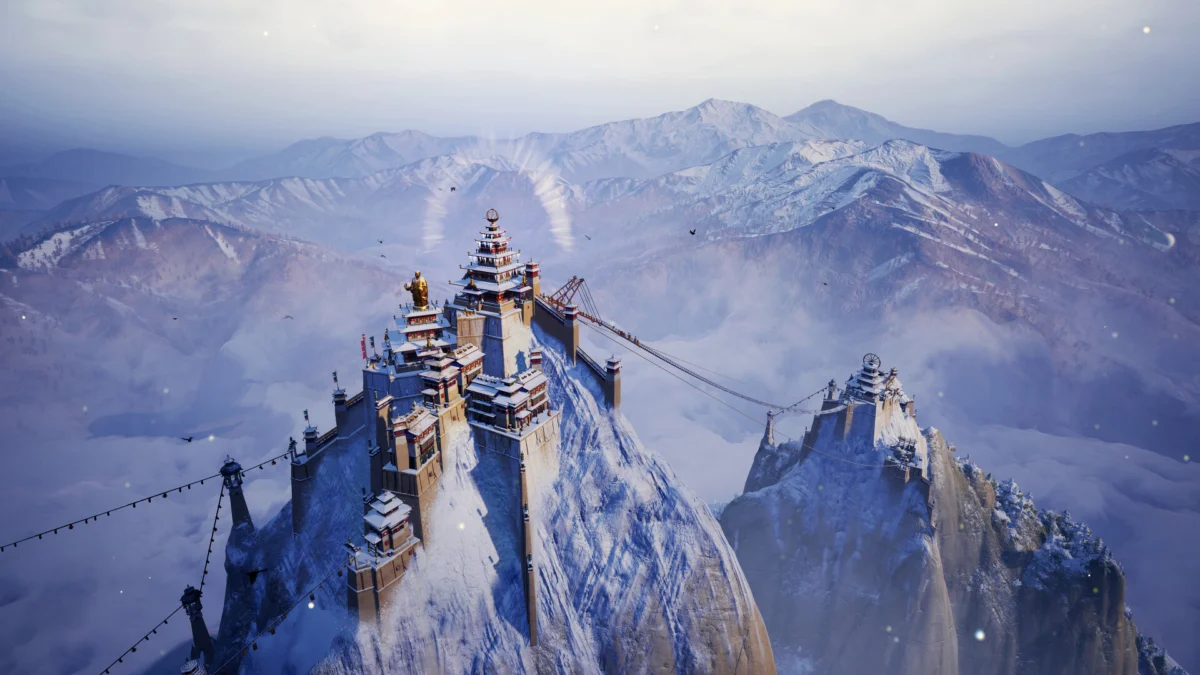
At its core, Laysara: Summit Kingdom is a city builder that refuses to let the player take the easy route. Instead of building outward, players are tasked with constructing settlements along the treacherous, craggy slopes of a mountain range. The ultimate, lofty goal is to establish a network of interconnected towns that provide the necessary resources to construct a legendary temple at the very summit of the peak.
The gameplay is defined by three distinct social classes—Lowlanders, Artisans, and Monks—each with their own unique requirements and cultural contributions. Balancing the needs of these groups while navigating the physical constraints of a mountain environment requires a level of micro-management that separates Laysara from its more relaxed contemporaries. With a distinct Tibetan-inspired aesthetic and a serene, atmospheric soundtrack, the game creates an immersive experience that feels as much like an architectural challenge as it is a strategy simulation.
Chronology of Development and Release
The journey of Laysara began as an ambitious attempt to break the "flat-world" syndrome common in strategy titles. Nejcraft’s development process focused heavily on the physics of mountain living, specifically how to translate the logistical nightmare of high-altitude trade into a cohesive game loop.
Following a successful period of Early Access on PC, which allowed the team to refine the intricate production chains and balance the difficulty spikes, the game saw a wider release, including a crucial port to the Nintendo Switch. The challenge of moving a mouse-and-keyboard-heavy genre to a controller-based platform was met with a thoughtful, if occasionally cumbersome, user interface redesign. Since its launch, the title has been bolstered by various game modes, including a robust campaign, sandbox, challenge, and free-build options, ensuring that the game offers significant replay value for both casual builders and hardcore strategy enthusiasts.
Supporting Data: Complexity in the Clouds
The genius of Laysara lies in its restrictive design. In most city builders, space is a commodity you can eventually secure. In Laysara, space is an immutable, scarce resource. Every building, road, and production chain must be squeezed onto narrow ridges and steep slopes. This physical limitation forces players to engage with the environment in ways that would be unnecessary elsewhere.

The Logistics of Verticality
The game’s core loop involves establishing specialized settlements at different elevations. A mine might be located near a mineral deposit, while a farm might thrive on a lower, flatter plateau. The "magic" happens in the connections between these sites. Players must establish complex trade routes, often requiring the use of specialized mountain transport, to ensure that resources flow efficiently from the bottom to the top.
Social Stratification
The management of the three classes adds another layer of depth:
- Lowlanders: The backbone of your early economy, responsible for basic extraction and initial construction.
- Artisans: The masters of refinement, requiring more complex goods and specialized infrastructure to thrive.
- Monks: The spiritual leaders whose needs are the most demanding, requiring rare goods that often necessitate high-level trade networks.
The difficulty is not in the abundance of options, but in the efficiency of the layout. When the system works—when a chain of mines, mills, and warehouses creates a self-sustaining loop that feeds a thriving, high-altitude city—the sense of accomplishment is profound. The visual feedback of seeing your tiny, bustling village clinging to the side of a snowy peak is arguably one of the most rewarding sights in modern strategy gaming.
Official Responses and User Reception
The reception of Laysara has been largely positive, particularly among the niche audience that craves "puzzle-style" city builders. Critics have praised the game’s unique identity, noting that its Tibetan-inspired visual design and ambient soundscape provide a much-needed break from the industrial gray or neon-soaked aesthetics of its peers.
However, the game is not without its detractors. The "late-game" experience has been a common point of contention. As players move toward the summit, the requirement for massive infrastructure upgrades often necessitates the demolition and total reorganization of early-game settlements. For some, this feels like an engaging test of planning; for others, it feels like a chore that punishes progress.
Regarding the Nintendo Switch port, the developer has received feedback concerning the interface. While the control scheme is considered "respectable" given the limitations of a controller, users have pointed out that navigating complex menus while trying to manage multiple high-altitude settlements can lead to "logistical headaches." Despite this, the game’s performance remains stable in both docked and handheld modes, proving that complex strategy titles can indeed thrive on the console.
Implications: The Future of the Genre
Laysara: Summit Kingdom serves as a proof-of-concept for the "niche strategy" movement. By daring to move away from the traditional tropes of the genre, it demonstrates that players are eager for games that force them to think three-dimensionally.

Does the "Mountain" Model Work?
The primary implication for the genre is that limitation is a valid design philosophy. By removing the ability to simply "expand" outward, the developer forced the player to engage with the game’s internal logic. Future city builders will likely look to Laysara when attempting to introduce verticality or environmental hazards into their own mechanics.
A Test of Patience vs. A Test of Skill
There is a fine line in game design between "challenging" and "exhausting." Laysara dances on this edge. For those who enjoy the "Zen" of city building—the ability to sit back and watch their creation grow—Laysara may prove too demanding. Its constant need for optimization means there is rarely a moment of total peace; the mountain is always changing, and the logistics of the summit are always shifting.
However, for the target demographic—players who treat city builders like complex engineering problems—the game is a masterclass in efficiency. The frustration of rebuilding a plateau to fit a new, higher-tier production line is not a bug; it is the fundamental experience of the game.
Conclusion: Is It Worth the Climb?
Laysara: Summit Kingdom is not a game for everyone. It does not offer the casual relaxation of a sandbox builder where you can ignore the math and focus solely on the aesthetics. Instead, it offers a rigorous, rewarding, and deeply intelligent strategy experience that respects the player’s intelligence.
While the interface on the Nintendo Switch can occasionally prove clunky, and the late-game cycles of demolition and rebuilding can test the patience of even the most dedicated player, the core experience is one of the most refreshing in the genre. If you are looking for a title that demands your full attention and rewards precise, long-term planning, Laysara is a peak worth scaling. It is a bold, beautiful, and occasionally brutal addition to the city-builder pantheon, proving that even in a crowded genre, there is still plenty of room to reach new heights.