

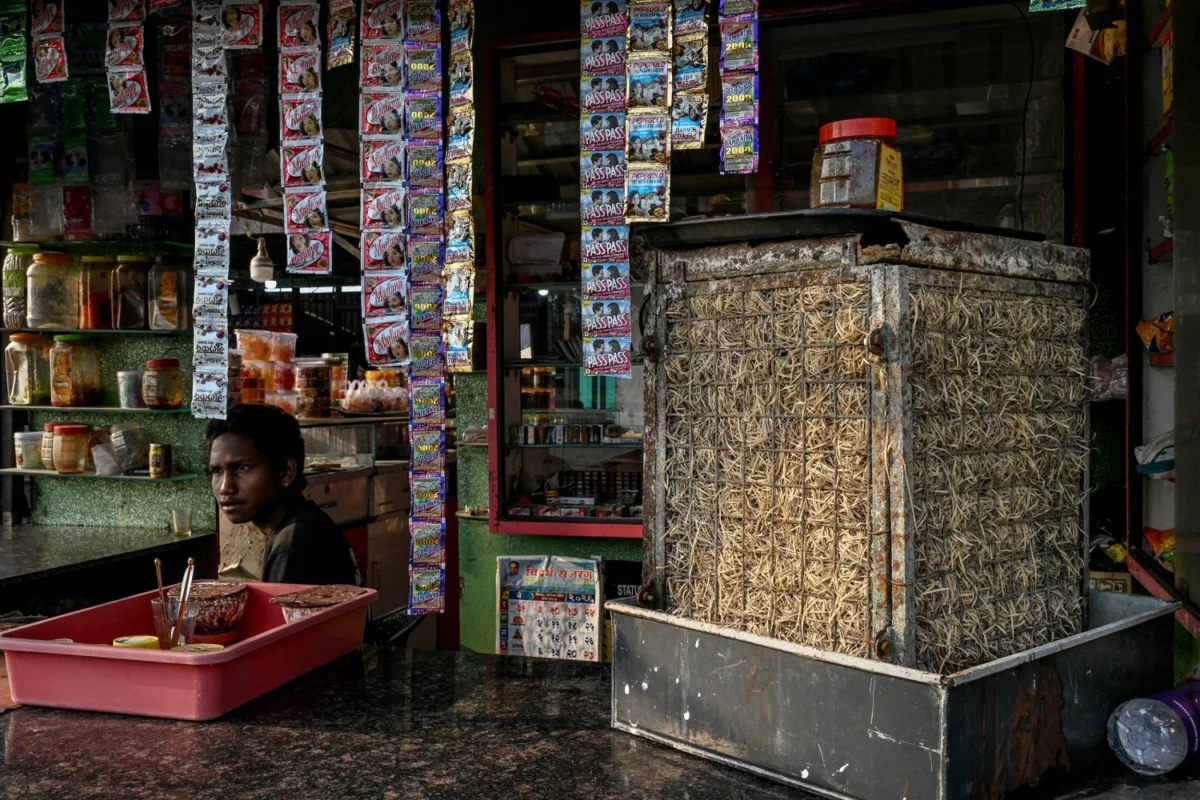
In the heart of India, where the sun transforms the landscape into an unforgiving furnace, the struggle for survival has taken on a new, modern dimension. As average temperatures regularly exceed 40°C (104°F) weeks before the cooling relief of the monsoon, the nation’s infrastructure is being pushed to its breaking point. In Nagpur, one of the world’s hottest cities, engineers work tirelessly to keep the power grid from collapsing, deploying giant industrial coolers and high-powered fans to prevent transformers from melting under the load. Yet, while the grid remains resilient, the human cost of this stability has become a source of profound inequality, forcing millions to choose between basic comfort and financial ruin.
The Human Cost of Energy Resilience
For the working-class residents of neighborhoods like Sudam Nagari, the power grid’s success is a cruel irony. While the infrastructure is functioning, the price of the electricity flowing through it is increasingly out of reach.
Anuradha Shravan Kavle, a 40-year-old housemaid, provides a haunting portrait of this struggle. In her cramped, corrugated iron-walled home, heat is not just an outdoor annoyance; it is a permanent, trapped inhabitant. Even late at night, when the rest of the city attempts to find rest, the air inside her home remains stifling. Her electric cooler sits in the corner—a silent, unplugged monument to her inability to afford its operation.
In April, Kavle’s power bill reached 1,960 rupees (more than $20) for 188 kilowatt-hours of consumption. For a household where income is inconsistent and daily expenses are climbing, this represents at least 10% of the family’s total earnings. To manage, Kavle and her children are forced to live a life of extreme austerity: skipping doctor’s visits to save money, working extra part-time hours to cover tuition, and, most tellingly, fleeing their own home. After 10 p.m., the streets of Sudam Nagari are crowded with families sitting on the pavement, scrolling through phones or watching children play, simply because the air inside their homes is too hot to endure and the electricity to cool it is too expensive to consume.
Chronology of a Mounting Energy Crisis
The current state of affairs is the result of years of infrastructural pressure and an accelerating climate crisis.
- 2024-2025: Maharashtra, the state encompassing Nagpur, witnessed a surge in power demand driven by industrial expansion and unprecedented heatwaves. The state-run utility, Maharashtra State Electricity Distribution (MSEDCL), began a massive capital expenditure program to harden the grid against extreme heat.
- March 2026: MSEDCL reported an 85% year-on-year increase in capital expenditure, totaling 234.5 billion rupees ($2.4 billion), aimed at upgrading substations and distribution networks to prevent widespread outages.
- May 2026: Temperatures in central India reached record highs, with global monitoring platforms identifying all 50 of the world’s hottest cities as being located within India.
- Current Status: Despite the successful deployment of cooling technology for infrastructure, residential power rates remain among the highest in the country, effectively locking the poorest citizens out of climate-adaptation tools like air conditioning or coolers.
Supporting Data: The Economics of Heat
The disparity between infrastructure investment and consumer affordability is stark. At over 10 rupees per unit, the electricity rate in Maharashtra is nearly 50% higher than the national average per-unit revenue for retailers.
According to projections by the McKinsey Global Institute, the economic fallout of this heat is massive. Heat stress is estimated to threaten as much as 4.5% of India’s GDP by 2030, a figure driven by lost labor hours, reduced agricultural yields, and the overwhelming burden on public healthcare systems.
For the average household, the math is simple but devastating. The government’s proposed roadmap to lower electricity prices by 26% by 2030—largely through an increased reliance on renewable energy—offers little immediate relief. The policy heavily favors those consuming under 100 kilowatt-hours, covering only the most basic needs like LED bulbs and a fan. For those like Kavle, whose essential needs push them above that threshold, the projected cost reduction is a mere 5%.
Official Responses and Policy Gaps
The government of Maharashtra has acknowledged the challenge, framing the transition to renewable energy as the primary solution for long-term price stability. However, experts argue that the current policy framework is insufficient to address the immediate, life-threatening impacts of extreme heat.

"Merely providing electricity doesn’t guarantee access to cooling," says Rohit Magotra, a director at the New Delhi-based thinktank Integrated Research and Action for Development (IRADe). "States need to consider giving seasonal subsidies for power to low-income people. The benefits would far outweigh the costs to the economy, in terms of productivity losses and the burden on the healthcare system caused by heat."
While districts like Nagpur have pioneered "heat action plans"—which include setting up cool wards in hospitals, providing shade at traffic junctions, and shifting labor hours to the early morning—these are, at best, palliative measures. They do not solve the structural problem of energy poverty, which forces the most vulnerable to endure the heat in silence while the grid stays "resilient" only for those who can pay.
Agricultural Dislocation: The Rural Perspective
The crisis is not confined to the urban slums of Nagpur. In rural areas like Kelapur, 100 kilometers away, the combination of heat and poor energy scheduling is devastating the agricultural sector.
Farmers report that while the state provides subsidized electricity for irrigation, it is delivered during windows—typically from 8 a.m. to the early afternoon—that align with utility grid management needs but are disastrous for human health. Working in the fields during these peak heat hours is described by local farmers as "murderous."
"When we need water, when we need power, we don’t get it," says Raju Bhiwaji Munjewar, a 53-year-old farmer. His land sits idle, waiting for the monsoon, because he cannot afford the heat-related physical toll of irrigating during the only hours the grid provides power.
Implications: A Future of Hard Choices
The implications for India are clear: the country is moving toward a future where "survivability" is a commodity. As climate change continues to push temperatures toward the limits of human tolerance, the divide between those who can afford to "cool" their existence and those who must endure the environment will widen.
For Anuradha Shravan Kavle, the future is not about long-term policy shifts or renewable energy benchmarks. It is about tonight. Under the dim, flickering light of a single LED bulb, she calculates the cost of one more hour of a running fan against the cost of her family’s next meal or medical emergency.
"We keep our consumption to a bare minimum," she says, her eyes fixed on the power bill that dictates the terms of her family’s life. "Just enough to get some rest in the night."
As India continues to modernize its grid, the challenge remains to ensure that this modernization does not leave its most vulnerable citizens in the dark—and in the heat—of a rapidly warming world. Without direct, targeted intervention to make cooling affordable, the nation risks a future where the grid works perfectly, but the people living under it are left behind.












No comments yet. Be the first to join the conversation!