

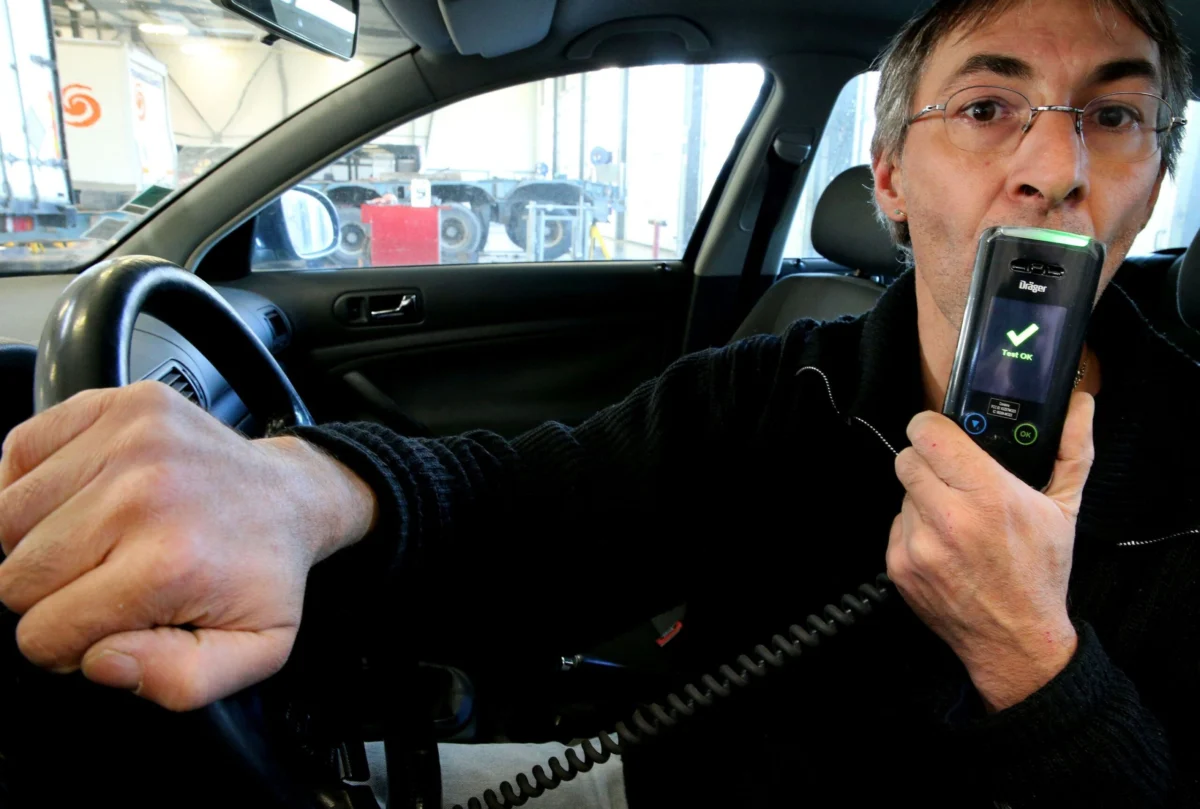
As of July 1, the automotive landscape within the European Union has undergone a fundamental transformation. New regulations now mandate that every vehicle sold across the bloc must come equipped with a standardized, pre-installed interface designed to accommodate an "alcohol interlock"—a breathalyzer device that prevents a car from starting if the driver is over the legal blood-alcohol limit. This legislative shift is not merely a bureaucratic tweak; it is a cornerstone of the European Union’s ambitious "Vision Zero" strategy, which aims to slash traffic-related fatalities and injuries by 50 percent by 2030, with an ultimate goal of eliminating them entirely by 2050.
The Mandate: Engineering for Accountability
The new regulation requires automakers to provide a seamless electrical connection and a designated mounting space within the vehicle’s cabin to facilitate the installation of an alcohol ignition interlock device (AIID), commonly referred to as an "alcolock."
Under the guidelines established by the European Union’s General Safety Regulation (GSR), these devices must strictly adhere to the EN 50436 European standard. This certification ensures that the technology is not only accurate but also tamper-proof. For the consumer, the operation is straightforward: before the ignition can be engaged, the driver must provide a breath sample into the device. The sensor measures the concentration of alcohol in the breath. Should the reading exceed the pre-set legal threshold, the device communicates directly with the vehicle’s electronic control unit (ECU), effectively immobilizing the engine and preventing the car from starting.
While the requirement is currently limited to the preparation interface—meaning not every car will come with the breathalyzer physically attached—it creates a universal "plug-and-play" infrastructure that allows for the rapid, cost-effective deployment of these devices, whether for court-ordered rehabilitation programs or voluntary safety initiatives.
Chronology of a Safety Revolution
The road to this mandate began long before the July 1 deadline. It is the result of over a decade of legislative deliberation and technological integration.
- 2018: The European Commission launched a renewed road safety initiative, setting the stage for a suite of mandatory Advanced Driver Assistance Systems (ADAS).
- 2019: The European Parliament and Council reached a provisional agreement on the revised General Safety Regulation, identifying specific technologies that would become mandatory for all new vehicle types.
- 2022: The EU officially began enforcing the mandatory inclusion of several safety features, including the "Black Box" (Event Data Recorder) and Intelligent Speed Assistance (ISA) for new vehicle types.
- July 2024: The mandate for a standardized interface for alcohol interlocks became effective for all new vehicles sold in the EU. This serves as the final, critical piece of the initial legislative phase, signaling a shift toward proactive, rather than reactive, safety engineering.
Supporting Data: Why Interlocks Work
The adoption of this technology is backed by compelling data. Alcohol remains one of the leading causes of fatal road accidents globally. In Europe, the statistics are sobering: alcohol-related crashes account for a significant percentage of preventable deaths, particularly among young drivers and repeat offenders.
According to studies cited by the European Commission, the implementation of alcohol interlock programs can reduce recidivism among drunk drivers by up to 65 percent. In countries like Sweden, France, and Belgium, where these devices have been utilized for years—primarily as a condition for re-licensing after a DUI conviction or for commercial passenger transport—the reduction in alcohol-related incidents has been profound.
By normalizing the presence of the interface, the EU is moving away from the stigmatization of breathalyzers. Instead of viewing them solely as a punishment for offenders, the regulation treats the interlock as a standard safety tool, similar to an airbag or a seatbelt.
A Suite of Technologies: The "Vision Zero" Toolkit
The alcohol interlock mandate is merely the latest chapter in a comprehensive technological rollout. Since 2022, the European Union has effectively turned modern vehicles into "intelligent" safety pods. The current requirements for new vehicles include:
1. Intelligent Speed Assistance (ISA)
Using a combination of front-facing cameras and GPS mapping, the ISA system recognizes speed limit signs and compares them against the vehicle’s current speed. If the driver exceeds the limit, the system provides haptic, acoustic, or visual alerts, nudging the driver to slow down.
2. Emergency Lane Keeping (ELK)
This system monitors road markings and the vehicle’s position. If the car begins to drift out of its lane without the use of a turn signal—often a symptom of fatigue or distraction—the system automatically applies subtle steering corrections to keep the vehicle on track.
3. Event Data Recorders (EDR)
Often called the "black box," these devices store critical telemetry data in the seconds immediately preceding, during, and after a collision. This data is invaluable for traffic safety investigators, providing an objective account of vehicle speed, brake application, and steering angle, which helps improve future vehicle design and infrastructure.
4. Adaptive Brake Lights
Recognizing that rear-end collisions are a major source of urban traffic injury, the EU now requires vehicles to feature adaptive brake lights. When a driver performs an emergency stop, the rear lights pulse or flash at a higher intensity, providing an immediate, high-visibility warning to the drivers behind them to react instantly.
Official Responses and Industry Implications
The automotive industry has faced significant logistical challenges in meeting these mandates. Integrating these systems requires deep collaboration between vehicle engineers, software developers, and safety regulators.
The European Transport Safety Council (ETSC) has been a vocal proponent of the interlock requirement. In their official statements, representatives have argued that while the technology is not a "silver bullet" for all drunk driving, it is an essential tool for "high-risk" scenarios. By ensuring that all new vehicles are "interlock-ready," the EU is effectively future-proofing its fleet. If a government decides to mandate the use of breathalyzers for all drivers in the future, or if a fleet operator wishes to implement them for employee safety, the infrastructure is already waiting behind the dashboard.
However, some industry analysts have raised concerns regarding privacy and the potential for "feature creep." As vehicles become more connected and reliant on monitoring systems, the debate surrounding who owns the data collected by these devices—and how that data can be accessed by law enforcement—continues to evolve. The EU has emphasized that the EDR (black box) data is strictly anonymized and used only for accident analysis, but as the technology expands to include breathalyzer integration, the scrutiny on data privacy is expected to intensify.
Implications for the Future of Mobility
The July 1 deadline represents a fundamental shift in the relationship between the driver, the vehicle, and the state. By embedding safety protocols directly into the vehicle’s hardware, the European Union is effectively removing the margin for human error—the primary cause of over 90 percent of traffic accidents.
For the consumer, the change may be subtle. Most drivers will never see or use the interlock interface unless they opt into a specialized program or face a legal requirement. Yet, the existence of the interface serves as a constant, passive reminder of the high cost of alcohol-impaired driving.
Looking forward, the success of these measures will be measured by the downward trend in annual road deaths. If the 65 percent reduction in recidivism seen in pilot programs can be scaled across the entire European fleet, the EU will be well on its way to achieving its goal of zero road fatalities by 2050.
Furthermore, this regulation sets a global precedent. Just as the European Union’s previous mandates for seatbelts and ABS (Anti-lock Braking Systems) eventually became global standards, the requirement for breathalyzer-ready ignition systems is likely to influence regulations in the United States, Asia, and beyond. As vehicle technology continues to advance, the "Vision Zero" philosophy—that no death on the road is acceptable—is rapidly moving from a utopian dream to a standard engineering requirement, fundamentally reshaping the future of personal mobility.












No comments yet. Be the first to join the conversation!