Iffa Jayyana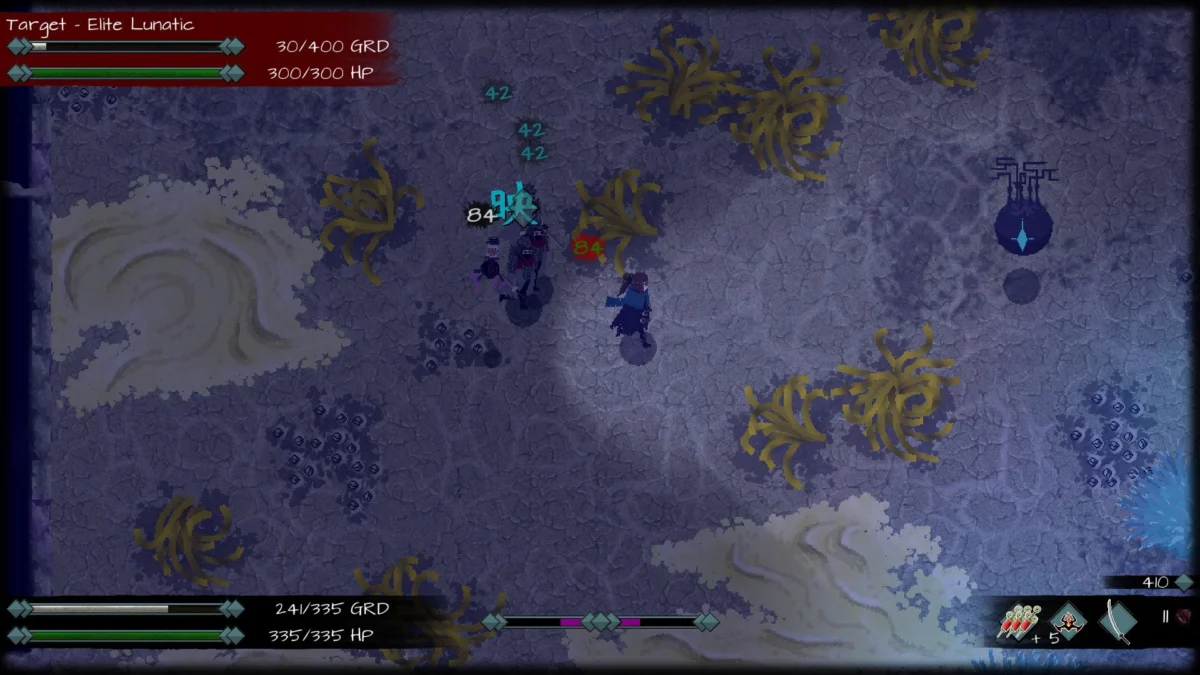
In the landscape of modern indie gaming, the Metroidvania genre has become increasingly crowded, often defined by polished hand-drawn animations and accessible difficulty curves. Yet, Skautfold: Moonless Knight stands as a deliberate, jagged departure from that trend. Developed by the Skautfold series creators, this latest entry blends the intricate map design of the genre with the punishing, high-stakes combat of a Soulslike, all wrapped in a coat of oppressive cosmic horror.
Set within an alternate-history Japan where the celestial order has been shattered—quite literally—by a fractured moon, the game invites players into a sprawling, labyrinthine palace. Here, we analyze the mechanics, the narrative atmosphere, and the uncompromising design philosophy that defines this challenging title.
The Premise: An Alternate Japan Under a Broken Sky
The narrative hook of Skautfold: Moonless Knight is as evocative as it is bleak. By twisting historical Japanese aesthetics with Lovecraftian cosmic dread, the developers have crafted a setting that feels both grounded and deeply alien. The "Moonless" title is not merely a poetic flourish; it represents the cataclysmic event that has unleashed eldritch horrors upon the shogunate.
As the player navigates the palace, they aren’t merely exploring a building; they are infiltrating a tomb of a dying world. The architecture serves as a silent narrator, with the juxtaposition of traditional wooden structures and grotesque, otherworldly growths creating a constant, suffocating sense of dread. For players who appreciate "environmental storytelling," the game offers a masterclass in visual composition, even if the narrative remains intentionally cryptic.
Core Mechanics: The Guard System as a Strategic Pillar
The defining feature of Skautfold: Moonless Knight is its departure from the ubiquitous stamina-management systems found in most Soulslike games. Instead, the game places the "Guard" mechanic at the center of every encounter.
The Risk-Versus-Reward Loop
In most action games, blocking is a defensive fallback. In Moonless Knight, it is an offensive opportunity. The Guard meter functions as both your shield and your endurance. Mastering this system requires a deep understanding of rhythm:
- Active Defense: Players must balance the timing of blocks, dodges, and strikes. A perfectly timed block often opens a window for a critical counter-attack.
- Meter Management: If the Guard meter breaks, the player is left vulnerable, often leading to immediate death against the game’s more aggressive bosses.
- The Combat Flow: Unlike games that reward mindless button-mashing, Moonless Knight demands precision. The combat is deliberate and slow-paced, forcing players to commit to their actions. This creates a high-pressure environment where every encounter feels like a miniature boss fight.
This progression system is bolstered by a variety of weapon types and relics. These items serve a dual purpose: they are essential for combat versatility and act as "keys" that allow for navigation through the interconnected map. As players unlock new abilities, they gain the freedom to revisit previously inaccessible areas—the hallmark of the Metroidvania genre.
Chronology: The Evolution of the Skautfold Series
To understand Moonless Knight, one must look at the trajectory of the Skautfold series as a whole. The franchise has consistently prioritized a specific "gritty" aesthetic and a uncompromising approach to player guidance.
- Early Titles: The series began with a focus on establishing a unique visual identity—pixel art that leans into shadow, darkness, and muted color palettes.
- The Shift to 3D/2.5D Influence: As the series progressed, the developers moved away from purely linear progression toward the sprawling, interconnected world design that characterizes this latest entry.
- Refinement of Difficulty: Early entries were noted for their punishing nature, but Moonless Knight marks the peak of this philosophy. By removing "hand-holding" tutorials and minimalizing map markers, the developers have doubled down on the idea that the discovery of the world is a challenge in itself.
Supporting Data: Navigation and User Experience
While the combat receives universal acclaim from the hardcore community, the game’s structural design presents a more polarizing case study.

The Barrier to Entry
Data from player forums and initial reviews suggest that the first three to five hours of the game serve as a "filter." The combination of:
- Obscure Objectives: The game rarely explicitly states where to go next, relying on environmental cues and intuition.
- Steep Learning Curve: The Guard mechanic is not intuitive for those accustomed to traditional stamina-based games.
- Navigation Complexity: The interconnectedness of the palace can lead to "backtracking fatigue" for players who have not yet unlocked key shortcuts.
For a player base raised on modern "quest-marker" design, this can feel like an oversight. However, for the target demographic, this lack of hand-holding is viewed as a feature. It forces the player to engage with the map, memorize layouts, and truly "learn" the game world rather than following a GPS path.
Official Responses and Developer Philosophy
While the development team has remained relatively quiet, their design choices speak volumes. In an era where many titles include "Easy Modes" or accessibility features that drastically lower the barrier to entry, Skautfold: Moonless Knight unapologetically sticks to its vision.
The aesthetic choices—specifically the heavy reliance on pixel art that favors gritty, dark tones over vibrant, hand-drawn clarity—reflect an intention to maintain a specific mood. The developers have leaned into the "oppressive" nature of the game, ensuring that the soundtrack, visual density, and mechanical difficulty all pull in the same direction: to make the player feel small, vulnerable, and ultimately triumphant only through sheer mastery.
Implications: Where Does This Leave the Genre?
The success of Skautfold: Moonless Knight carries significant implications for the Metroidvania market. It proves that there is a sustainable, dedicated audience for games that refuse to compromise on difficulty.
- Niche vs. Mainstream: By choosing not to be "for everyone," the game avoids the common pitfall of diluting its core identity. It secures a loyal player base that values the satisfaction of overcoming a steep learning curve.
- The Resurgence of "Hardcore" Indie Design: Much like Elden Ring forced the AAA space to reconsider player guidance, titles like Moonless Knight continue to push the indie space toward a more "punishing but fair" design philosophy.
- Aesthetic Trends: The game serves as a counterpoint to the trend of hyper-vibrant, hand-drawn Metroidvanias. It reminds developers and players alike that pixel art is at its most effective when it is used to evoke atmosphere, shadow, and dread.
Final Assessment: Is It For You?
Skautfold: Moonless Knight is not a game for the casual player looking for a relaxing experience. It is a demanding, at times frustrating, and deeply atmospheric journey that asks a great deal of the player.
If you are a fan of:
- Soulslike combat that prioritizes precision over speed.
- Metroidvania exploration that hides its secrets behind clever mechanics.
- Cosmic horror that doesn’t shy away from being bleak and oppressive.
…then Moonless Knight is an essential addition to your library. However, if you prefer clear waypoints, streamlined combat, or a lighter narrative tone, the density of this title may prove too heavy to enjoy.
Ultimately, the game is a testament to the power of a unified vision. By refusing to cater to every player, it manages to be a perfect game for its specific audience—a rare feat in a market that often tries to please everyone. As the lunar debris continues to fall over this twisted version of Japan, one thing is certain: those who endure the learning curve will find one of the most rewarding and distinct experiences available in the current indie landscape.


 Sagoh
Sagoh
 Ammar Sabilarrohman