

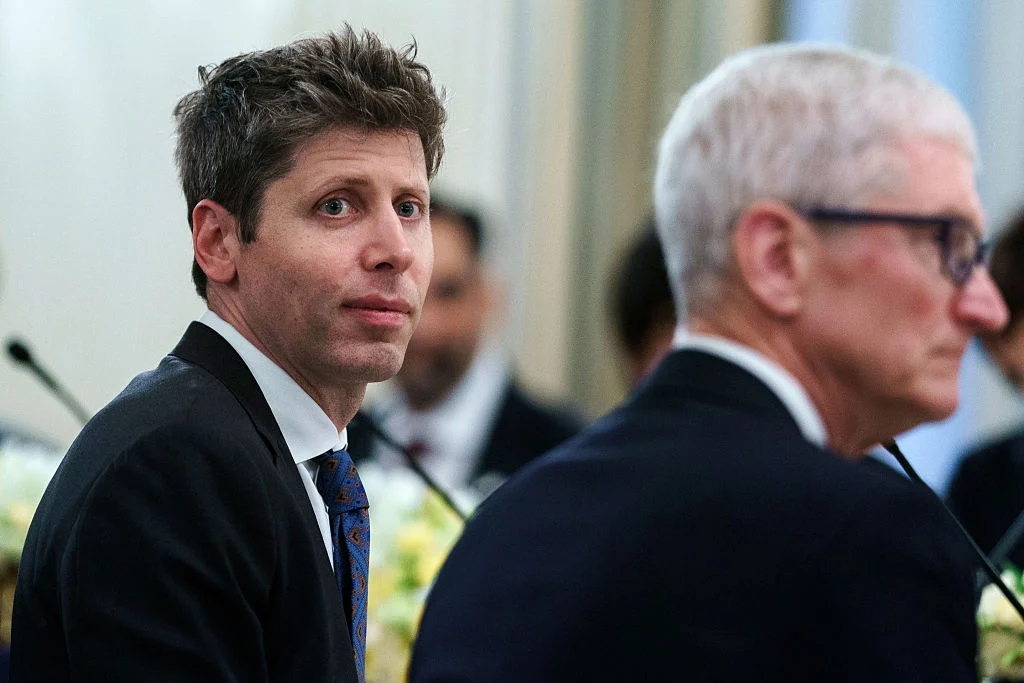
In a landmark legal confrontation that threatens to reshape the landscape of the artificial intelligence and consumer electronics industries, Apple Inc. has officially filed a lawsuit against OpenAI. The complaint, lodged in the U.S. District Court for the Northern District of California, alleges a systematic campaign of corporate espionage, trade secret theft, and breach of contract. Apple asserts that OpenAI, in its aggressive pursuit of building a hardware ecosystem to rival the iPhone, has engaged in a pattern of predatory recruiting and intellectual property misappropriation that reaches into the highest echelons of its leadership.
The lawsuit, which was filed this past Friday, marks a significant escalation in the rivalry between the Cupertino tech giant and the San Francisco-based AI powerhouse. Apple is seeking immediate judicial intervention to halt the further use of its proprietary data and is calling for the preservation of all evidence related to what it describes as a "rotten-to-the-core" strategy of innovation via theft.
The Allegations: A Pattern of Misconduct
At the heart of the litigation is the claim that OpenAI’s senior leadership has actively orchestrated the poaching of Apple talent to accelerate the development of their own proprietary hardware. Apple’s complaint paints a picture of a company desperate to bypass the arduous R&D cycle by simply "downloading" the institutional knowledge of its competitor.
According to the filing, the misconduct was not limited to individual rogue employees but was facilitated and encouraged by OpenAI’s top-tier executives, including Chief Hardware Officer Tang Tan. Tan, a veteran of Apple’s product design division with a 24-year tenure, is accused of weaponizing his insider knowledge to gain an unfair competitive advantage.
Apple alleges that during the recruiting process, Tan and other OpenAI leadership explicitly pressured job candidates to:
- Reveal confidential project code names.
- Bring sensitive Apple hardware components and prototypes to interviews.
- Provide detailed insights into Apple’s proprietary vendor selection and component supply chain processes.
- Evade Apple’s rigorous internal security protocols to facilitate the transfer of intellectual property.
Chronology of a Corporate Breach
The tension between the two companies has been simmering for months, but the legal filing reveals a timeline of systematic infiltration that dates back to the migration of key personnel to OpenAI in 2026.
The Recruitment Offensive
The transition of Tang Tan from Apple’s VP of product design for the iPhone and Apple Watch to a high-ranking role at OpenAI served as the catalyst for Apple’s internal investigation. Apple claims that immediately following Tan’s departure, the company noted a spike in anomalous behavior among departing employees.
The "Chang Liu" Incident
A focal point of the lawsuit involves Chang Liu, a former senior systems electrical engineer at Apple. Apple alleges that upon leaving for OpenAI in 2026, Liu failed to return an company-issued laptop. Forensic analysis conducted by Apple’s security team suggests that the laptop was used to download a treasure trove of confidential technical documents, including engineering presentations, schematics, and specifications for unannounced technologies. Beyond the physical theft, the suit alleges that Liu actively coached other Apple employees on how to leverage internal secrets to secure positions at OpenAI, effectively turning the recruitment process into an intelligence-gathering operation.
The Silence of February
In February, Apple formally contacted OpenAI to express its concerns regarding these activities. According to the complaint, Apple provided documentation of the alleged breaches and requested a collaborative resolution. OpenAI’s failure to respond to this communication ultimately forced Apple’s hand, leading to the current litigation.
The Strategic Pivot: OpenAI’s Hardware Ambitions
The timing of this lawsuit is far from coincidental. OpenAI is widely rumored to be developing its first proprietary hardware device—a venture that could pose an existential threat to Apple’s primary revenue stream.
Industry analysts, including Ming-Chi Kuo, have suggested that OpenAI is working on a revolutionary smartphone concept that prioritizes AI agents over traditional app-based interfaces. Such a device, if successful, would fundamentally disrupt the mobile computing market that Apple has dominated for nearly two decades.
This hardware strategy was significantly bolstered last year when OpenAI completed a $6.5 billion acquisition of "io," a hardware startup founded by Apple’s former lead designer, Jony Ive. While the filing names the entity "io" as a participant in the alleged strategy to extract Apple’s secrets, Jony Ive himself is not currently a named defendant in the lawsuit. Nevertheless, the involvement of Ive’s team, combined with the hiring of former Apple stalwarts like Tan, suggests a deliberate attempt to replicate Apple’s "secret sauce" in industrial design and hardware integration.
Supporting Evidence: The "Metal Finishing" Case
Apple’s complaint goes beyond general accusations of theft, citing specific instances of misappropriation. In one notable example, the lawsuit references a proprietary metal finishing technique developed by Apple’s engineers. Apple alleges that OpenAI utilized this specific technology in the development of its own hardware prototypes after misleading a shared industry partner into believing that Apple had authorized the use of the process. This detail suggests that Apple’s investigation is based on a granular, forensic understanding of how its intellectual property has been compromised in the supply chain.
Official Responses and Public Statements
The rhetoric between the two companies has been sharp and uncompromising.
Apple’s Stance:
In an official statement, Apple emphasized its commitment to protecting the fruits of its innovation. "At Apple, our teams are constantly developing breakthrough technologies to create the best products and services in the world, and protecting their work and intellectual property is something we take very seriously," the statement read. "We will always defend our teams’ hard work and innovations, and we are taking all appropriate steps to do so."
The court filing is even more visceral, stating: "This is the tip of the iceberg. Apple lacks visibility into what’s been happening behind closed doors at OpenAI, where such misconduct is normalized and exemplified by leadership. As a natural result, OpenAI’s nascent hardware business now rests on the shakiest of foundations, rotten to its core by its illegal reliance on misappropriated trade secrets."
OpenAI’s Rebuttal:
OpenAI has largely remained quiet, opting for a brief, standardized response provided on the social media platform X. "We have no interest in other companies’ trade secrets," the company stated. "We remain focused on building innovative technology that empowers people everywhere."
Implications for the Tech Industry
The outcome of this lawsuit will likely have profound implications for the future of Silicon Valley’s "revolving door" hiring culture.
1. Legal Discovery as a Weapon
By moving to the discovery phase of litigation, Apple will gain the legal right to subpoena internal OpenAI communications, emails, and server logs. This process is expected to expose the extent to which OpenAI’s leadership directed the acquisition of Apple’s trade secrets. If the evidence matches Apple’s claims, OpenAI could face massive financial penalties and a court-ordered injunction that could effectively halt its hardware development for years.
2. The Future of AI Hardware
If OpenAI is forced to scrap its current hardware designs due to the taint of stolen intellectual property, it could severely damage the company’s credibility and market position. For Apple, the lawsuit serves as a warning to other tech giants and AI startups that the company will not tolerate the cannibalization of its R&D efforts.
3. Standards of Conduct
This case may set a new precedent for how companies handle the transition of high-level employees. Future employment contracts in the tech sector are likely to see significantly more restrictive non-compete and non-solicitation clauses, as well as more rigorous "digital exit" audits to prevent the kind of data exfiltration alleged in the cases of Tang Tan and Chang Liu.
As the legal battle unfolds, the industry will be watching closely. For now, the confrontation serves as a stark reminder that in the high-stakes world of modern technology, the difference between a breakthrough product and a legal catastrophe often comes down to the integrity of the people building it.
This is a developing story. Stay tuned for further updates as court filings become available and both parties respond to the ongoing judicial process.











