Reynand Wu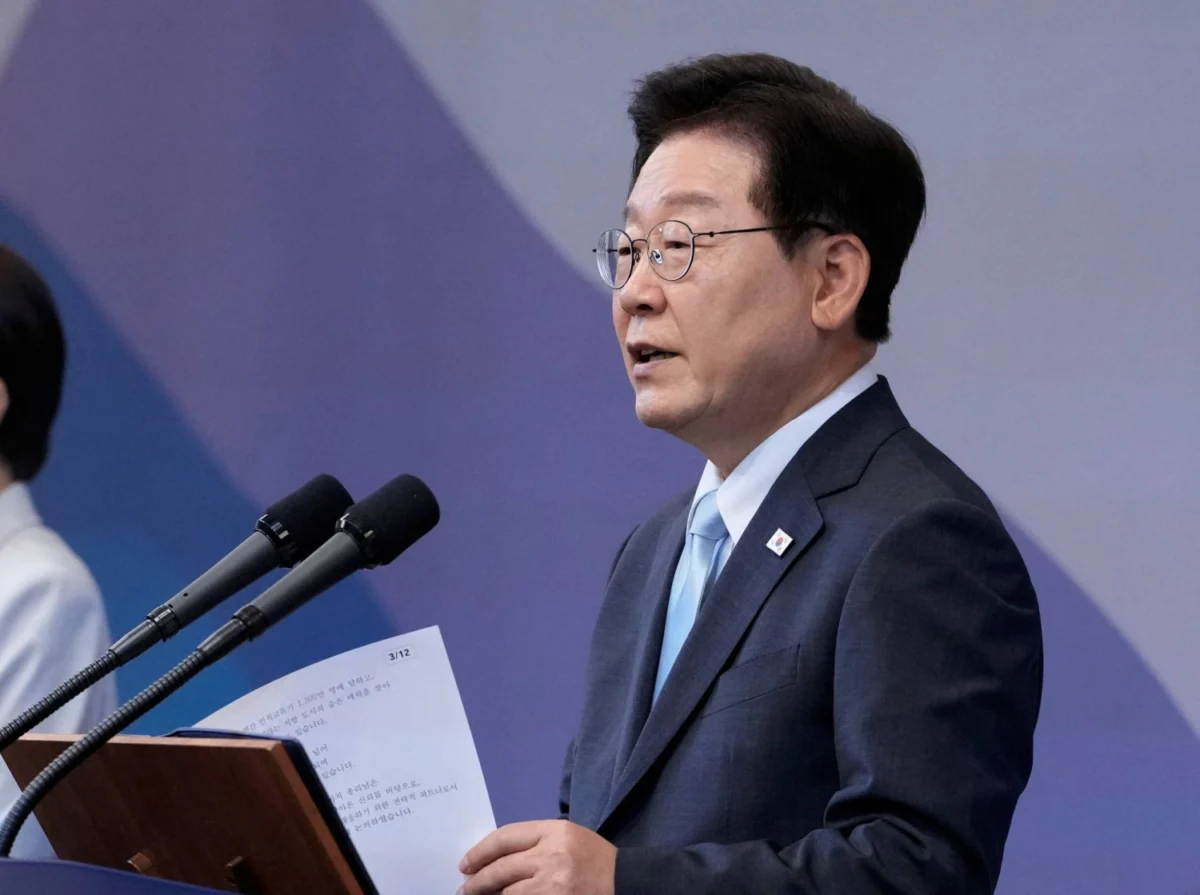
By [Your Name/Journalist Desk]
One year into his tenure as the leader of South Korea, President Lee Jae-myung stands at a defining juncture. Having enjoyed a robust and remarkably stable approval rating that has consistently hovered near the 60% mark, the President now faces his first significant electoral test: a nationwide series of local elections that will serve as a referendum on his administration’s performance and a bellwether for the future of the nation’s political landscape.
While the legislative branch remains firmly under the control of his Democratic Party, these municipal and regional contests are not merely administrative formalities. They are a high-stakes battle for the grassroots influence necessary to implement, refine, and sustain the President’s domestic policy agenda over the remaining years of his term.
The Main Facts: A Battle for Local Hegemony
The upcoming elections, covering thousands of municipal council seats, represent a critical opportunity for the Democratic Party (DP) to reshape the administrative map of South Korea. The focal point of this political theater lies in the 17 key gubernatorial and mayoral races, particularly in major metropolitan hubs like Seoul and Busan.
Historically, these regions have been the battlegrounds where the ideological tug-of-war between progressive and conservative forces is most acutely felt. In the 2022 local elections, the opposition People Power Party (PPP) dominated the landscape, securing 12 of the 17 major posts, while Lee’s Democratic Party managed to retain only five.
For the Lee administration, this election is about more than just political optics; it is about momentum. A decisive victory for the DP would signal a sea change in regional governance, allowing the President to align local policies with his national vision. Conversely, a poor showing could expose the limitations of his current popularity, suggesting that while the public may support his leadership style, they remain skeptical of his party’s local implementation.
A Chronology of the Lee Presidency: The Path to the Ballot Box
To understand the weight of this electoral test, one must look back at the trajectory of the Lee administration since his inauguration.
- Year One: The Honeymoon Phase: Upon taking office, Lee Jae-myung inherited a nation grappling with post-pandemic economic adjustments and shifting geopolitical alliances. His early months were characterized by a focus on "stabilizing the center," a strategy that resonated with a broad spectrum of voters.
- Mid-Term Consolidation: Through a series of targeted domestic initiatives—ranging from housing reform to industrial subsidies—Lee managed to maintain a level of public support that few of his predecessors achieved so early in their terms. His ability to maintain a 60% approval rating in the face of inflationary pressures and global economic uncertainty has been a hallmark of his first year.
- The Campaign Launch: As the one-year mark approached, the political climate shifted. The Democratic Party, leveraging the President’s popularity, began an aggressive push to turn the local elections into a "vote of confidence" for the administration.
- The Opposition’s Pivot: Throughout this period, the People Power Party has been in a state of recalibration. Stung by their losses in the general parliamentary elections, the conservative bloc has focused its efforts on "local accountability," arguing that the national government’s success has not trickled down to municipal services.
Supporting Data: Understanding the Public Pulse
Public opinion polling serves as the lifeblood of this electoral cycle. The persistent 60% approval rating that President Lee enjoys is a rarity in South Korean politics, where polarization often keeps executive support figures closer to the 40-50% range.
However, analysts caution against equating presidential approval with local electoral success. Local elections in South Korea are historically driven by "hyper-local" issues: infrastructure development, local tax policies, and the effectiveness of municipal leadership.
Data from recent surveys indicates a narrowing gap in several key districts. While the President remains popular, voters in urban centers like Seoul have expressed concerns regarding housing affordability—a challenge that has persisted despite national-level policy interventions. The Democratic Party’s challenge, therefore, is to bridge the disconnect between the President’s high personal approval and the ground-level dissatisfaction with specific municipal outcomes.
Official Responses and Political Maneuvering
The rhetoric from both sides of the aisle has intensified as polling day approaches.

In recent press conferences, representatives for the Democratic Party have framed the election as a "necessity for synergy." The official line from the party headquarters is that "a vote for the DP candidate is a vote to empower the President to finish the work he started." They argue that having local leaders who share the President’s vision is essential for streamlining public works and social welfare programs.
The People Power Party, conversely, has adopted a strategy of "checks and balances." Their leadership has warned voters against granting the ruling party a "monopoly on power." In a recent campaign rally in Busan, a senior PPP spokesperson stated: "We cannot allow the entire country to become an echo chamber. We need strong local voices to hold the central government accountable for its economic shortcomings."
President Lee himself has remained relatively guarded, focusing his public appearances on policy announcements rather than direct campaign stump speeches. This "statesman-first" approach is widely viewed by political scientists as a strategic move to preserve his high approval ratings by staying above the fray of local mudslinging.
Implications: The Road Beyond the Election
The outcome of these local elections will set the tone for the remainder of President Lee’s term. There are three primary scenarios currently being discussed by political analysts:
1. A Democratic Party Sweep
If the DP secures a majority of the 17 major races, the President will have a clear mandate. This would likely lead to a period of rapid legislative and administrative expansion, with the President feeling emboldened to pursue more ambitious structural reforms. It would also likely demoralize the opposition, potentially leading to further internal fracturing within the conservative camp.
2. A Status Quo Outcome
Should the results mirror the 2022 elections, the political landscape will remain effectively gridlocked at the local level. While the President would maintain his national popularity, he would be forced to continue negotiating with conservative local governors. This would likely result in a "slow-burn" governance style, characterized by incremental changes rather than transformative policy shifts.
3. A Conservative Resurgence
A victory for the People Power Party in key battleground cities would be a major blow to the Lee administration. Even if his national approval rating remains high, such a result would be interpreted as a warning from the electorate. It would likely force the President to reshuffle his cabinet and pivot toward a more moderate, consensus-based policy approach to avoid a lame-duck scenario in the years leading up to the next presidential election.
Conclusion: The Resilience of Democracy
Regardless of the outcome, these elections serve as a vital reminder of the health of South Korea’s democratic institutions. The transition from the high-level debates of the National Assembly to the bread-and-butter issues of municipal council seats ensures that the political system remains tethered to the daily realities of the citizenry.
As voters head to the polls, they are participating in a process that is larger than the individual candidates or the President himself. They are testing the limits of executive power, the efficacy of local governance, and the endurance of the political mandates they granted just one year ago.
For President Lee Jae-myung, the road ahead is narrow. He has proven his ability to capture the public imagination on the national stage, but the true test of any leader is the ability to translate that support into tangible results for every citizen, in every city. As the nation waits for the results, the message is clear: in a time of excessive information and shifting political sands, the people’s voice, expressed through the ballot box, remains the ultimate arbiter of the nation’s direction.
The world will be watching to see if the "Lee wave" continues to hold steady, or if the tide is beginning to turn. The final tally will not only decide the fate of mayors and governors—it will shape the very character of the next three years of the South Korean presidency.


 Neng Nana
 Asro
Asro