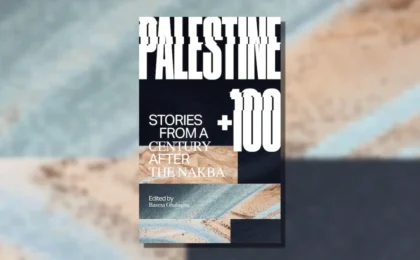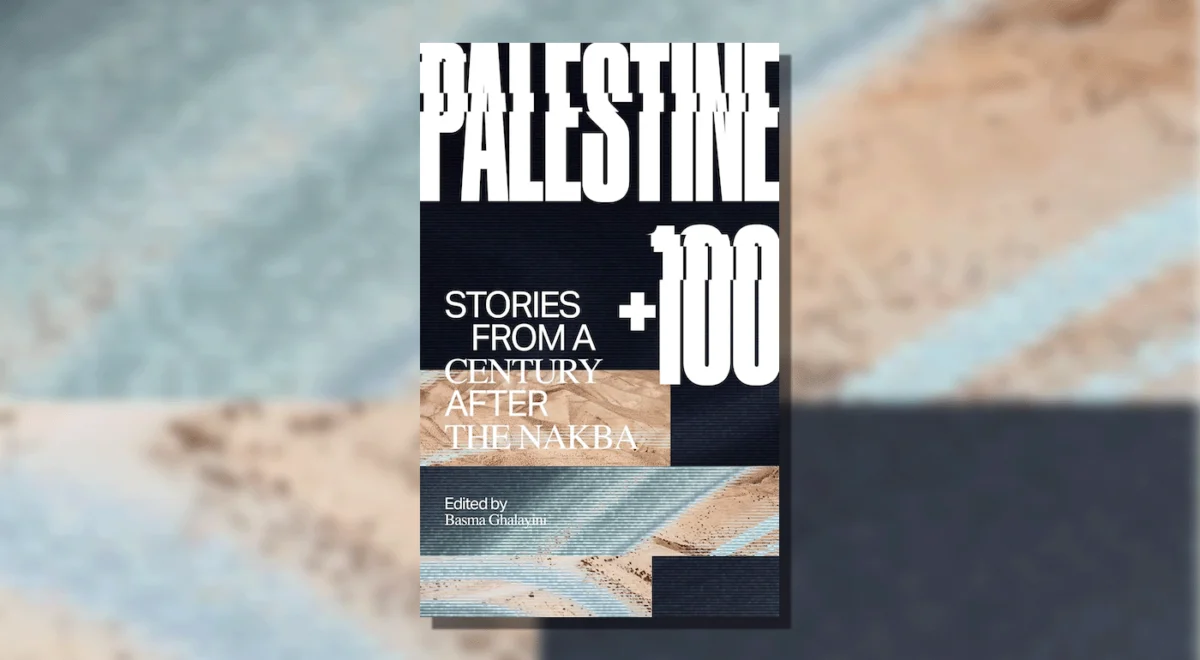
In the landscape of contemporary speculative fiction, the anthology Palestine +100, edited by Basma Ghalayini, stands as a profound testament to the power of imagination as a tool for political survival. Originally published in 2019, this collection of twelve short stories asks a harrowing, necessary question: What does the future hold for a people whose present is defined by systemic erasure? By projecting the Palestinian experience into the year 2048—exactly one century after the Nakba—Ghalayini’s contributors utilize the speculative form not as an escape from reality, but as a lens to magnify the complexities of occupation, memory, and the persistent, stubborn demand for a future.
The collection serves as the subject of the latest Found in Translation column, which examines how translated speculative literature challenges traditional narratives and offers, in the words of its contributors, the unifying realization that "there is always more out there."
The Genesis of a Dystopian Future
Dystopia, derived from the Ancient Greek dys- (“bad”) and -topia (“place”), typically functions as a cautionary tale of extreme oppression. However, for a society currently undergoing the trauma of displacement, imprisonment, and military violence, the "dystopian" label feels insufficient. Palestine +100 rejects the notion that artists should filter out suffering. Instead, it invites readers into an imagined reality where the state of Palestine exists in 2048, yet remains profoundly shaped by the scars of the previous century.
The anthology represents a significant achievement in international literature. While not every story was originally written in Arabic, the collection is deeply rooted in the linguistic patterns and cultural consciousness of the Palestinian diaspora. As a reviewer and a multilingual author myself, I find that even the English-language entries carry the distinct, rhythmic cadence of a people whose primary language of existence is one of struggle, displacement, and inherited memory.
Chronology of the Anthology: A Story-by-Story Analysis
The collection is a tapestry of genres, shifting between clinical science fiction, haunting horror, and poignant magical realism.
The Landscape of 2048
- "Song of the Birds" (Saleem Haddad): This story opens the anthology with a chilling premise: a liberated Gaza where the youth are increasingly succumbing to suicide. Through the eyes of a girl haunted by visions of a destroyed land, Haddad explores how even the concepts of hope and longing can be weaponized as tools of colonial control.
- "Sleep it Off, Dr. Schott" (Selma Dabbagh): Utilizing an experimental format of logs and surveillance transcripts, Dabbagh depicts a society under extreme observation, following a protagonist tasked with monitoring a sensitive, illicit cross-cultural romance.
- "N" (Majd Kayyal, tr. Thoraya El-Rayyes): A quieter, more melancholic piece, N introduces a literal interpretation of the two-state solution. In this reality, the two countries occupy the same geographical space but exist in different temporal or political realities, accessible only to a specific generation of Palestinians.
- "The Key" (Anwar Hamed, tr. Andrew Leber): Leaning heavily into horror, Hamed imagines an Israeli technological innovation involving invisible walls that only allow "authorized" passage. The story serves as a visceral metaphor for the keys carried by Nakba survivors, flipping the narrative of the "settler’s fear" of the dispossessed.
- "Digital Nation" (Emad El-Din Aysha): In a more satirical vein, this story imagines a massive cyberattack that converts every Israeli digital interface into Arabic, leading to a swift societal collapse and the eventual unification of the Palestinian state.
- "Personal Hero" (Abdalmuti Maqboul, tr. Yasmine Seale): This entry explores the intersection of virtual reality and grief, as an elderly daughter of the revolutionary hero Abd Al-Qadir al-Husayni uses VR to commune with her father, who was killed in 1948.
- "Vengeance" (Tasnim Abutabikh): In a future where environmental degradation necessitates the wearing of lifemasks, a young man’s pursuit of revenge is complicated by his own humanity and the imperative to protect his cultural identity.
- "Application 39" (Ahmed Masoud): Perhaps the most politically ironic entry, this story follows two brothers in the Gaza City Republic who submit a prank application to host the Olympic Games. The resulting diplomatic chaos highlights the absurdity of international recognition.
- "The Association" (Samir El-Youssef, tr. Ralph Cormack): A noir-inspired mystery, this story explores a future where history is illegal. A journalist’s investigation into a historian’s death reveals the terrifying cost of peace built upon the denial of the past.
- "Commonplace" (Rawan Yaghi): Focusing on the internal life of a dealer navigating a world still scarred by bombs and torture, this is perhaps the most intimate and character-driven piece in the collection.
- "Final Warning" (Talal Abu Shawish, tr. Mohamed Ghalainey): Often cited as the most optimistic story in the anthology, this narrative uses the arrival of extraterrestrial visitors to force a moment of shared human connection in a landscape of fear.
- "The Curse of the Mud Ball Kid" (Mazen Maarouf, tr. Jonathan Wright): The collection concludes with a novella-length masterpiece. It depicts a world where only one Palestinian remains—not as a symbol of victory for the occupier, but as a "living bomb" who holds the collective energy of the murdered.
Supporting Data and Thematic Implications
The power of Palestine +100 lies in its refusal to offer easy catharsis. Across these twelve stories, the recurring themes are not just technological innovation, but the permanence of memory. The "digital" is used to reclaim land, "virtual reality" is used to resurrect ancestors, and "alien invasion" is used to expose the fragility of terrestrial borders.

These authors are not writing about a utopian future; they are writing about a surviving future. The implications of this work are profound for the literary canon. By engaging with the speculative genre, these writers demonstrate that Palestinian identity is not a static historical event, but a dynamic, evolving force that persists even in the most restricted environments. The anthology forces the reader to confront the reality that for millions, the "future" is not a given, but a contested space that must be reclaimed through storytelling.
Official Responses and Critical Reception
Since its publication, Palestine +100 has been hailed by literary critics and human rights activists alike as a groundbreaking intervention in world literature. It has been praised for its refusal to adopt the "victimhood" tropes often associated with Middle Eastern literature, instead opting for a narrative of agency, dark humor, and technological sophistication.
In literary circles, the collection has been cited as a primary example of "post-colonial speculative fiction." By utilizing the tropes of Western science fiction—surveillance states, alternative dimensions, and technological dystopias—the authors subvert the genre, turning the tools of speculative fiction back toward the realities of their own history.
The Future of Memory
Ultimately, Palestine +100 does not cause a sense of defeat. While the settings are often bleak, the stories are imbued with a fierce, quiet hope. The collection serves as a reminder that human connections are the ultimate currency of survival.
For readers, this book is more than a collection of short stories; it is an act of defiance. It posits that as long as the Palestinian experience can be articulated, dreamed, and projected into the future, the project of erasure will never be complete. Palestine +100 is a vital addition to any library, demanding that we look at the year 2048—and our own current reality—with eyes wide open to the power of the imagination to outlast any border, any wall, and any system of oppression.
As the editor Basma Ghalayini suggests throughout the anthology, the future is not something that happens to us; it is something we create. And in the pages of this book, that future is one where the memory of the past is not a burden, but the foundation upon which a new, liberated world is built.