Laily UPN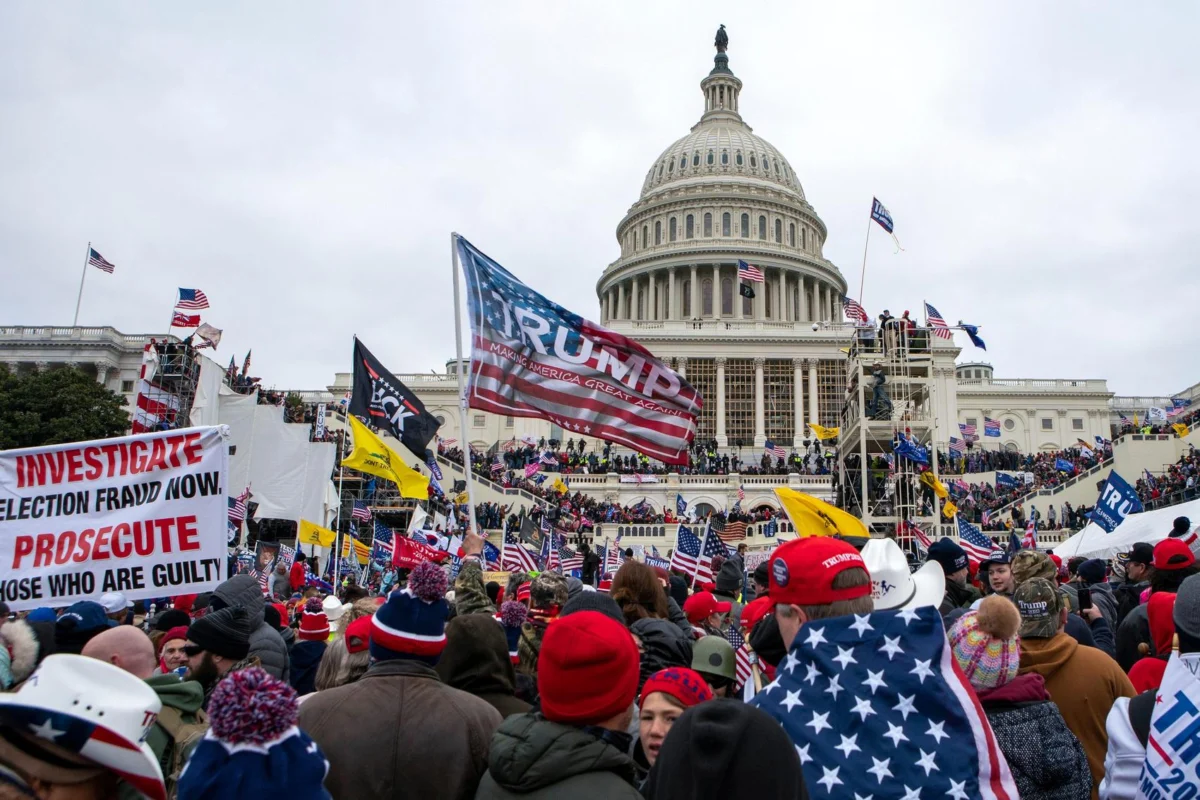
WASHINGTON — The Trump administration has appointed a man convicted for his role in the January 6, 2021, attack on the U.S. Capitol to a position within the Pentagon’s policy office, a move that has ignited a fierce firestorm regarding the vetting process for political appointees and the intersection of domestic political unrest with national security infrastructure.
Internal Pentagon records and statements from administration officials confirm that Elias Irizarry, who served 14 days in federal prison for his participation in the breach of the Capitol building, is now employed in the Office of the Undersecretary of Defense for Policy. This division serves as the primary advisory body to the Secretary of Defense, tasked with shaping high-level military strategy, planning, and global security posture.
The appointment underscores a broader, deliberate shift within the executive branch to reintegrate individuals involved in the events of January 6 into the federal government, signaling a significant departure from traditional security clearance norms and political staffing protocols.
The Chronology of an Unlikely Career Path
The trajectory of Elias Irizarry from a cadet at the Citadel military college to a political appointee at the Department of Defense is as rapid as it is controversial.
In early 2021, Irizarry was a 19-year-old freshman and a Civil Air Patrol cadet. Court documents from his subsequent criminal trial detail how he traveled to Washington D.C. to participate in the "Save America" rally. Following the rhetoric of the day, Irizarry joined the surge of protesters toward the Capitol.
According to federal investigators, Irizarry climbed through a shattered window to gain unauthorized entry into the building. Once inside, he navigated the halls, entering a secure conference room and carrying a metal pole through the structure. He documented his presence by taking photos before exiting the building.
Prosecutors emphasized the severity of his actions, noting that as a military cadet, Irizarry possessed a higher level of situational awareness regarding the dangers posed by a volatile mob to federal legislators and staff.
Following an investigation by the FBI, Irizarry was charged and eventually pleaded guilty to a misdemeanor trespassing count in October 2022. In March 2023, U.S. District Judge Tanya Chutkan sentenced him to two weeks in custody. At his sentencing, Irizarry expressed profound remorse, telling the court that he had brought "great shame upon myself, my family, and even my country." He characterized the violence at the Capitol as a "horrible" betrayal of American institutions.
However, the transition from a convicted trespasser to a defense policy official occurred in the months following the 2024 election cycle, as the new administration moved to overhaul the federal bureaucracy.
The Pentagon’s Defense of the Appointment
The decision to install Irizarry in the policy office was met with immediate pushback from national security analysts, yet the administration has stood firmly by the choice.
Acting Pentagon Press Secretary Joel Valdez addressed the controversy on social media, dismissing the criticism and framing the hire as a matter of merit and ideological alignment. "Mr. Elias Irizarry is a qualified, patriotic young professional, and we are proud to have him as a political appointee," Valdez stated.
The Pentagon has declined to provide specific details regarding the scope of Irizarry’s current duties or the length of his tenure, citing the sensitivity of personnel matters. However, the placement is objectively significant. The Office of the Undersecretary of Defense for Policy is one of the most sensitive offices in the building, handling everything from nuclear deterrence strategies to regional security partnerships and classified military intelligence assessments.
Broader Implications: A Pattern of Reintegration
The Irizarry appointment is not an isolated incident. It is part of a larger trend in which individuals previously prosecuted or charged in connection with the January 6 riots have found pathways into the highest levels of the current administration.
Most notably, Jared Wise, a former FBI agent who faced charges for his role in the Capitol breach, was appointed last year to a role in the Justice Department. His position—an adviser to the department’s pardon attorney—offered an ironic twist, as Wise was himself a beneficiary of the administration’s sweeping approach to the events of that day.
Wise’s case was dismissed in early 2025 after President Trump, upon returning to the White House, issued a wave of pardons and commutations for nearly 1,600 individuals charged in the January 6 attack. Wise’s eventual resignation in April 2026 provided insight into the internal culture of these appointees. In a parting social media post, Wise wrote: "I returned to Washington to fully expose the abuses by the FBI and DOJ against J6 defendants, but it became clear that this will only happen from outside of government."
This pattern suggests an administration that views the traditional "deep state" vetting process as a barrier to be dismantled. By placing individuals who were on the "front lines" of the January 6 movement into policy-making roles, the administration is effectively installing its own ideological gatekeepers within the very institutions that prosecuted them.
The National Security Debate
The appointment has drawn sharp condemnation from Capitol Hill. Senator Mark Warner, the top Democrat on the Senate Intelligence Committee, expressed disbelief at the assignment. "This administration thinks a convicted Jan 6 rioter should be doing that kind of work?????" Warner asked in a viral social media post.
Critics of the appointment raise two primary concerns: the integrity of the security clearance process and the potential for politicization of military strategy.
The Security Clearance Question
Traditionally, an applicant for a defense role requiring a security clearance must undergo a rigorous background check, known as an "SF-86" process. Investigators typically look for "foreign influence," "personal conduct," and "criminal behavior." A federal conviction for an act of political violence, such as storming the Capitol, would historically be a "red flag" that would disqualify a candidate from holding a position of trust.
Experts argue that by circumventing these norms, the administration is creating a vulnerability. "If you have individuals who have demonstrated a willingness to subvert the rule of law to achieve a political outcome, they are inherently a security risk," said one former intelligence official, who spoke on the condition of anonymity due to the sensitivity of the issue.
The Institutional Integrity Argument
Beyond the clearance process, there is a fundamental question of military culture. The U.S. military prides itself on being an apolitical institution that serves the Constitution rather than any single political figure. Placing personnel who have been actively involved in insurrectionist activities into the heart of the Pentagon’s policy office risks eroding the morale and perceived neutrality of the civilian-led Department of Defense.
Conclusion: A Shift in Governance
The appointment of Elias Irizarry represents a watershed moment in the relationship between the executive branch and the civil service. By prioritizing ideological loyalty and personal history with the "America First" movement over traditional administrative vetting, the administration is signaling a definitive end to the era of institutional norms that governed Washington for decades.
As the Pentagon continues to operate under this new leadership structure, the long-term impact on national security strategy remains to be seen. Supporters of the administration view these hires as a necessary "drain the swamp" measure, ensuring that the personnel in power are fully committed to the President’s agenda. Detractors, however, see a dangerous degradation of the federal government’s foundational institutions.
For now, Elias Irizarry remains in his post, a symbol of the shifting tides in American government, where the line between political activism and national security policy has become increasingly, and perhaps irrevocably, blurred.
Associated Press writers Michael Kunzelman and Eric Tucker contributed to this report.
© Copyright 2026 The Associated Press. All rights reserved. This material may not be published, broadcast, rewritten or redistributed without permission.


 Neng Nana
 Asro
Asro