

In the hyper-competitive digital landscape of 2025, social media is no longer just a broadcast channel—it is a battlefield. Brands that rely solely on intuition to guide their content strategy are increasingly finding themselves outmaneuvered by competitors who leverage data-driven intelligence. A formal social media competitor analysis is the essential bridge between "posting content" and "achieving measurable market dominance."
By systematically evaluating the digital footprint of your rivals, you can uncover hidden gaps in the market, identify untapped audience segments, and refine your unique value proposition. This article provides a comprehensive blueprint for executing a professional-grade competitive analysis, designed to help your brand stay one step ahead.

The Strategic Imperative: Why Competitive Analysis Matters
A social media competitor analysis is a rigorous, ongoing process of auditing your competitors’ digital activity to benchmark it against your own performance. It is not about copying what others do; it is about understanding the boundaries of the playing field.
When executed with precision, this analysis provides three critical advantages:

- Landscape Clarity: You gain an objective view of what your target market expects in terms of tone, frequency, and content format.
- Differentiated Strategy: By identifying what your competitors aren’t doing, you can claim "white space" in the market, establishing a distinct voice that resonates more deeply with your audience.
- Risk Mitigation: Early identification of a competitor’s new campaign or pivot allows you to respond in real-time rather than reacting months later when your market share has already eroded.
Chronology of Execution: A Step-by-Step Methodology
Conducting a thorough analysis is a process that requires patience and a structured approach. Most high-performing marketing teams adopt a quarterly cycle, though a "one-off" comprehensive report is an excellent starting point for any brand.
Phase 1: Identification of True Competitors
The most common mistake is assuming your direct business competitors are your only social media rivals. In the social ecosystem, your competitors are anyone fighting for the same "share of attention."

- Keyword Mapping: Use tools like Google Ads Keyword Planner or Google Search Console to identify the terms your brand wants to own. A boutique hotel in Manhattan, for example, competes with other local luxury experiences, not just generic "NYC hotels."
- The Social Search Audit: Perform searches for your core keywords directly on TikTok, Instagram, and LinkedIn. Often, the brands ranking on Google are entirely different from the ones dominating the "For You" page. If a brand frequently appears in top-tier social search results, they are a primary content competitor.
- Audience Overlap: Utilize Meta Business Suite or Instagram Insights to see what other brands your followers are engaging with. If your audience follows a specific industry influencer or a secondary competitor, that brand deserves a spot on your watch list.
Phase 2: Gathering Intelligence
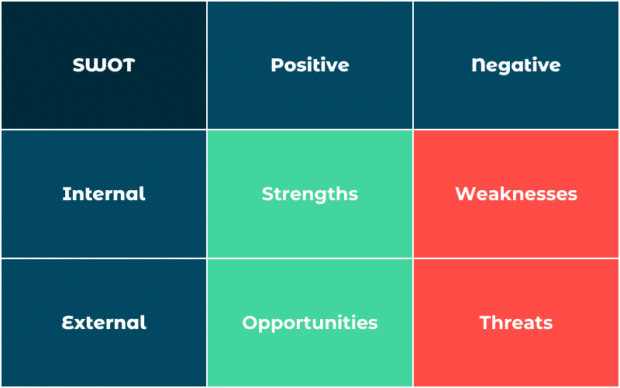
Once you have narrowed your list to 3–5 primary competitors, you must move beyond vanity metrics. Collect data points that reveal the quality of their strategy:
- Posting Cadence: How often are they publishing? Does their frequency correlate with spikes in engagement?
- Content Mix: What is the ratio of video (Reels/TikToks) to static imagery? Are they focusing on educational content, entertainment, or direct sales?
- Community Sentiment: Monitor the comments section. What are users complaining about? What are they asking for? This is the most valuable "free" customer research available to you.
Phase 3: The SWOT Synthesis
The final step is translating raw data into a SWOT framework (Strengths, Weaknesses, Opportunities, and Threats).
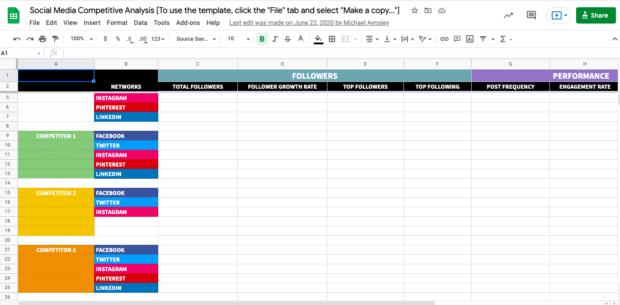
- Strengths: Where do your numbers outperform the average? Leverage these as your primary brand pillars.
- Weaknesses: If your engagement rate is lower than the benchmark, acknowledge it. This is not a failure; it is an area for A/B testing and experimentation.
- Opportunities: Where is the "content vacuum"? If your competitors ignore a specific platform or fail to address a common customer pain point, that is your opening.
- Threats: Keep an eye on market shifts. Is a competitor suddenly investing heavily in influencer partnerships? Is a new entrant disrupting the pricing model?
Supporting Data and Industry Benchmarks
Data remains the backbone of any credible strategy. To move from guesswork to growth, you must quantify your findings. Benchmarking your performance—comparing your engagement rate, follower growth, and click-through rates (CTR) against your peers—provides the "why" behind your strategy.
According to industry trends, companies that incorporate social listening and competitor benchmarking into their quarterly reviews see, on average, a 15% higher growth in organic reach compared to those that manage accounts in a vacuum. The use of centralized platforms like Hootsuite or Sprout Social has become standard, as they aggregate cross-platform data, allowing teams to visualize competitive trends without the manual labor of spreadsheet management.

Official Perspectives: The Role of Social Listening
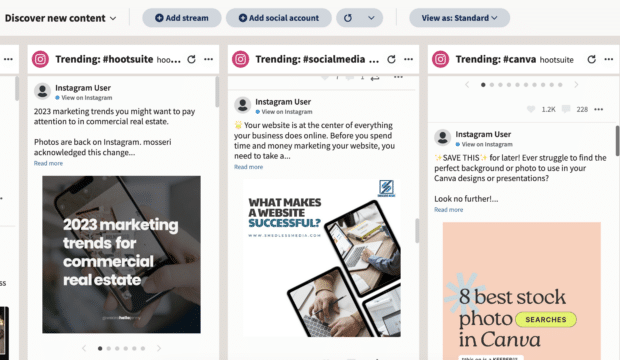
Enterprise-level organizations have moved beyond static reports toward "real-time intelligence." Industry experts emphasize that the true value of competitor analysis lies in Social Listening.
"Social listening provides the why behind the data," says a leading digital strategist. "While a report might tell you that a competitor’s engagement spiked on Tuesday, listening tools tell you that it happened because they tapped into a trending conversation or addressed a specific customer frustration. That context is what allows a brand to pivot its own messaging in real-time."

Large-scale brands often utilize tools like Talkwalker or Mentionlytics to track sentiment. Understanding not just what is being said, but the emotional tone of the conversation surrounding a competitor, provides an edge in product development and crisis management.
Strategic Implications: How to Pivot
Once the analysis is complete, the most crucial step is the "so-what." A report left in a folder is useless; a report that informs your content calendar is a competitive weapon.

1. Resource Allocation
If the analysis reveals that your audience is shifting toward long-form educational videos, you may need to reallocate budget from static design to video production.
2. Messaging Refinement
If your competitors are all using a formal, corporate tone, a brand that adopts a conversational, human-centric voice can capture the attention of an audience that feels "market-fatigued."
3. The "Hybrid" Approach
Most successful businesses treat competitive analysis as a hybrid activity. They conduct a "Deep Dive" audit once a year to reset their high-level strategy, while keeping a "Pulse Check" (monthly or quarterly) to monitor for sudden shifts in the landscape.
Conclusion: Continuous Vigilance
A competitive analysis is not a checkbox item; it is a mindset of continuous improvement. The digital landscape is fluid, and today’s dominant player can be tomorrow’s legacy brand if they stop paying attention to the market.
By mastering the art of the analysis—finding your true rivals, gathering actionable intelligence, and applying a rigorous SWOT framework—you transform your social media presence from a simple communication channel into a robust business engine. Start small, use the right tools to automate your data collection, and stay curious. In the race for digital attention, the best-informed brand almost always wins.
Key Takeaways for Your Next Review:
- Focus on Gaps: Don’t just mimic the market leaders; find what they are missing and fill that need.
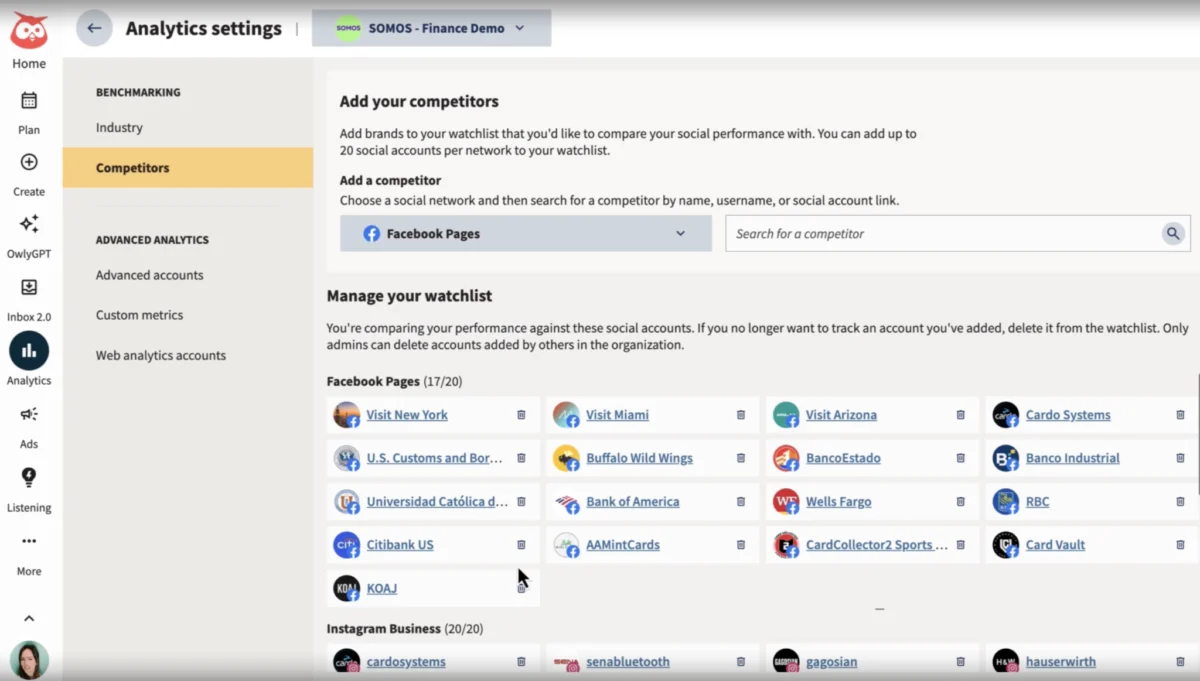
- Automate Data Collection: Use tools like Hootsuite Analytics to track up to 20 profiles at once, saving hours of manual research.
- Track Sentiment: Look beyond likes and shares to understand how people feel about your competitors.
- Review Regularly: Market conditions change. A static strategy is a failing strategy. Revisit your analysis quarterly to stay agile.












No comments yet. Be the first to join the conversation!