Ammar Sabilarrohman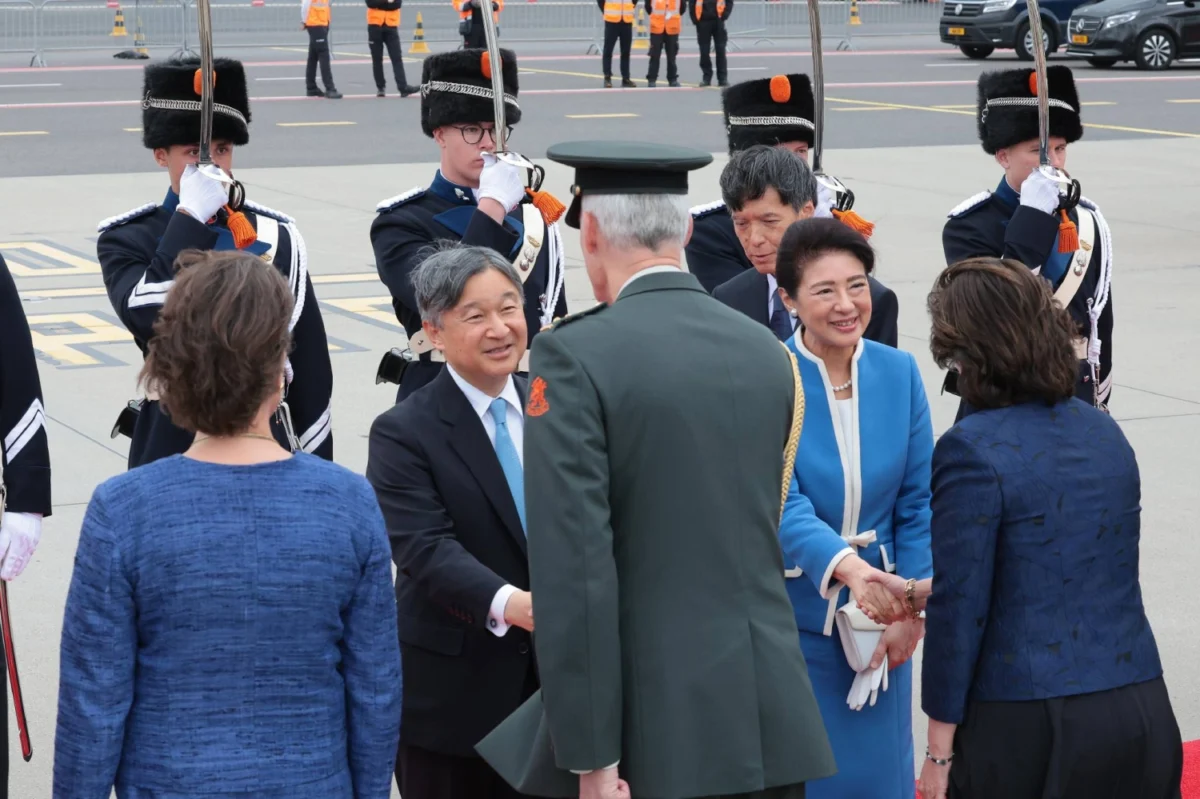
Introduction
On Saturday, Emperor Naruhito and Empress Masako arrived at Schiphol Airport near Amsterdam, marking the beginning of a high-profile state visit to the Netherlands and Belgium. This diplomatic journey, which represents one of the most significant overseas engagements for the Japanese Imperial couple in recent years, serves to reinforce the long-standing historical, cultural, and political ties between Japan and two of Europe’s most storied constitutional monarchies.
As the Imperial couple touched down, they were greeted with the customary protocol befitting heads of state, signaling the commencement of a series of high-level meetings and ceremonial events. Experts suggest that this visit is not merely a formality but a strategic exercise in “monarchical diplomacy,” designed to fortify alliances in an increasingly complex geopolitical landscape.
The Significance of the Visit: A Scholar’s Perspective
Naotaka Kimizuka, a professor at Komazawa University and a leading expert on European royal families, has characterized the trip as “extremely significant.” According to Kimizuka, the decision to visit the Netherlands and Belgium—two nations that were original members of the European Economic Community, the precursor to the modern European Union—underscores Japan’s commitment to its democratic partners.
“This visit will be a trip that further deepens the bonds formed over many years with both nations,” Kimizuka noted. He emphasized that the commonalities between Japan’s Imperial House and the monarchies of the Low Countries—namely their shared status as constitutional monarchies—provide a unique foundation for mutual understanding and diplomatic rapport. In these systems, the monarch serves as a symbol of national unity and historical continuity, a role that resonates deeply across all three countries.
Chronology of the Diplomatic Engagement
While the specific itinerary of the trip is carefully curated to balance state duties with cultural exchanges, the visit follows a structured diplomatic timeline:
- Arrival (Saturday): The Imperial couple arrived at Schiphol Airport, transitioning immediately into private discussions with Dutch officials.
- State Ceremonies (Days 2-3): The focus shifts to formal welcoming ceremonies in Amsterdam, including meetings with the Dutch Royal Family. Discussions are expected to center on historical reconciliation and future economic collaboration.
- The Transition to Brussels: Following their time in the Netherlands, the Emperor and Empress will travel to Belgium. This leg of the trip is expected to highlight the industrial and technological partnerships between the two nations, as well as the deep personal friendships between the Japanese and Belgian royal families.
- Cultural Reciprocity: Throughout the trip, the couple will engage in cultural outreach, visiting institutions that showcase the shared history of Japanese-European exchange, which dates back to the Edo period in the case of the Netherlands.
Supporting Data: The Historical Foundation of the Alliance
The relationship between Japan and the Netherlands is historically profound. As the only Western nation permitted to trade with Japan during the centuries of Sakoku (national isolation), the Netherlands served as the primary conduit for Western science, medicine, and technology into Japan, known as Rangaku (Dutch learning).
Economic Ties
Modern relations go far beyond history. The Netherlands remains a critical European partner for Japan, serving as a primary entry point for Japanese goods into the European market. Belgium, similarly, is a vital hub for international trade and the administrative heart of the European Union.
Constitutional Parallels
The shared governance model of the three nations provides a stable framework for dialogue. Unlike presidential republics, where heads of state may change frequently, the long-term continuity of the Imperial and Royal houses allows for the cultivation of generational friendships. This personal dynamic is a hallmark of the Imperial family’s diplomatic style, often referred to as “heart-to-heart diplomacy.”
Official Responses and Diplomatic Implications
The official reception of the Emperor and Empress reflects the high regard in which they are held internationally. By traveling as state guests, the couple is afforded the highest level of diplomatic protection and ceremonial honor.

Strengthening EU Relations
At a time when the European Union is navigating shifts in global trade policy and security cooperation, the presence of the Japanese Emperor serves as a reminder of the democratic values shared by Japan and the EU. The visit provides a platform for Japan to reaffirm its status as a key partner in the Indo-Pacific region, seeking to align its interests with those of its European counterparts on issues such as environmental sustainability, technological innovation, and international law.
Soft Power and Global Image
The Imperial family’s presence in Europe acts as a powerful instrument of “soft power.” Through public appearances, royal banquets, and charitable engagements, the couple helps maintain a positive image of Japan as a nation rooted in tradition yet forward-looking and cooperative. For Empress Masako, whose background as a career diplomat brings a modern perspective to the role, the visit is also an opportunity to engage in discussions regarding international social issues and the role of women in leadership.
Implications for the Future
The long-term implications of this visit are likely to manifest in three specific areas:
- Enhanced Bilateral Cooperation: Following the visit, government officials from Japan, the Netherlands, and Belgium are expected to follow up with ministerial-level talks to build upon the momentum generated by the royal visit.
- Educational and Cultural Exchange: The visit will likely stimulate new initiatives in academic cooperation, particularly in the fields of climate change research and maritime history—areas where the three nations have significant overlapping interests.
- Stability of Institutional Bonds: By reaffirming the bonds between the Imperial House and European monarchies, the visit ensures that even as political administrations change in Tokyo, Brussels, or Amsterdam, the deep institutional trust remains intact.
The Role of the Monarchy in Modern Diplomacy
In the 21st century, some critics question the relevance of royal diplomacy. However, as Professor Kimizuka argues, the unique nature of the Japanese Emperor’s role allows him to transcend the cut-and-thrust of daily partisan politics. He can engage in "symbolic diplomacy" that focuses on long-term national friendships rather than short-term electoral gains.
This trip is a testament to the fact that, even in an era of digital communication and instant global connectivity, the physical presence of a head of state remains the gold standard of international relations. The warmth of the welcome at Schiphol is a clear indication that, despite the miles separating Tokyo from Amsterdam and Brussels, the shared history and mutual respect remain as vibrant as ever.
Conclusion
As Emperor Naruhito and Empress Masako continue their visit, the world watches not just the ceremonial aspects of the trip, but the quiet, deliberate efforts to secure a peaceful and prosperous future for Japan’s relationships in Europe. Through this tour, the Imperial couple is effectively "tending the garden" of international relations, ensuring that the roots of cooperation are strong enough to withstand the winds of global change.
Whether through the discussion of historical ties or the exploration of modern technological partnerships, the visit is a reminder that diplomacy is as much about human connection as it is about policy. As the Emperor and Empress represent Japan on the European stage, they carry with them the history of the past and the aspirations of the future, reinforcing a partnership that has stood the test of time and continues to evolve in the modern age.
For ongoing coverage of the Imperial couple’s visit and in-depth analysis of Japan’s foreign policy, subscribe to our newsletter for exclusive reports and expert commentary.


 Neng Nana
 Asro
Asro