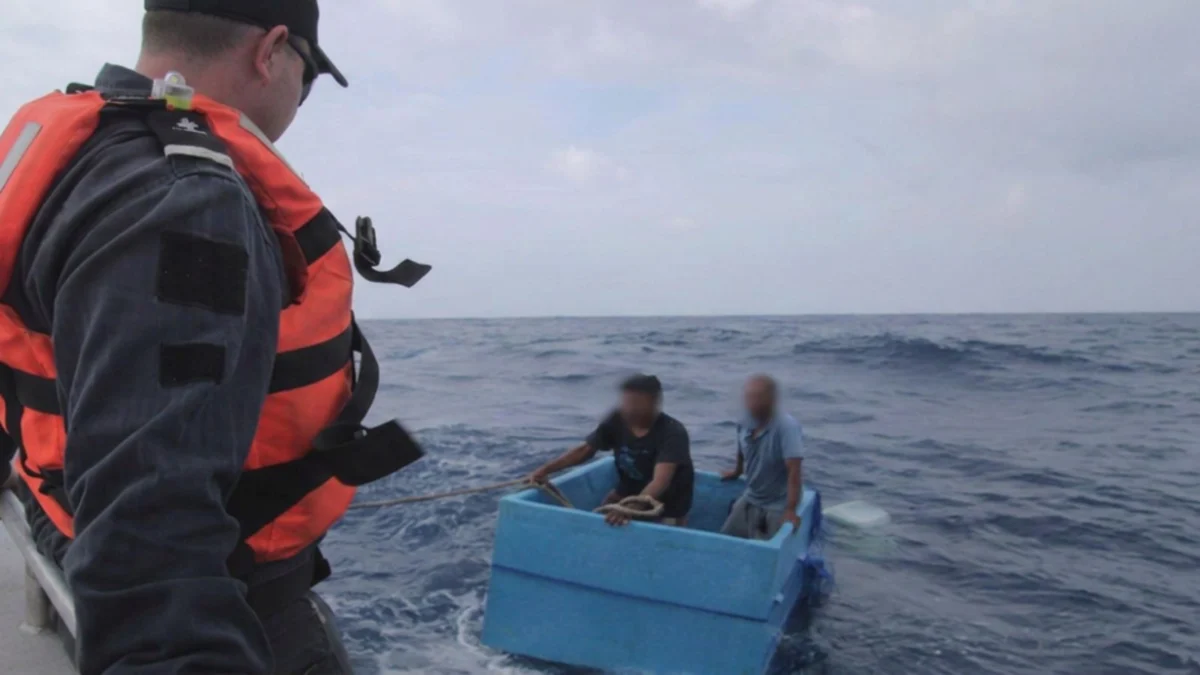
In a harrowing tale of survival that has captivated the nation, two Mexican fishermen were plucked from the vast, unforgiving expanse of the Pacific Ocean after surviving five days adrift inside a makeshift vessel—a large, blue industrial fishing cooler. The rescue, which concluded on August 20, 2026, occurred approximately 150 miles (240 kilometers) off the coast of the Mexican state of Chiapas, marking the end of a desperate, multi-day search operation by the Mexican Navy (SEMAR).
The survivors, 53-year-old Daniel Guerrero Martinez and 32-year-old Jose Luis Portelas Villegas, had been missing since August 14. Their survival, described by medical professionals as "near-miraculous" given the lack of provisions, highlights both the extreme dangers of artisanal fishing in the Pacific and the remarkable endurance of the human spirit when faced with the absolute solitude of the open sea.
The Chronology of a Crisis: From Departure to Drift
The Final Voyage of the Camaronera
On August 13, 2026, Martinez and Villegas departed from the small, coastal fishing community of Paredon. Their vessel, a boat identified as the Camaronera, was intended for a routine excursion. The waters off the Chiapas coast are vital to the local economy, but they are notoriously volatile, prone to sudden shifts in weather and strong currents that can overwhelm smaller crafts.
The trouble began on August 14. According to initial reports, the Camaronera encountered severe weather conditions—common in the late summer months—which triggered a catastrophic failure of the vessel. Whether through capsizing or structural failure, the boat went under, leaving the two men with only seconds to react. In a desperate bid for survival, the pair clung to a large, insulated blue fishing cooler that had been on the deck of their boat.
The Search Effort
When the men failed to make their scheduled check-in with their local fishing cooperative, alarm bells were raised immediately. The cooperative, recognizing the gravity of the situation, alerted the Mexican authorities on August 14, triggering a massive search-and-rescue (SAR) operation.
The Mexican Navy mobilized a "Trinomio" strategy—a specialized response framework that coordinates surface vessels, high-speed interceptor boats, and long-range aircraft. For five grueling days, search teams scoured thousands of square miles of ocean. The search area was complicated by the Pacific’s unpredictable currents, which can shift a small object like a cooler dozens of miles away from the initial site of a shipwreck.
On the morning of August 20, the effort bore fruit. A patrol vessel spotted the small blue cooler bobbing in the swells. Footage released by the Navy shows the moment of contact: the men, visibly weakened and sunburned, were hoisted from their plastic raft onto the deck of the naval vessel, finally brought to safety after 120 hours of exposure.
The Ordeal: Survival Without Sustenance
The physical toll of being adrift at sea for five days is immense. Experts note that humans can generally survive for three days without water in mild conditions; however, under the relentless sun of the Pacific, where salt spray exacerbates dehydration and the glare of the water causes severe retinal strain, the physiological limits are pushed to the breaking point.
The Psychological and Physical Toll
Both Martinez and Villegas were found suffering from severe dehydration, exhaustion, and the initial stages of hypothermia or heatstroke, depending on the cycle of the sun and night air. In a video released by the Mexican Navy shortly after their rescue, the men provided a haunting glimpse into their experience.
"We didn’t think we were going to survive these days," Martinez stated, his voice raspy. "The only thing we could do was pray to God and wait for the help of all of you here from the Navy."
Villegas echoed these sentiments, emphasizing the sheer psychological horror of their circumstances. "It was the hardest thing imaginable," he said. "I wouldn’t wish it on anybody, not even my worst enemy." The isolation of the open ocean, where the horizon remains unchanged for days and the sound of the wind and waves is the only constant, often inflicts a profound sense of hopelessness—a "survival trauma" that rescuers say takes weeks or months to process.
Official Responses and Medical Aftermath
The Mexican Navy’s role in the rescue was lauded by officials and the public alike. The successful outcome of the search underscored the importance of the Navy’s investment in maritime surveillance technology and its commitment to the safety of the nation’s artisanal fishing fleets.
Medical Stabilization
Following their extraction, both men were immediately assessed by on-board medical staff. Due to their critical condition—specifically the severity of their dehydration—they were airlifted from the patrol vessel to a port facility for more intensive care.
Doctors treating the men noted that while they were severely malnourished and dehydrated, their organs remained stable, a testament to their physical resilience. Following stabilization, they were reunited with their families in a highly emotional homecoming that was widely covered by local media. The rescue has served as a poignant reminder of the risks taken by those who work in the maritime industry, often with minimal safety equipment.
Implications: The Safety Gap in Artisanal Fishing
The incident involving the Camaronera has reignited a critical debate regarding safety standards for small-scale, independent fishing operations in Mexico. While large commercial vessels are subject to rigorous safety regulations and must carry life rafts, emergency position-indicating radio beacons (EPIRBs), and satellite communication equipment, artisanal fishermen often operate with limited resources.
The Vulnerability of Small-Scale Operations
- Communication Deficits: Many small boats lack GPS trackers or satellite phones. When a vessel sinks, the loss of communication is instantaneous, often leaving the victims to rely solely on the hope that someone on shore notices they are overdue.
- Safety Equipment: The use of a cooler as a flotation device is a common, if grim, reality for many fishermen. While the cooler provided the buoyancy needed to survive, it offered no protection against the sun, salt, or marine life.
- Environmental Risks: As climate change contributes to more volatile weather patterns, the predictability of the Pacific has decreased. Small vessels that were once considered adequate for local waters are now facing conditions that were previously rare.
The Path Forward
In the wake of this rescue, maritime experts are calling for a government-subsidized program to equip small-scale fishing cooperatives with basic distress beacons. The cost of a small satellite tracker is negligible compared to the massive expenditure required for a five-day naval search-and-rescue operation.
Furthermore, the Mexican government is facing pressure to enforce stricter weather-monitoring protocols for independent fishermen. The tragedy of the Camaronera—while ending in a successful rescue—has exposed a structural vulnerability in the regional maritime economy.
Conclusion: A Testament to Human Endurance
The story of Daniel Guerrero Martinez and Jose Luis Portelas Villegas is one that will be retold for years in the coastal villages of Chiapas. It is a story of human endurance that serves as both a celebration of survival and a wake-up call for maritime safety reform.
While the men have been returned to their families, the trauma of their five days in the Pacific will likely linger. As they recover, they stand as symbols of the thousands of men and women who head out to sea every day to provide for their families, often facing the fury of nature with little more than their faith and their wits. Their survival is a victory for the Mexican Navy, a miracle for their families, and a sobering reminder of how thin the line is between a successful day at work and a life-altering tragedy at sea.