

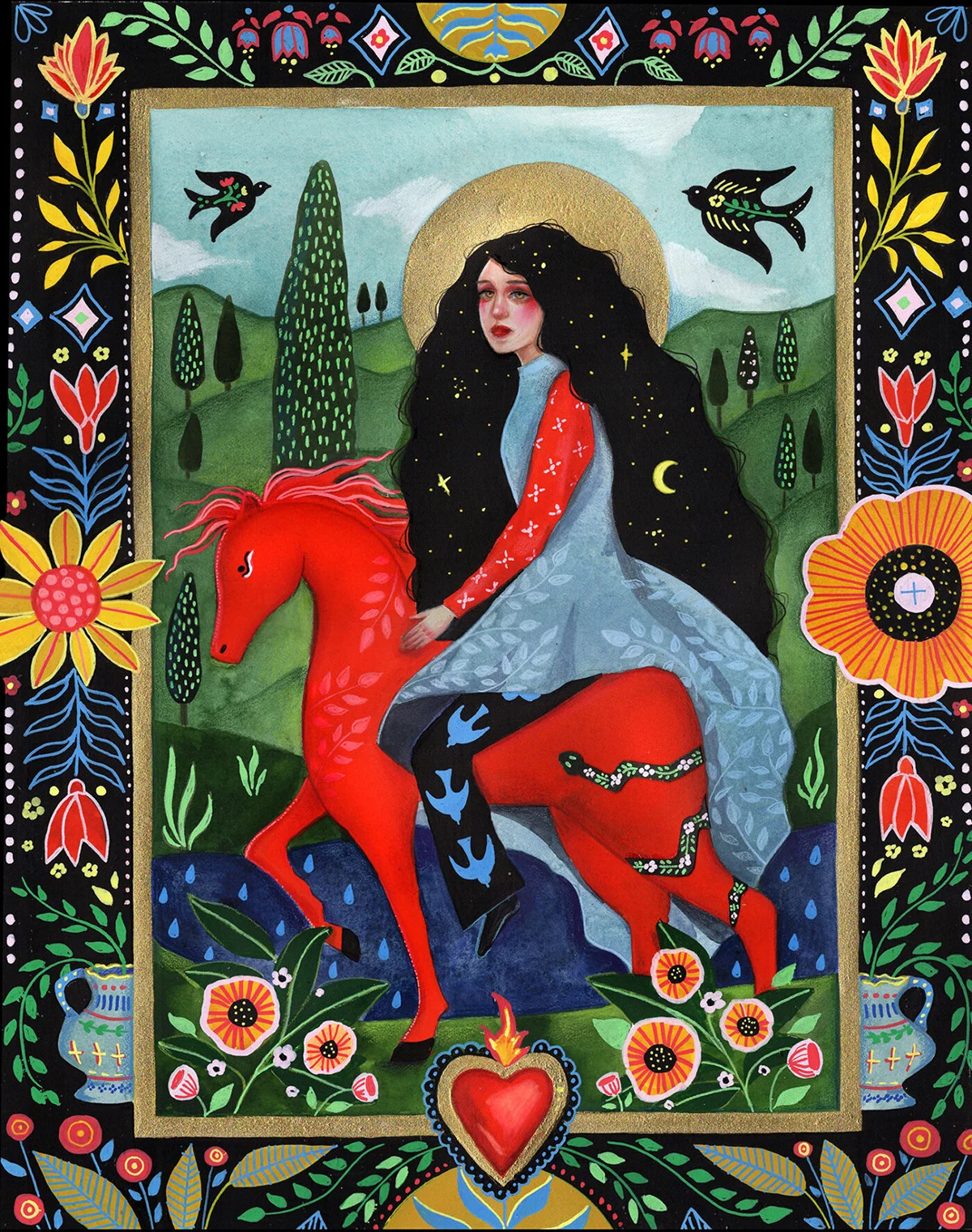
In the quiet, meticulous corridors of the contemporary art world, few artists bridge the gap between harrowing personal trauma and vibrant, triumphant visual expression as effectively as Michigan-born artist Aunia Kahn. Her work, a kaleidoscopic fusion of gouache, acrylic, oil pastel, and intricate 3D elements, serves as a testament to the endurance of the human spirit. As the art community looks toward her highly anticipated solo exhibition at Thinkspace in January 2027, Kahn’s practice stands as a poignant reminder of how art can function not merely as decoration, but as a vital, life-sustaining mechanism.
The Genesis of an Aesthetic: Main Facts
Aunia Kahn’s artistic vocabulary is built upon layers—both physical and metaphorical. Her compositions are rarely flat; they utilize a tactile, multi-media approach that invites the viewer to look closer. By integrating traditional painting mediums like gouache and acrylic with the sculptural dimension of hand-painted 3D elements, she creates a world that feels simultaneously ethereal and grounded.
The primary subject matter of Kahn’s work is deeply rooted in personal narrative. It is an exploration of the psyche, often featuring figures that embody a sense of rebirth, vulnerability, and eventual empowerment. Her use of symbolism is deliberate; she employs color and living forms to articulate experiences that might otherwise remain inexpressible. For Kahn, the canvas is a site of negotiation between the past—marked by adversity—and the present, characterized by a hard-won gratitude for existence.
A Chronology of Survival: The Path to the Studio
To understand the depth of Kahn’s work, one must acknowledge the crucible in which it was forged. Her path to the professional art world was not traditional, nor was it paved with ease.
- The Early Years (Formative Struggles): Kahn’s upbringing was defined by instability, creating a psychological backdrop of longing and isolation. These early experiences established the initial themes of her work: a desire to connect with a world that often felt inaccessible.
- The Two-Decade Battle (1995–2015): Perhaps the most significant chapter in her life was a twenty-year struggle with a mysterious, undiagnosed health crisis. During this period, the physical body became a prison, and the outside world became a distant, often unreachable concept. It was during these long, isolated stretches that art transitioned from a hobby to a life-saving necessity.
- The Turning Point (2015–2020): As her health began to stabilize, the tone of her work shifted. The earlier, darker manifestations of pain began to give way to a narrative of evolution. The focus moved from mere endurance to an active, intentional celebration of survival.
- Contemporary Practice (2020–Present): Today, Kahn’s studio practice is a refined ritual of gratitude. Her current output is defined by a newfound clarity, focusing on the beauty of the human form and the resilience inherent in the act of living.
The Anatomy of the Work: Supporting Data and Methodology
Kahn’s methodology is as complex as her subject matter. By utilizing a hybrid approach to materials, she challenges the static nature of the painting medium.
The Materiality of Healing
The selection of mediums—gouache, oil pastel, and acrylic—allows for a range of opacity and texture that mimics the layers of the subconscious. Gouache offers the matte, punchy color necessary for her vibrant palettes, while oil pastel provides the soft, human touch that grounds the more surreal elements of her compositions. The addition of hand-painted 3D elements is arguably her most signature innovation; these elements break the fourth wall, literally protruding into the viewer’s space.
Symbolism as Language
In the absence of a spoken language that could adequately describe two decades of chronic illness, Kahn developed a symbolic one. Her recurring motifs—birds, flora, and figures caught in moments of transition—serve as proxies for her own physical and spiritual state. When she speaks of "rebirth," she is not using a metaphor loosely; she is describing the literal experience of regaining bodily autonomy after years of health-induced limitations.
Official Responses and Curatorial Perspectives
The art world has taken significant notice of Kahn’s trajectory. Her upcoming solo show at Thinkspace in January 2027 is a milestone that marks her transition from a compelling individual voice to a major figure in the contemporary landscape.
Curators at Thinkspace, known for their focus on the "New Contemporary" movement, have noted that Kahn’s work resonates specifically because of its raw emotional honesty. In an era where digital art and AI-generated imagery are becoming prevalent, Kahn’s work—which is deeply tactile, manual, and intensely personal—offers a necessary human anchor. The gallery’s commitment to her 2027 show signifies an institutional belief that her work is not just visually arresting, but culturally essential.
Implications: The Role of the Artist in Modern Society
Kahn’s practice invites us to consider the broader implications of art as a therapeutic tool. Her story challenges the "starving artist" trope, replacing it with the "surviving artist" narrative.
Art as a Lifeline
Kahn’s own words provide the most direct insight into the function of her work: "My art springs from a deep longing to connect with a world where my presence has been limited. Creativity became my lifeline during two decades of battling an undiagnosed illness." This statement carries profound weight. It suggests that for many artists, the studio is not just a place of production, but a sanctuary of survival.
The Evolution of Personal Narrative
As Kahn moves toward her 2027 solo exhibition, the implications of her work suggest a shift in how we interpret "trauma-informed" art. Often, such art is viewed through a lens of victimhood. Kahn’s work, however, flips this perspective. She presents trauma as the catalyst for growth, rather than the end-point of the narrative. By focusing on "rebirth and self-discovery," she provides a blueprint for viewers who may be seeking their own sense of agency amidst chaos.
Looking Forward: The 2027 Horizon
The announcement of her January 2027 exhibition at Thinkspace comes at a time when the art world is increasingly focused on themes of wellness, mental health, and the physical reality of the artist’s life. Kahn is uniquely positioned to lead this conversation. Her work is a bridge—connecting the private, often painful experience of illness with the public, celebratory act of creating art.
For those interested in following the trajectory of this Michigan-born visionary, her evolution from the shadows of chronic illness into the bright, layered reality of her current work offers a roadmap for resilience. Whether through her delicate pencil work or her bold, 3D-accented canvases, Aunia Kahn is effectively reminding us that the act of creating is, in its purest form, an act of defiance against the limitations of the human condition.
As we approach the 2027 show, the art community will undoubtedly be watching closely. Not only for the technical evolution of her craft but for the continued unfolding of a life that has, against all odds, chosen to bloom. Her journey serves as a powerful reminder: to create is to live, and to share that creation is the ultimate form of connection.
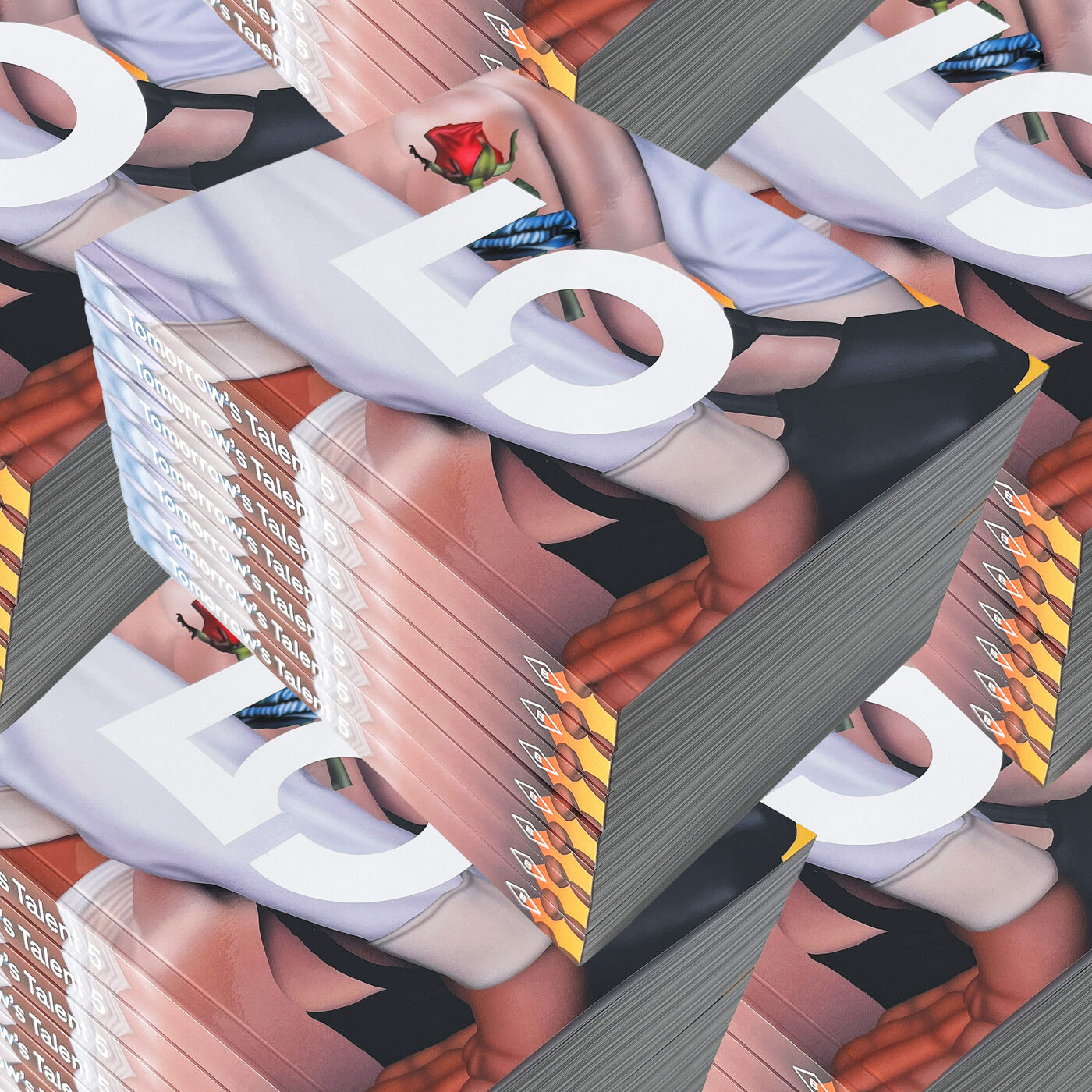
For those interested in exploring further narratives of contemporary talent, we invite you to review the "Tomorrow’s Talent 5" collection, a 276-page volume highlighting over 60 artists pushing the boundaries of their respective fields. Additionally, readers can keep up with the latest in the art world by joining our Secret Email Club, which provides curated links, open calls, and industry insights not found anywhere else.









No comments yet. Be the first to join the conversation!