Laily UPN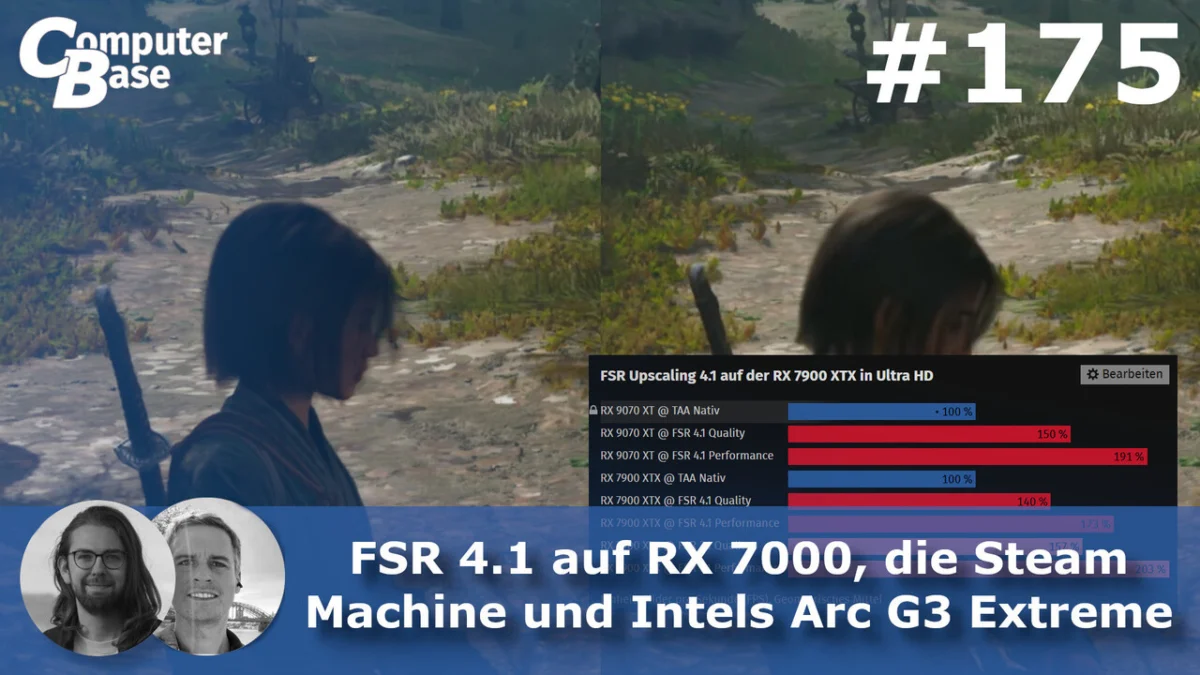
In the fast-paced world of hardware releases, timing is everything—or, as this week’s episode of the CB-Funk podcast demonstrates, timing is often a chaotic mess of unexpected updates and puzzling product strategies. This week, hosts Jan and Fabian dive deep into a trifecta of industry-shaping developments: the surprise rollout of AMD’s FSR 4.1 for the Radeon RX 7000 series, the polarizing retail launch of the new Steam Machine, and the ongoing silicon war between Intel and AMD in the handheld gaming space.
The Main Event: FSR 4.1 Arrives on RDNA 3
For months, the hardware community speculated that AMD would reserve its next-generation AI-upscaling technology, FSR 4.1, exclusively for the upcoming RDNA 4 architecture. Expectations were firmly set for a July reveal. However, in a move that caught analysts and enthusiasts off guard, AMD bypassed the expected timeline, delivering the update to the existing Radeon RX 7000 series (RDNA 3) ahead of schedule.
Analyzing the Technical Leap
Wolfgang, the lead tester at ComputerBase, has spent the last several days putting the new FSR 4.1 implementation through its paces. The goal was twofold: to evaluate the raw image quality gains over previous iterations (such as FSR 3.1) and to measure the performance impact on RDNA 3 hardware.
The early findings are compelling. FSR 4.1 marks a distinct shift toward more sophisticated AI-driven reconstruction, moving away from the purely temporal scaling methods that defined earlier versions of the tech. When compared to "native" resolutions on RDNA 4 hardware, the FSR 4.1 upscaling on RX 7000 cards demonstrates a remarkable ability to retain fine texture detail while minimizing the shimmering artifacts that plagued earlier FSR iterations. The podcast episode dissects these benchmarks, highlighting that while the software is "backported" to current hardware, the efficiency gains suggest that AMD’s software-side optimization is finally maturing at a rate that keeps older cards competitive with next-gen silicon.
The Steam Machine Controversy: A Launch to Forget?
If the FSR 4.1 release was a triumph of unexpected utility, the concurrent launch of the new "Steam Machine" has been a masterclass in market confusion. After years of dormancy, the brand was resurrected this Monday, but the reception has been anything but warm.
The Financial and Structural Barriers
The device hit the market at a price point exceeding €1,000—a figure that immediately placed it in a premium, if not luxury, tier. However, the price is only the beginning of the controversy. Valve and its partners implemented a "lottery" system for the initial purchase wave, a strategy that has drawn ire from the core gaming community who feel that such tactics belong in the hype-cycles of limited-edition sneakers rather than hardware sales.
Perhaps most baffling is the absence of FSR 4.1 support at launch. Given that AMD is a primary partner in the silicon powering these devices, the lack of its latest AI upscaling tech in a high-end, newly released system feels like a missed opportunity of massive proportions. The CB-Funk hosts examine why this decision was made and what it implies for the future of the platform’s software integration. Is this a temporary limitation, or a sign that the Steam Machine is struggling to maintain feature parity with modern PC standards?
The Handheld SoC Duel: Intel Arc G3 Extreme vs. The Field
The third pillar of this week’s technical discussion is the battle for dominance in the handheld gaming SoC (System-on-a-Chip) market. The recent testing of the Intel Arc G3 Extreme, featured in the MSI Claw 8 EX AI+, provides a fascinating look into Intel’s "Panther Lake" architecture.
Silicon Under the Microscope
Intel is fighting a two-front war: trying to displace the incumbent AMD Ryzen Z2 Extreme while also proving that its Arc integrated graphics are viable for the power-constrained environment of handheld devices. The podcast provides a "behind the scenes" look at the testing methodology used to compare these chips.
The data suggests that while Intel has made massive strides in power efficiency and clock-speed stability, AMD’s maturity in driver support and integration with FSR technologies remains a formidable hurdle. For consumers, this is the most exciting development in the industry: a genuine arms race for the "heart" of the next generation of portable gaming devices.
Chronology of the Week’s Events
- Monday: AMD officially triggers the surprise release of FSR 4.1 for the Radeon RX 7000 series, catching the market off-guard.
- Monday (Concurrent): The Steam Machine launches in a limited lottery-based release, immediately sparking debate over its €1,000+ price tag.
- Tuesday: Independent benchmarks for FSR 4.1 begin to circulate, showing significant improvements in image stability over FSR 3.1.
- Wednesday: Analysis of the Intel Arc G3 Extreme SoC reveals competitive performance figures, though questions regarding long-term driver support persist.
- Thursday: The CB-Funk team records Episode 175, synthesizing these events into a coherent analysis for the community.
Supporting Data: Why This Matters
The intersection of these three stories paints a picture of a hardware industry in transition.
- AI-Upscaling Maturity: FSR 4.1 confirms that AI-driven reconstruction is no longer a "nice to have" feature but a core requirement for modern GPU performance. By pushing this to the RX 7000 series, AMD is effectively extending the lifespan of their current hardware, which is a significant value proposition for the consumer.
- Market Pricing Sensitivity: The backlash against the Steam Machine’s pricing model serves as a reminder that even high-end enthusiasts have a "price-to-value" ceiling. The inclusion of a lottery system suggests that either supply is severely constrained, or the manufacturer is intentionally creating scarcity—a strategy that rarely yields long-term brand loyalty in the PC hardware space.
- Intel’s Pivot: The Arc G3 Extreme represents Intel’s "make or break" moment in the handheld space. If they can successfully challenge the AMD Ryzen Z2 Extreme, it will force a more aggressive pace of innovation for both companies, ultimately benefiting the end-user through better hardware efficiency.
Implications for the Future
What does this all mean for the average gamer?
First, the rapid deployment of FSR 4.1 suggests that AMD is prioritizing software parity across its hardware generations. Users who bought an RX 7000 card can feel confident that they won’t be abandoned as RDNA 4 rolls out.
Second, the Steam Machine launch serves as a cautionary tale. While the hardware itself may be impressive, the "soft" launch elements—pricing, availability, and software readiness—are just as critical as the silicon itself. If a device lacks the latest software features like FSR at the moment of purchase, it starts its lifecycle at a disadvantage.
Finally, the handheld wars are just heating up. With Intel finally putting real pressure on AMD, the next twelve months will likely see a rapid iteration of handheld devices, with more power, better battery life, and more advanced upscaling features.
Engaging with the Community
As always, the CB-Funk podcast serves as a platform for deeper engagement. The hosts are currently soliciting listener questions, which have become a staple of the show. Whether you are curious about the technical nuances of AI upscaling, want to know more about the internal struggles of the Steam Machine project, or have questions about the editorial process at ComputerBase, the team is listening.
Listeners can submit their inquiries via:
- Email: [email protected]
- Forum/Discord: Direct messages to the editorial team.
The CB-Funk podcast remains available across all major platforms, including Spotify, Apple Podcasts, Amazon Music, and Deezer, with a full archive available on the ComputerBase website. As the hardware landscape continues to evolve, these weekly deep dives remain an essential resource for those who want to look past the press releases and understand the engineering and market realities driving the technology we use every day.


 Basiran
 Pevita Pearce