Iffa Jayyana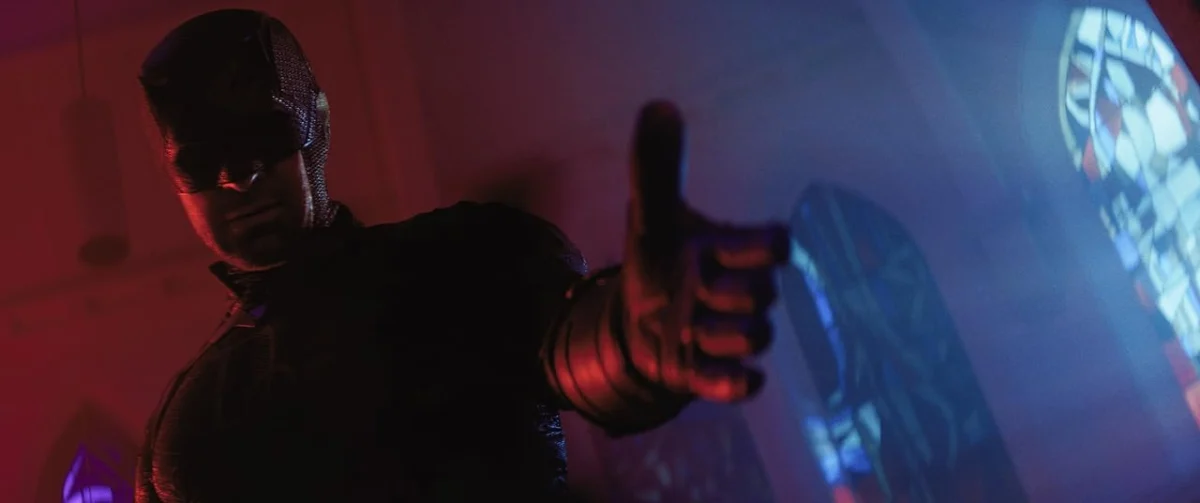
By Editorial Staff
In the landscape of modern television, few revivals have carried the weight of expectation that Daredevil: Born Again faced upon its announcement. Following a tumultuous production cycle and the daunting task of living up to the legacy of the Netflix-era series, the show has officially hit its stride. However, it is the recent installment, "The Grand Design," that serves as a watershed moment for the series. By deftly weaving together the ghosts of the past with the visceral, high-stakes violence of the present, the episode not only secures its place as the strongest entry of the season but arguably rivals the narrative peak of the original show’s most celebrated hours.
The Core Conflict: Past Meets Present
The narrative architecture of "The Grand Design" relies on a dual-track structure: the immediate, blood-soaked aftermath of the "Gloves Off" cliffhanger and a series of meticulously crafted flashbacks to the early days of Nelson and Murdock.
In the present day, Matt Murdock finds himself in the unenviable position of rescuing the wounded Dex. Their dynamic is one of the most intellectually stimulating aspects of the season. Dex, fueled by a delusional conviction that his survival is ordained by a divine "grand design," challenges Matt’s morality. When he asks the existential question—Why save him?—the episode provides a profound answer through the lens of history.

The flashbacks, set during the duo’s internship at the morally bankrupt law firm Landman and Zach, provide the necessary context. We see a younger, grittier Matt Murdock—one whose righteous fury at the world’s injustices is only just beginning to crystallize into the vigilantism fans recognize. Through Elden Henson’s reprisal of Foggy Nelson, the show highlights the character’s unwavering altruism. Foggy is not merely the comic relief; he is the moral compass that prevents Matt from descending into the abyss of his own cynicism. The decision to have them risk their careers to help a client, Lionel "Ray" McCoy, serves as a masterclass in character development, illustrating that Matt’s current mercy toward Dex is a direct evolution of the lessons he learned alongside his lifelong friend.
Chronology of a Tragedy: The Death of Vanessa Fisk
Perhaps the most significant development in the episode is the definitive death of Vanessa Fisk. The sequence is handled with a cold, clinical grace that stands in stark contrast to the operatic chaos surrounding Wilson Fisk.
As Vanessa drifts in and out of consciousness in the hospital, her visions offer a haunting reflection of her character. The flashbacks to her initial meeting with Wilson—and her calculated decision to display the "Rabbit in a Snowstorm" painting—reveal that her manipulative instincts were present long before she met the Kingpin. She didn’t just fall for Wilson; she identified his "deep emptiness" and sought to mirror it.
The final moments of her life are marked by a tragic irony. Wilson Fisk, a man who has exerted control over the entire city of New York, finds himself utterly powerless against the biological reality of his wife’s deteriorating condition. His frantic interference with the hospital staff, combined with his refusal to allow proper medical intervention until his specific demands for pineapple juice were met, underscores his profound instability. When Vanessa finally seizes and passes away, the loss is not merely personal; it is the catalyst for the next phase of the Kingpin’s evolution.

Supporting Data: The Underbelly of the Kingpin’s Empire
The episode does not shy away from the granular details of the criminal underworld. The introduction of Buck—a former British Special Air Service operative turned Fisk’s new enforcer—provides a dark mirror to the departed James Wesley.
The sequences involving Daniel and Buck offer a chilling look at the price of loyalty in Fisk’s organization. During an extended, tension-filled drive upstate, Buck’s monologue regarding war crimes and the "Kingpin cause" serves as a harrowing reminder that the hierarchy of the MCU’s criminal elite is built on blood. The revelation that Buck was tasked with cleaning up the loose end of Lionel McCoy—only to find the target had escaped—connects the flashback timeline to the current plot with satisfying precision.
Furthermore, the involvement of James Wesley in these past events adds a layer of depth to the series’ lore. By framing Wesley as the architect of the Fisk/Vanessa union, the writers have successfully retrofitted the narrative in a way that feels organic rather than forced. It suggests that while the Fisks believe in fate, the reality is far more orchestrated—a testament to the meticulous, calculating nature of the Kingpin’s inner circle.
Official Implications and Thematic Weight
The return of Foggy Nelson, even through the medium of flashbacks, has sparked significant debate regarding the creative direction of Born Again. While the show has successfully established a new status quo, the chemistry between Charlie Cox and Elden Henson remains the series’ primary heartbeat.

The episode forces the audience to confront the "what if" scenarios of the Daredevil mythos. By highlighting how the bond between Matt and Foggy served as the foundation for Matt’s heroic journey, the writers have made the absence of that bond in the present day feel even more acute. This creates a powerful narrative tension: Matt is carrying the weight of his city, his guilt, and his memories, and the viewer is left to wonder if he can maintain his path without his partner’s grounding influence.
The episode concludes with a chilling realization: the death of Vanessa Fisk is not an end, but a beginning. With Matt and the wounded Dex arriving at the resistance hideout, and Karen Page’s reaction radiating a mixture of shock and righteous fury, the stage is set for a collision of ideologies.
Critical Assessment: A Triumph of Performance
"The Grand Design" succeeds largely because of its cast. Charlie Cox delivers one of the most nuanced performances of his career, navigating the transition between the hopeful, ambitious young lawyer of the past and the battered, guilt-ridden protector of the present. Vincent D’Onofrio continues to redefine the villain archetype, bringing a terrifying, childlike vulnerability to Wilson Fisk that makes his eventual outbursts of rage feel earned and unpredictable.
Ultimately, the episode functions as both a tribute to what came before and a bold step into the future. By anchoring the high-concept drama of the MCU in the intimate, character-driven stakes of a legal case, Daredevil: Born Again has proven that its greatest strength is not its action sequences, but the people who occupy its world. As the city braces for the fallout of Vanessa’s death, one thing is certain: the "grand design" of the series has never been clearer, and the consequences for the people of Hell’s Kitchen will be permanent.

The show has successfully navigated the difficult task of honoring its past while aggressively pushing its narrative forward, ensuring that the legacy of Daredevil remains one of the most compelling chapters in the Marvel Cinematic Universe.

 Sagoh
Sagoh
 Ammar Sabilarrohman