Nana
Nana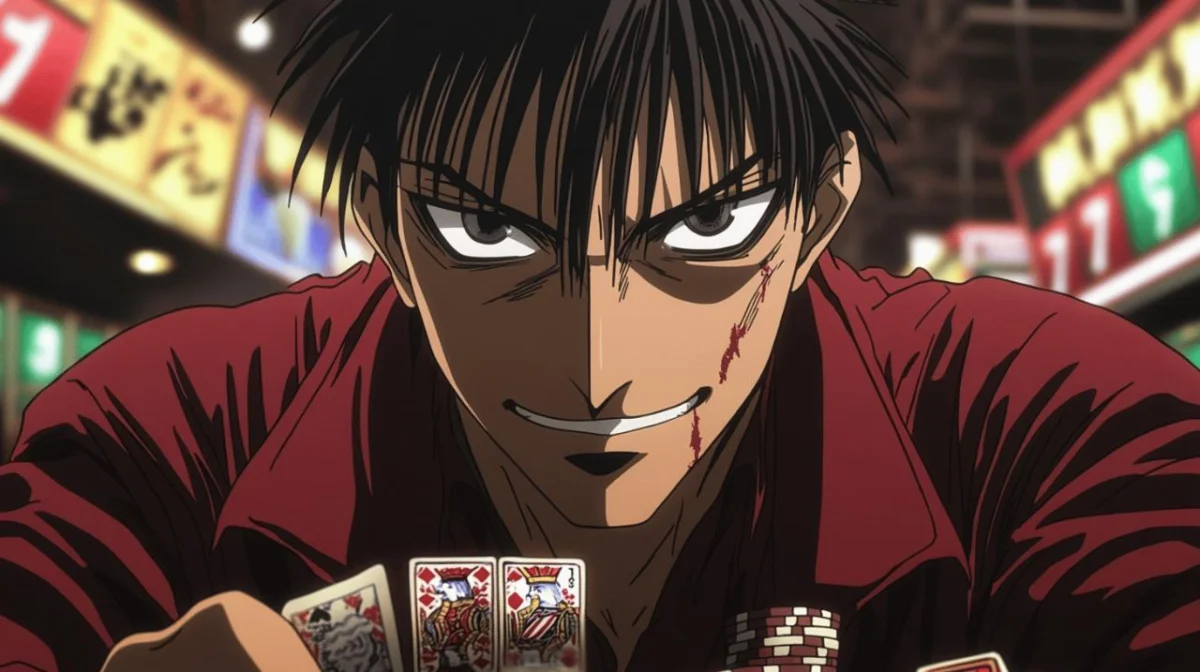
In the vast landscape of Japanese manga and anime, few works have managed to capture the visceral, bone-chilling essence of human desperation as effectively as Nobuyuki Fukumoto’s Kaiji: Ultimate Survivor. Since its debut in Young Magazine in 1996, the series has transcended the medium of seinen manga to become a cultural touchstone. It is a harrowing exploration of the fragility of the human spirit when confronted with the crushing weight of systemic debt, gambling addiction, and the predatory nature of Japan’s underground economy. With over 21.5 million copies in circulation as of 2019, Kaiji stands not merely as a story about games, but as a chilling indictment of societal indifference.
The Genesis of a Modern Classic: Main Facts
At its core, Kaiji is the story of Kaiji Itou, a man adrift in a society that offers no safety net for the fallen. After dropping out of school and failing to find stable employment in the wake of Japan’s economic stagnation, Kaiji finds himself in a position all too familiar to many of his contemporaries: he is drowning in a debt of 3,850,000 yen (approximately 28,705 euros).
The narrative hook is deceptively simple: to clear his debt, Kaiji is lured onto a ship called the Espoir, where he is invited to participate in "Restricted Rock-Paper-Scissors." What follows is a brutal deconstruction of hope. Fukumoto’s masterpiece is characterized by its shift away from action-oriented tropes toward a high-stakes psychological battlefield where the currency is not just money, but life itself.
A Chronological Descent into Darkness
The journey of Kaiji Itou is marked by a series of increasingly perilous "games" orchestrated by the Teiai Corporation, a predatory organization that functions as a shadow bank for the desperate.
- 1996–1999: The Foundation of Fear: The initial arc establishes the tone. From the Espoir to the "Human Derby," the reader witnesses the total dehumanization of the players. The games are not about luck; they are about understanding the flaws in the human psyche.
- 1999–2003: The Underground Labor Camps: After his initial failures, Kaiji is sent to a forced labor camp, a literal pit of despair where he must endure years of hard labor to pay off interest that never seems to decrease. This segment serves as a scathing critique of modern corporate exploitation.
- 2003–2008: The Pachinko SWAMP: This arc is widely considered the magnum opus of the series. The SWAMP is a pachinko machine so heavily rigged that it is functionally impossible to win—until Kaiji discovers the one mathematical anomaly that could potentially bankrupt the house.
- 2007–Present: Media Proliferation: The franchise expanded significantly with the 2007–2008 anime adaptation by Madhouse, followed by a second season in 2011 and three live-action feature films (2009, 2011, and 2020), solidifying its status as an international phenomenon.
Supporting Data: The Economics of Despair
The enduring power of Kaiji lies in its cold, hard realism regarding financial ruin. The series does not shy away from the math of exploitation. In the SWAMP arc, for instance, the stakes are elevated to 700 million yen—an amount that represents total financial liberation or permanent slavery.
The success of the manga is bolstered by its brutal consistency. According to industry sales records, the series’ longevity is a testament to its resonance with a generation that has grown up in a world of limited social mobility. The "Teiai Corporation," while fictional, mirrors the predatory lending practices that have historically plagued Japan’s economic margins. The series highlights how debt is not just a financial burden but a tool of social control used to turn citizens into disposable capital.
The Psychological Mechanics: Why It Works
What separates Kaiji from other "survival" stories is its relentless focus on the "internal monologue." Fukumoto utilizes a unique, angular, and highly expressive art style to convey the agonizing mental state of his characters. When a character faces a choice between winning and dying, their face becomes a landscape of distorted emotion—a visual representation of the internal collapse caused by extreme stress.
The games themselves, such as "E-Card" or the "Tissue Box Raffle," are masterpieces of game theory. They force the audience to think like the characters. We are not just watching Kaiji suffer; we are calculating the odds, analyzing the behavioral tells of his opponents, and agonizing over the inevitable betrayal.
Implications: The Legacy of the "Survival Game" Genre
The influence of Kaiji cannot be overstated, particularly in the wake of the global success of Squid Game. The structural parallels are undeniable:
- The Debtor Protagonist: A person from the lower rungs of society, burdened by insurmountable debt, enters a competition where death is the penalty for failure.
- The Elitist Audience: In both Kaiji and its modern successors, the games are watched or facilitated by an ultra-wealthy elite who view human suffering as entertainment.
- The Critique of Capitalism: Both works use the "game" as a metaphor for the real-world economy, where the rules are rigged to ensure that the house always wins, and the poor are left to cannibalize one another for a chance at survival.
Kaiji paved the way for the "survival game" genre by proving that audiences are captivated by the intersection of high-stakes gambling and profound human pathos. It stripped away the glamour often associated with betting and replaced it with the raw, terrifying reality of losing one’s humanity.
Official Critiques and Cultural Response
Critics and sociologists have often pointed to Kaiji as an unintentional documentary of the "Lost Decade" in Japan. The character of Kaiji Itou serves as an avatar for the disenfranchised youth who feel discarded by the rigid corporate structures of their country.
The series has received numerous accolades, including the Kodansha Manga Award in 1998, which validated its status as serious literature. However, the true response is found in its longevity. In an era where media is consumed and forgotten within weeks, Kaiji has remained relevant for over two decades. Its ability to pivot from a simple story about gambling to a complex meditation on the nature of courage, intelligence, and greed is why it continues to be studied by fans and scholars alike.
Conclusion: The Mirror of the Underground
Kaiji: Ultimate Survivor is a grim, unflinching, and ultimately essential piece of media. It forces us to ask: how far would we go to change our circumstances? When the lights go out and the systems of society fail us, what remains of our moral compass?
By documenting the struggle of a man who refuses to stay down, even when the world demands he surrender, Nobuyuki Fukumoto has created more than a comic book. He has created a cautionary tale that resonates with the universal fear of losing control. Whether through the lens of a pachinko machine or the high-pressure environment of an E-Card duel, Kaiji reminds us that in the game of life, the biggest risk is not losing your money, but losing your resolve to fight for your own dignity.


 Siti Muinah
 Azzam Bilal Chamdy