

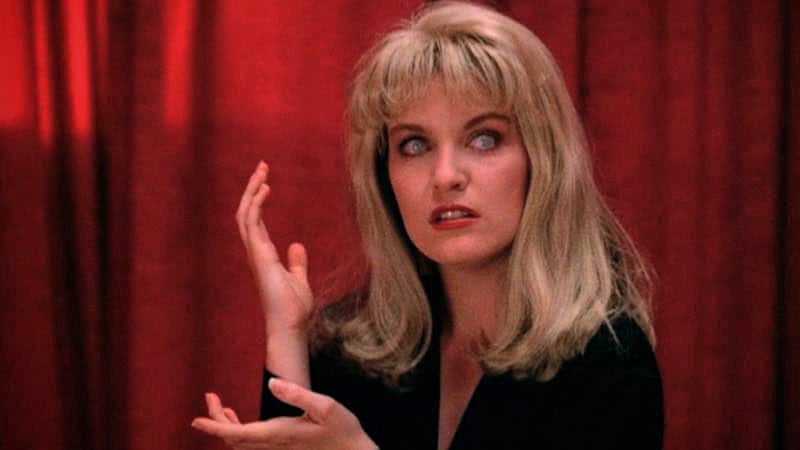
It is a sound that lingers long after the television screen fades to black—a mournful, synthesized wind, a slinky jazz clarinet, or the melancholic ache of a solitary electric guitar. To those who have walked the foggy, Douglas-fir-lined streets of the fictional town of Twin Peaks, the music is not merely background noise; it is the very soul of the narrative. Twin Peaks is a supernatural, soap-operatic, surrealist, and pulpy police procedural all at once. That these disparate genres coalesce into a singular, cohesive experience is, in large part, due to the transformative power of its sound design and musical score.

Main Facts: The Lynch-Badalamenti Paradigm
The bedrock of the Twin Peaks sound is the legendary collaboration between creator David Lynch, composer Angelo Badalamenti, and vocalist Julee Cruise. Having first established their signature atmospheric style with Lynch’s 1986 film Blue Velvet, the trio crafted a sonic landscape that defied the conventions of 1990s network television.

As Lynch once noted, "Cinema is sound and picture, flowing together in time. To me, the director is supposed to guide what people see from beginning to end and what people hear from beginning to end." The score for Twin Peaks functions as an emotional barometer, tracking the show’s wild tonal shifts—from the high-camp melodrama of the local high school drama to the soul-crushing horror of the Black Lodge. The music is a peculiar, inviting melange of 1950s teen pop, ambient jazz, modernist dissonance, and experimental electronica. By blending the nostalgia of mid-century jazz with the unsettling, cold textures of synthesizers, the sound design achieves an "uncanny" quality—something familiar yet deeply wrong.

Chronology of a Sonic Revolution
- 1990–1991: Twin Peaks premieres on ABC. It is widely credited with helping usher in the era of "auteur television," where the singular vision of the creator dominates the production. The original soundtrack becomes a cult phenomenon, defining the aesthetic of the early 90s.
- 2017: After a 26-year hiatus, Twin Peaks: The Return airs on Showtime. The musical landscape shifts significantly. Gone is much of the "finger-popping jazz quirk" of the original run; in its place, David Lynch and music supervisor Dean Hurley introduce a more atmospheric, abrasive, and avant-garde soundscape.
- Post-2017: Despite nine Emmy nominations for The Return, the series remains a challenging, polarizing masterpiece. The Internet continues to churn with rumors of a Season 4, though the legacy of the show’s sound remains its most indelible contribution to media studies.
Supporting Data: The Anatomy of Iconic Sequences
To understand the genius of the show’s sound, one must look at specific moments where music dictates the psychological state of the audience.

1. The Birth of BOB (The Return, Episode 8)
Perhaps the most audacious sequence in modern television history, the origin of the malevolent spirit BOB is scored not by a traditional melody, but by Krzysztof Penderecki’s Threnody for the Victims of Hiroshima. This 1960 work for 52 string instruments uses extended techniques—screeches, dissonant clusters, and plucking—to represent the metaphysical trauma of the atomic age. By pairing the Trinity nuclear test with this searing, atonal masterpiece, Lynch transforms a historical event into a cosmic horror origin story.

2. The "I Am the F.B.I." Moment
In Episode 16 of The Return, after a long, grueling journey as the catatonic Dougie Jones, Agent Dale Cooper finally returns. The music used is "Falling," the original theme from the 1990 pilot. Its inclusion acts as a masterclass in narrative tension; the stately, sighing guitar lines and keyboard swells provide an emotional catharsis that justifies the audience’s patience through the show’s most experimental episodes.

3. Audrey’s Dance
In the first season, Audrey Horne’s dance at the Double R Diner serves as a template for the show’s blurring of reality and surreality. When Audrey plays a song on the jukebox, the diegetic sounds of the diner fade away, leaving only a slinky, jazz-inflected vamp. The ambiguity—is the music playing in the room, or is it a projection of Audrey’s internal state?—remains one of the most effective uses of music in television history.

Official Responses and Creative Philosophy
The transition from the warmth of the original seasons to the colder, more detached atmosphere of The Return was a deliberate creative choice. Dean Hurley, Lynch’s long-time music supervisor, noted in an interview with Vulture that upon reading the scripts for the 2017 season, it was "pretty obvious that the majority of that original finger-popping jazz quirk was not the tone of this thing."

This aligns with Lynch’s own philosophy on "auteur television." He believes that for a project to truly "hold together," the sound and image must pass through one person’s filter. The music isn’t there to support the scene; it is there to define the reality of the scene. When Leland Palmer sings "Get Happy" while his family sits in terror, the contrast between the upbeat song and the horrifying context creates a dissonance that is uniquely Lynchian.

Implications for Modern Media
The legacy of the Twin Peaks soundtrack extends far beyond the cult following of the show itself. It proved that audiences are willing to engage with "difficult" music—atonal strings, ambient drones, and experimental soundscapes—provided they are framed within a compelling narrative.

Musicologist Brooke McCorkle has argued that the "blurring between the real and the fantastic" is a cornerstone of the Lynchian aesthetic. By using sound to puncture the boundary between diegetic and non-diegetic worlds, Twin Peaks taught a generation of filmmakers that the most frightening thing is not what you see, but what you hear.

As we look back, it is clear that Twin Peaks did more than change television; it changed the way we listen to it. The music remains a character in its own right—frightening, delicate, droll, and haunting. As Daniel DiPaolo, a pianist and educator, aptly put it: "The music will come to haunt your days and nights." Whether it is the soft, sustained synths of a suburban dinner table or the piercing violins of a nuclear apocalypse, the music of Twin Peaks ensures that the town, and its mysteries, will never truly be left behind.

For those who have yet to experience it, be warned: once you enter the Black Lodge, the music stays with you forever.










No comments yet. Be the first to join the conversation!