Asro
Asro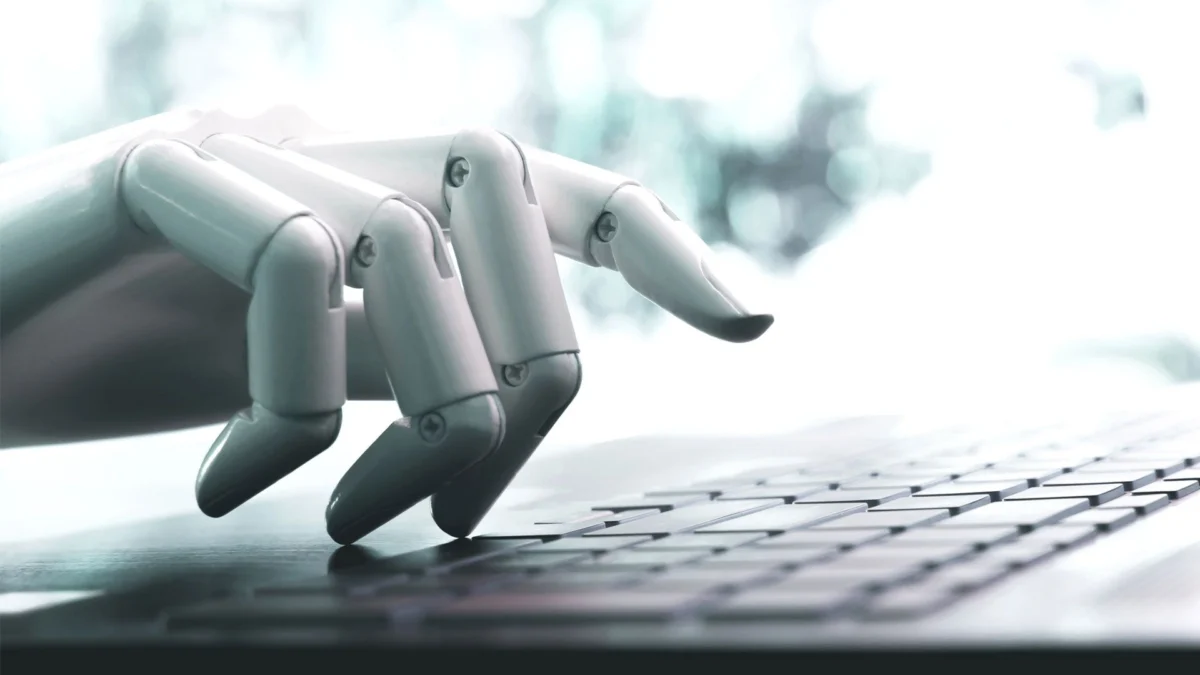
In the modern job market, the intersection of technology and human resources has reached a critical tipping point. As generative artificial intelligence (AI) tools like ChatGPT, Claude, and Gemini become ubiquitous, job seekers are increasingly turning to these platforms to draft, refine, and polish their resumes. However, a growing body of evidence suggests that what appears to be a technological advantage may actually be a significant hurdle in the quest for employment.
New research from the career platform Kickresume has sounded a cautionary alarm: recruiters are increasingly fatigued by the influx of AI-generated content. According to the data, over half (56%) of surveyed recruiters report that they frequently or always encounter resumes containing AI-generated text. Furthermore, 67% of hiring professionals have noted a marked increase in the prevalence of AI-crafted documents over the past year. This phenomenon, while born of a desire for efficiency and professionalism, is creating a "sea of sameness" that makes it increasingly difficult for authentic candidates to distinguish themselves.
The Core Conflict: Human Authenticity vs. Algorithmic Perfection
The primary function of a resume is to serve as a bridge between a candidate’s history and a prospective employer’s needs. It is intended to be a curated narrative of a professional’s specific journey, unique character, and tangible skills.
Recruiters argue that AI-generated text—while grammatically flawless and syntactically sophisticated—often lacks the vital "human spark" required to make a candidate memorable. By prioritizing a polished, sterile aesthetic, applicants risk stripping their professional profiles of the very personality that might align them with a company’s culture.
The report highlights that the professional CV writing community is particularly concerned about the rise of "boiler-plate" content. Roughly 63% of professional resume writers identified generic, templated language as the most significant drawback of AI-assisted job applications. When every resume follows the same sophisticated, predictable structure, the competitive advantage of having a "perfect" resume vanishes, leaving hiring managers with a stack of identical-sounding documents.
Chronology of the AI Job-Hunting Trend
To understand how we reached this point, it is necessary to look at the rapid evolution of job-seeking tools:
- Pre-2022: The resume landscape was dominated by human-written content, occasionally supplemented by basic grammar checkers like Grammarly or simple resume-builder templates.
- Late 2022 – Early 2023: The release of ChatGPT and other large language models (LLMs) triggered an immediate shift. Job seekers began using these tools to overcome "writer’s block" and to draft cover letters at scale.
- Mid-2023: Recruiters began to notice a pattern. The "AI-voice"—characterized by specific buzzwords like "spearheaded," "orchestrated," and "synergized"—became ubiquitous.
- Late 2023 – Present: We are now in the "fatigue phase." Hiring managers are becoming adept at identifying AI-written content. Many companies are now updating their internal recruitment policies to explicitly address how they handle AI-generated applications, with some even implementing AI-detection software to screen out "over-automated" submissions.
Supporting Data: The High Cost of Convenience
The data provided by Kickresume underscores a troubling trend regarding accuracy and honesty. While AI is excellent at producing well-structured documents, it is also highly susceptible to "hallucinations" or simply generating overly optimistic descriptions of professional roles.
Key findings from the study include:
- The Exaggeration Trap: A significant portion of the data points to applicants using AI to "fluff up" their experience, sometimes leading to inflated claims that don’t align with their actual competencies.
- The Quality Paradox: Interestingly, only 8% of recruiters cited typos or spelling mistakes as a major issue. This is a double-edged sword: while AI has effectively solved the problem of poor grammar and orthography, it has replaced human error with a lack of substance.
- Expansion of Length: The data shows a 32% increase in the popularity of two-page CVs. AI, capable of generating vast amounts of text in seconds, often encourages candidates to provide more detail than is necessary, ignoring the traditional brevity required for high-impact applications.
Official Responses and Expert Commentary
Peter Duris, CEO of Kickresume, has been vocal about the importance of maintaining a personal touch. "AI is there to be leaned on, but what makes a CV stand out is the personal touch you add to it," Duris remarked. "The specifics of your skills, experience, and achievements are only something individuals can provide. An algorithm cannot tell your unique story, nor can it articulate the passion you bring to your specific industry."
Industry experts suggest that while recruiters aren’t inherently "anti-AI," they are "anti-inauthenticity." Most hiring managers agree that using AI for formatting, structural advice, or brainstorming is a smart use of technology. However, when the entire content of a resume—the core narrative—is offloaded to a machine, the result is a document that tells the reader absolutely nothing about the human being behind the screen.

The Silver Lining: Storytelling and Personal Branding
Despite the warnings, the study does not advocate for a complete ban on AI tools. In fact, it highlights the positive potential of generative AI when used as a creative partner rather than a replacement for human input.
Approximately 24% of recruiters have observed an improvement in personal branding and narrative storytelling, noting that some candidates are using AI to frame their experiences more effectively. Additionally, 18% of respondents reported an increase in creative, infographic-style resumes. These findings suggest that the problem is not the technology itself, but the application of it.
When a candidate uses AI to sharpen their own story, rather than letting the AI invent a story for them, the technology acts as a force multiplier for their career.
Implications for the Future of Recruitment
The shift towards AI-generated resumes carries profound implications for both sides of the recruitment desk:
1. The Rise of "Human-Centric" Interviews
As resumes become more uniform, the interview process will likely become more rigorous. Because hiring managers can no longer rely on the resume as a definitive indicator of communication style or thought process, they will likely prioritize face-to-face or video interviews earlier in the process to verify that the person in the room matches the person on paper.
2. The Evolution of Applicant Tracking Systems (ATS)
Companies are currently refining their ATS software. Future iterations of these tools will likely be trained not just to scan for keywords, but to identify the linguistic markers of AI-generated content. Candidates who rely too heavily on boilerplate templates may find their applications filtered out automatically by systems programmed to prioritize unique, original language.
3. The Return to Simplicity
There is a growing movement toward the "minimalist resume." Recruiters are signaling that they value concise, factual, and authentic information over long, flowery, AI-generated descriptions. In the future, the "less is more" approach will likely become the gold standard, as it leaves less room for fluff and more room for genuine substance.
Final Recommendations for Job Seekers
For those currently on the job hunt, the advice is clear:
- Use AI as a Tool, Not a Ghostwriter: Use AI to help format your CV or to generate ideas for how to phrase a particular bullet point. Once the draft is done, go through and replace the "AI-isms" with your own words.
- Verify Everything: Never allow an AI to draft an accomplishment or a skill description without verifying that it is 100% accurate. Recruiters will inevitably ask for details during an interview, and you must be able to back up every word on your document.
- Inject Personality: A resume should reflect your voice. If it sounds like a textbook, rewrite it. Use the structure provided by AI, but ensure the narrative is distinctly yours.
In conclusion, while the temptation to use AI to expedite the grueling job-hunting process is understandable, it is a risky shortcut. The most successful candidates will be those who balance the efficiency of technology with the irreplaceable, human-centric nuances of their own professional journeys. The resume of the future isn’t one written by a machine; it’s one curated by a human who understands how to harness the machine without being consumed by it.

 Ali Ikhwan
 Rifan Muazin