Azzam Bilal Chamdy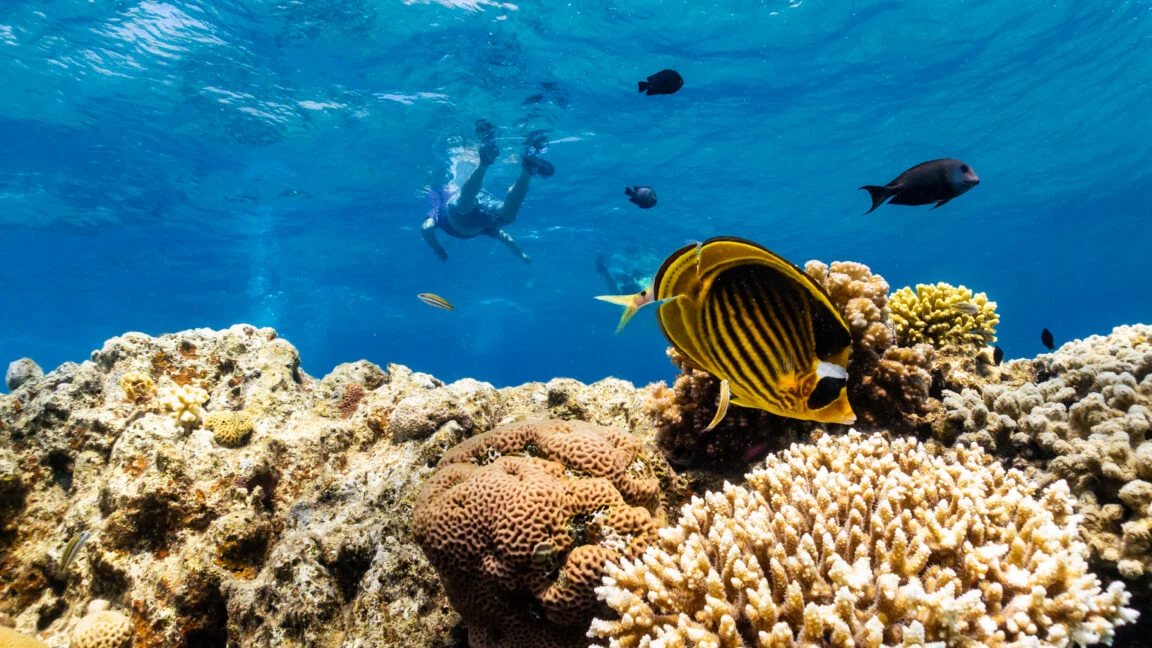
MAJURO, Marshall Islands — Perched on the bow of an aluminum landing craft, Dr. Anne Cohen, a veteran scientist from the Woods Hole Oceanographic Institution, watches a yellow, unmanned surface vehicle glide across the emerald waters of the Majuro lagoon. The robot, affectionately dubbed "Yellowfin," is more than a piece of oceanographic equipment; it is a vital ally in an existential race against time.
For decades, coral reefs—the rainforests of the sea—have served as the bedrock of life for millions of people in the Pacific. Today, they are facing a silent, bleaching catastrophe. As record-breaking marine heat waves sweep the globe, driven by anthropogenic climate change, over 80 percent of the world’s reefs have suffered severe bleaching. Yet, amidst this devastation, Dr. Cohen and her colleagues are tracking a flicker of hope: "Super Reefs." These are pockets of coral that, through genetic adaptation or fortunate geography, seem immune to the rising mercury, offering a blueprint for the future of marine conservation.
The Science of Resilience: Unmasking "Super Reefs"
The "Super Reefs" initiative, a global collaboration between Woods Hole, The Nature Conservancy, and Stanford University, was born from a simple but profound observation: in the middle of catastrophic heat events, certain patches of reef remained vibrant and healthy.
"We saw these corals that were behaving as if there was no heat wave at all," Cohen recalls. "I felt like there was a superhero coming in and flexing its muscles."
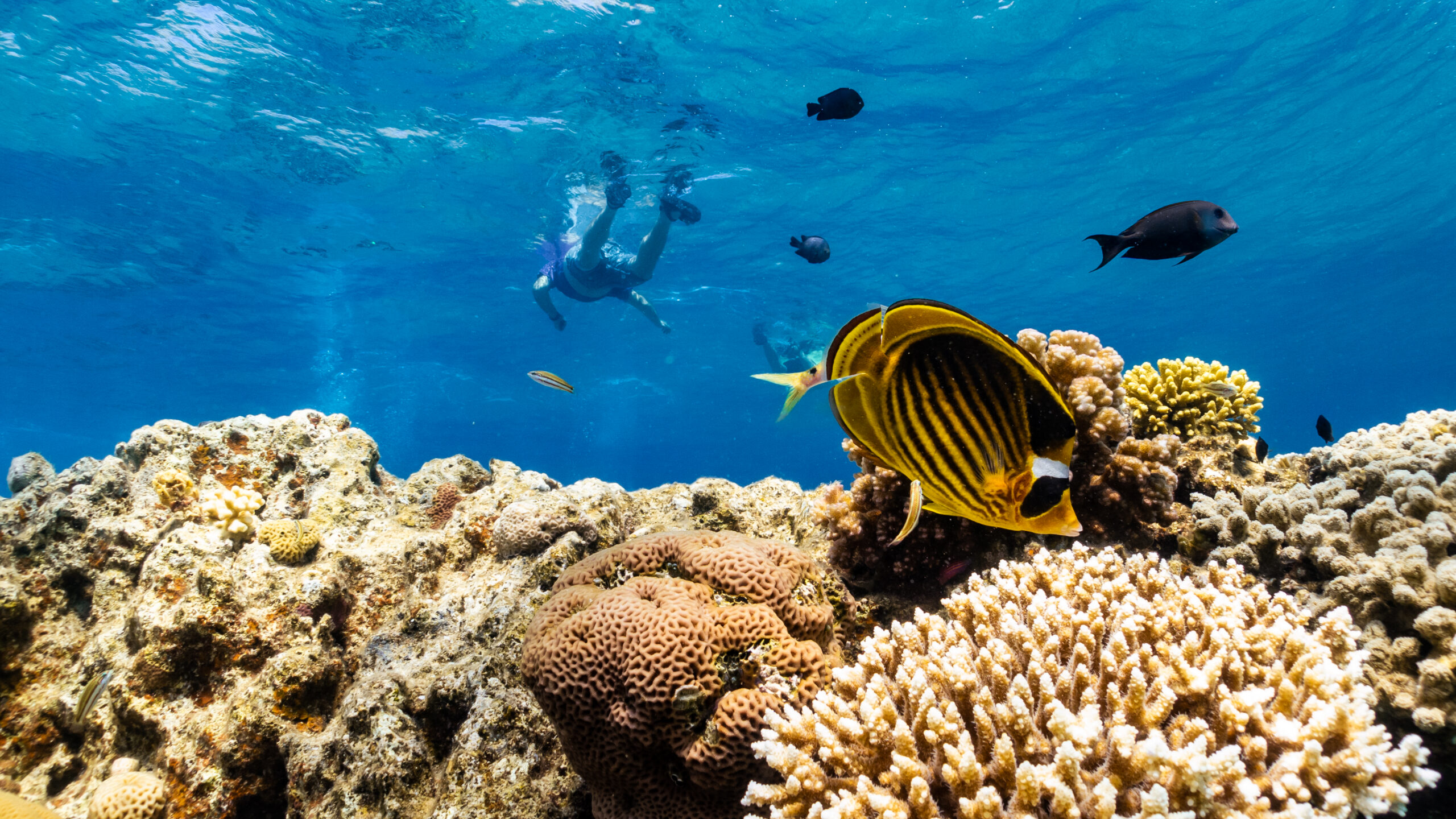
By definition, a super reef is not merely a healthy ecosystem; it is a scientifically validated refuge. These reefs must demonstrate a sustained capability to survive extreme temperature anomalies, either through heat-tolerant genetic mutations or by occupying niches cooled by oceanic currents. Crucially, a true super reef acts as a "larval engine," possessing the connectivity required to reseed degraded reefs across vast distances.
Chronology of a Crisis and a Solution
The trajectory of the current reef crisis is stark. Over the past century, the world has lost more than half of its coral cover. Scientists at the World Wildlife Fund warn that without radical intervention, 90 percent of tropical reefs could disappear within the next 25 years.
- 2018: Dr. Cohen formalizes the "Super Reefs" research project to study thriving, resilient corals.
- 2021: The launch of a formal initiative with Stanford and The Nature Conservancy to protect these heat-tolerant communities.
- 2023–2024: A period of record-breaking global bleaching, providing a baptism by fire for the research, as scientists observed how their identified "resilient" sites fared against unprecedented heat.
- April 2026: A pivotal expedition to the Marshall Islands to test autonomous surveying technology and pitch the "Blue Corridor" vision to local authorities.
The Technological Leap: Yellowfin and AI
The scale of the ocean makes traditional survey methods—relying on a handful of human divers—woefully inadequate. "Nobody can cover the necessary ground," Cohen says. "Not even if you had a team of 100 divers."
This is where the Yellowfin robot changes the paradigm. By mounting a high-resolution GoPro and GPS array beneath its hull, the robot can survey 40 miles of reef in a single day, capturing up to 20,000 images. Back in the laboratory at Woods Hole, the team is training artificial intelligence models to analyze these images, identifying bleaching patterns and pinpointing specific coral colonies that resist heat stress.
Furthermore, the team is creating 3D digital twins of the reefs. These models allow researchers to understand how the physical structure of a reef—its depth, orientation, and proximity to neighbors—influences its micro-climate. "With 3D models, we can see how a coral’s position relative to the coral next door can influence its survival," Cohen explains. "This may explain why some bleach and others don’t."
Community-Led Conservation: The "Reimaanlok" Process
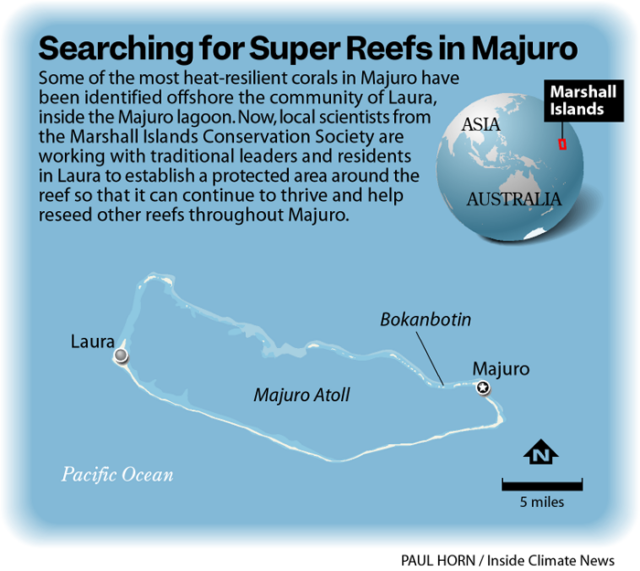
In the Marshall Islands, science is only half the battle. Conservation must be culturally integrated to be effective. The Marshall Islands Marine Resources Authority employs the Reimaanlok process, which translates to "looking to the future." This framework ensures that any protection strategy—such as limiting fishing in the "Laura" community’s reef—is driven by local knowledge, traditional leadership, and resident consensus.
Local councilman Jina David acknowledges the challenge. In a community where fishing is a primary source of food and income, restricting access to traditional fishing grounds is a delicate sell. However, as the local reefs continue to show signs of decline, the conversation is shifting. "If we don’t protect this," David warns, "nothing will be left for the future generation."
Implications: The "Super Reef Blue Corridor"
The ultimate goal for Dr. Cohen is to scale these individual successes into a trans-national network. She proposes a "Super Reef Blue Corridor"—a protected highway of resilient reefs stretching across the Marshall Islands, Kiribati, and Tuvalu.
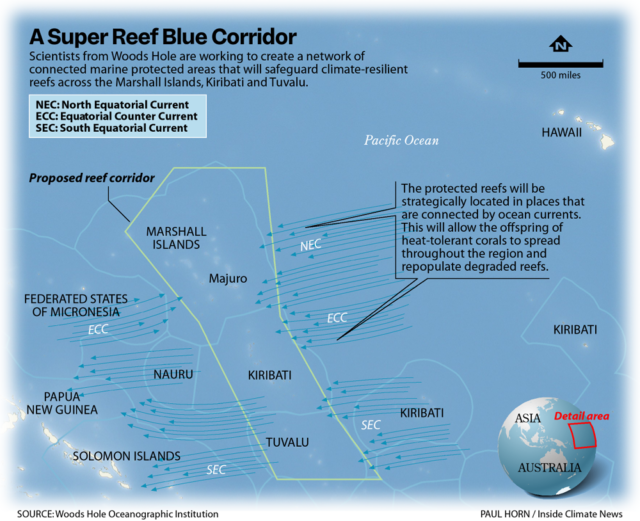
This concept draws inspiration from land-based wildlife corridors in Africa, which allow for the migration and genetic exchange of endangered species. By protecting "stepping stone" reefs, conservationists hope to create a continuous flow of larvae from heat-resistant corals. This would allow the next generation of "super babies" to drift with the currents and recolonize degraded reefs across the Pacific.
"We need to create maximum opportunity for them to create this oceanic shield of heat tolerance," Cohen says.
Official Responses and Future Outlook
The feasibility of this corridor is currently being evaluated by regional authorities. Alicia Edwards of the Marshall Islands Marine Resources Authority calls the concept "a very promising strategy," noting that the intersection of traditional community stewardship and high-tech biological monitoring offers the best path forward for a nation whose very existence is tied to the health of its reefs.
Independent experts echo this sentiment. Emily Darling, director of coral reefs at the Wildlife Conservation Society, emphasizes that "accounting for connectivity between high-integrity, climate-resilient reefs multiplies their conservation value across an entire region."

As the world heads into another cycle of El Niño, the urgency is palpable. Dr. Cohen is already planning her return. She knows the next heat wave will test her theories to their limit. Yet, there is a sense of professional optimism in her work. By identifying the survivors, she is not just documenting the death of an ecosystem; she is actively curating the survivors that will build the next one.
"We have a pretty strong chance of having a severe heat wave in the coming months," Cohen admits, standing on the deck of her research vessel. "I have a good idea which corals will resist because we’ve seen them do it before. Now, we just have to be there to make sure."
For the people of the Marshall Islands, whose land is literally built of ancient coral skeletons, the success of this mission is more than a scientific milestone—it is a matter of national survival. As the Yellowfin robot continues its "lawnmower" patterns across the seabed, it carries the hope that the reefs of tomorrow will be as resilient as the people who have called these islands home for millennia.

 Ammar Sabilarrohman
 Jia Lissa