

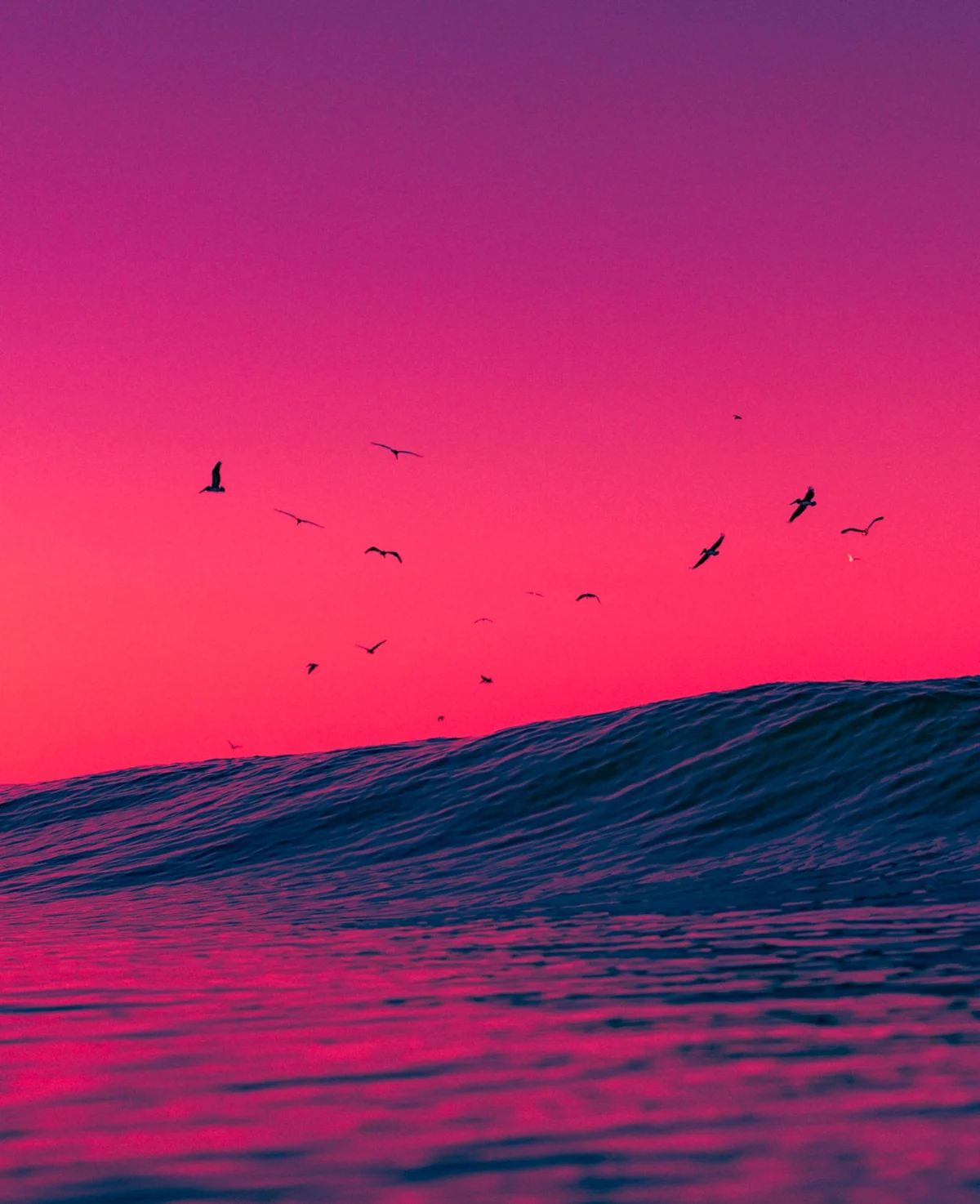
In the kaleidoscopic landscape of Los Angeles, where urban grit often clashes with the sprawling Pacific, few artists have managed to bridge the gap between technical precision and the untamed fluidity of nature as effectively as Craig Hubbard. A seasoned veteran of the creative arts, Hubbard—who previously built a formidable career in New York as an animator and comic book colorist—has, over the last decade, redefined his artistic identity. By trading the controlled environment of the studio for the unpredictable, salt-sprayed arenas of Venice Beach, he has become a chronicler of the ocean’s raw, sculptural power.
The Genesis: A Transition from Brooklyn to the Breakwater
The trajectory of Hubbard’s work cannot be understood without examining his roots. When he relocated from Brooklyn to Venice Beach in 2013, he brought with him a mind sharpened by the structural requirements of animation and the color theory essential to comic book illustration. However, he also arrived with a creative void; he had long since set aside the camera.
The catalyst for his return to photography was the singular quality of the West Coast light. The "golden hour"—that fleeting, ethereal window of time just after sunrise or before sunset—acted as a siren call. Initially, these sessions were a form of personal therapy, a way to document the familiar haunts of his new neighborhood. As an avid surfer and a former skater, Hubbard found himself naturally drawn to the intersection of human movement and architectural form.

"As an avid surfer and former skater, I gravitate toward skateparks and water," Hubbard explains. This dual affinity for the concrete geometry of the skate bowl and the liquid instability of the ocean forms the cornerstone of his aesthetic philosophy.
A Chronology of Artistic Evolution
To trace Hubbard’s development is to observe a man learning to relinquish control.
- 2013–2015: The Rediscovery Phase. During his first two years in Venice, Hubbard’s work was primarily observational. He was reacquainting himself with the mechanical nuances of lens-based art, focusing on the static beauty of the pier and the social dynamics of the shoreline.
- 2016–2019: The Graphic Focus. Drawing heavily upon his background in graphic design and color, Hubbard began to treat the ocean not as a landscape, but as a graphic subject. He started emphasizing bold outlines, high-contrast silhouettes, and the directional energy of crashing waves. This era marked his transition from a documentarian of place to a stylist of motion.
- 2020–Present: The Ethereal Synthesis. In his recent body of work, Hubbard has achieved a cinematic, almost painterly quality. He now captures the interplay between the marine layer (the thick, coastal fog) and the sharp, illuminated crests of waves. His work has moved toward a minimalist purity, where the "lip" or "curl" of a wave acts as the primary protagonist.
The Technicality of the Infinite: Supporting Data and Methodology
What sets Hubbard’s photography apart is his unique application of design principles to natural phenomena. While many photographers attempt to freeze motion, Hubbard seeks to imbue his static images with a sense of "directionality"—the suggestion of what came before the shutter clicked and what will occur in the millisecond that follows.

The "Heavy Lifting" of Nature
Hubbard remains refreshingly humble regarding his role in the process. He often remarks, "Nature ultimately does the heavy lifting, though." This perspective is supported by his methodology:
- Environmental Sensitivity: Hubbard identifies "dusk, dawn, and fog banks" as the primary activators of his creative process. These conditions provide the soft-box lighting of a studio, naturally diffusing the harsh California sun to create the ethereal tones that define his portfolio.
- The Translation of Energy: Hubbard views himself as a "biased translator." By utilizing specific lens apertures and shutter speeds that emphasize the texture of water spray, he converts kinetic energy into visual geometry.
The Role of the Subject
Venice Beach, despite the influx of modern developments and commercialization, remains a "funky, coastal neighborhood" in Hubbard’s eyes. He utilizes specific locations—the Breakwater and the Venice Beach Pier—not just as landmarks, but as natural framing devices. The interplay between the rigid, man-made structures and the chaotic, shifting surf provides the tension that fuels his best compositions.
Official Perspectives: The Philosophy of the Photographer
In recent reflections on his craft, Hubbard has offered a candid look into the psychological state required to capture the ocean. His approach is less about the "photographer’s ego" and more about an erasure of the self.

"The water is the muse and artist," Hubbard recently stated. "I’m just a biased translator and documentarian. Lastly, my ego relaxes in the ocean; the need to peacock recedes. This is where my best work comes from—or favorite, I should say."
This admission is vital to understanding the "cinematic" quality of his output. By removing the ego, he allows for a deeper, more patient observation. He is not waiting for the "perfect" shot in a commercial sense; he is waiting for the moment when the water’s inherent rhythm aligns with his own internal cadence. This shift in perspective is what elevates his work from mere surf photography to a meditative study of natural forces.
Implications: The Intersection of Art and Coastal Preservation
Hubbard’s work carries implications that extend beyond the aesthetic. By documenting the specific light and motion of Venice Beach, he is inadvertently creating a visual archive of a rapidly changing coastline.

The Preservation of Vibe
Venice Beach is currently undergoing a period of intense gentrification. As new developments rise, the "laid-back, surf-loving vibe" that Hubbard cherishes is constantly under threat. His photography serves as an anchor, a testament to the enduring, primal nature of the beach that exists regardless of the architecture built upon its perimeter.
The Influence of Graphic Backgrounds
The professional implication of Hubbard’s career—moving from animator to photographer—suggests a growing trend in the arts: the hybrid creator. His ability to apply the rigid rules of comic book color palettes to the fluid, unpredictable colors of a fog-covered ocean sunrise allows for a level of visual literacy that is rarely seen in traditional nature photography. He isn’t just taking pictures of waves; he is composing panels of a story where the main character is the Pacific Ocean itself.
Conclusion: A Continuous Dialogue
As Craig Hubbard continues to navigate the waters of Venice Beach, both with his surfboard and his camera, his work stands as a reminder of the power of transition. He successfully pivoted from the structured, artificial world of animation to the fluid, chaotic world of the Pacific, finding a synthesis that is both haunting and beautiful.

For those looking to engage with his ongoing narrative, Hubbard maintains a consistent presence via his Instagram, where he shares the immediate, raw output of his daily sessions, and his YouTube channel, which offers a deeper look into the movement and soundscapes of his chosen subject.
Ultimately, Hubbard’s photography is a dialogue—a conversation between a former illustrator and the indifferent, powerful, and endlessly shifting canvas of the ocean. It is a reminder that even in our modern, hyper-connected lives, there remains a space where the ego can recede, and the lens can become a window into something much larger than ourselves. His legacy is not just in the images he creates, but in the patience and reverence he brings to the shore, day after day, waiting for the light to hit just right.









No comments yet. Be the first to join the conversation!