Pevita Pearce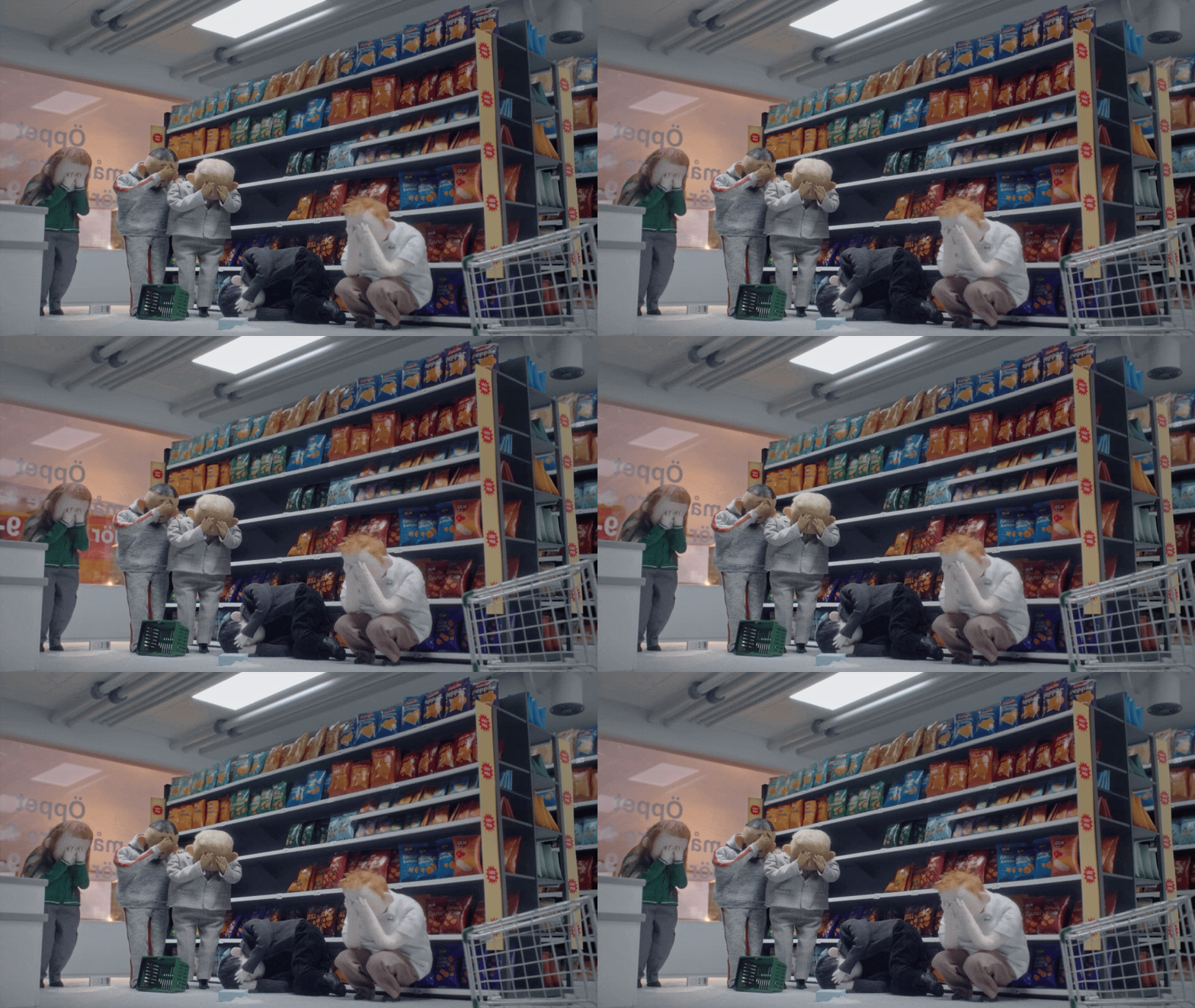
In the modern digital landscape, where the curation of the self has become a full-time occupation, the raw, unvarnished truth of human longing is often relegated to the shadows. Swedish animator Anna Mantzaris, a master of the tactile and the tenderly grotesque, is bringing those shadows into the light. Her latest stop-motion short film, PLEASE, serves as a poignant, darkly comedic mirror held up to our collective, often humiliating, pursuit of connection. Through her signature felt-textured puppets, Mantzaris explores the gamut of human emotion, plunging into the "pitiful and cringy" behaviors that define our most desperate moments of loneliness.
Main Facts: A Portrait of Unhinged Neediness
PLEASE is not a story of polished romance or cinematic serendipity. Instead, it is an anthology of vignettes that capture the frantic, sometimes absurd lengths individuals go to in order to fill the void of isolation. The film’s narrative engine is fueled by "neediness"—a social taboo that Mantzaris invites us to lean into.
The imagery is as striking as it is unsettling. We watch as felt-clad characters ignite fires to serve as dramatic backdrops for marriage proposals, weep uncontrollably in the fluorescent-lit aisles of grocery stores, and seek solace by hugging strangers’ puppies on train platforms. These characters are not merely puppets; they are manifestations of the modern psyche. They represent the internal monologue of the lonely, the impulses we suppress in public, and the "ugly" truths we hide behind our curated social media personas.
The film features an impressive voice cast, most notably the acclaimed Swedish actor Stellan Skarsgård—a 2026 Oscar nominee for Sentimental Value—who brings a profound, grounding gravity to the role of Winston. The collaboration marks a significant moment in independent animation, bridging the gap between high-art performance and the whimsical, often biting, medium of stop-motion.
Chronology: From Pandemic Isolation to Screen
The genesis of PLEASE dates back to the height of the global pandemic, a period that fundamentally altered the way humanity perceives both itself and its peers.
The Lockdown Catalyst
During the early stages of the COVID-19 lockdowns, Mantzaris found herself, like much of the world, staring at her own reflection through the pixelated lens of video conferencing software. This era of self-surveillance acted as the primary spark for the project.
"We became more obsessed with our self-image because we saw ourselves on screens in Zoom calls all day," Mantzaris explained in an interview with Creative Boom. "We spent a lot of time looking at ourselves while feeling disconnected from other people. I wanted the characters to try to break out of this bubble, to reach out, to show their longing, but in a not-so-perfect way."
Development and Execution
Following the initial conceptualization in 2020 and 2021, Mantzaris began the painstaking process of character design and stop-motion production. Utilizing her signature felt medium, which lends an inherent warmth and tactile vulnerability to her characters, she spent months crafting the specific "pathetic" moments that define the film.
The Current Circuit
As of mid-2026, PLEASE has entered the global film festival circuit, where it is being heralded for its emotional resonance and technical prowess. While festival screenings continue to build momentum, Mantzaris has confirmed that a wider, public-facing release is currently in development. Fans have already begun to get a taste of the film’s tone through strategic social media drops, including a viral Instagram post featuring the dating profile of a "particularly discouraged 21-year-old," which has sparked thousands of shares and discussions regarding the modern dating experience.

Supporting Data: The Sociology of Loneliness
To understand the impact of PLEASE, one must look at the data surrounding modern loneliness and the "performance" of self. According to various psychological studies conducted during and after the 2020-2022 period, there was a measurable spike in "social anxiety linked to self-perception."
- The Digital Mirror Effect: Research from the Journal of Media Psychology suggests that frequent exposure to one’s own image on video platforms leads to "self-objectification," where individuals judge their own behavior as if they were a third-party observer. This mirrors the behavior of Mantzaris’ characters, who seem to be constantly performing their own suffering.
- The "Neediness" Gap: Sociological surveys indicate that while 75% of adults report feeling an increased desire for deep connection, 60% admit to suppressing those desires to avoid appearing "clingy" or "unstable." Mantzaris’ work directly addresses this discrepancy, validating the "ugly" feelings that society generally encourages us to mask.
- Stop-Motion and Empathy: Studies in animation theory often cite that the physical nature of puppets—the fact that they occupy space and have texture—triggers a higher level of empathy in viewers compared to flat, 2D animation. By choosing felt as her primary material, Mantzaris softens the blow of the characters’ embarrassing actions, making their desperation feel relatable rather than repelling.
Official Responses and Creative Intent
Mantzaris’ approach to PLEASE is characterized by a desire to bridge the divide between the public "mask" and the private "grief." In her own words, she is deeply interested in the friction between what we present to the world and what we actually endure in solitude.
"Presenting the ‘ugly’ feelings through the puppets makes us feel seen," Mantzaris stated. "They get to do it for us, so we feel we’re not alone."
The inclusion of Stellan Skarsgård has provided a significant boost to the film’s profile. Skarsgård, whose career has been defined by complex, often melancholic roles, noted that the project appealed to him because it captured a specific, universal type of human failure. Critics who have viewed early festival cuts of the film have praised the synergy between Skarsgård’s vocal performance and Mantzaris’ tactile animation, noting that it elevates the short film into a poignant meditation on the human condition.
Implications: Why We Need PLEASE Now
The release of PLEASE arrives at a time when the societal discourse on mental health and authentic connection is at an all-time high. The implications of the film are twofold:
1. The Validation of "Ugly" Emotions
By externalizing the anxieties of the pandemic-era individual, PLEASE serves as a form of catharsis. It suggests that our moments of weakness—crying in a store, acting out of desperation, or craving validation—are not flaws to be hidden, but universal experiences that deserve empathy. In a culture that demands constant positivity, Mantzaris’ film acts as a necessary counter-narrative.
2. The Future of Independent Animation
Technically and aesthetically, PLEASE solidifies Mantzaris as a leading voice in the independent animation community. By moving away from the "fairy tale" tropes that dominate much of the medium, she is proving that animation is a sophisticated, mature vehicle for exploring existential philosophy. Her success with PLEASE paves the way for more experimental, character-driven works that prioritize psychological depth over spectacle.
3. A Call for Reconnection
Ultimately, the film is a plea. The title itself, PLEASE, is a double entendre: it is both a desperate request for love and an invitation for the audience to look past the superficiality of their own social interactions. As the film moves toward a wider release, it is expected to spark conversations in film schools, art galleries, and living rooms alike about how we reach out, how we fail, and, most importantly, how we continue to hope for connection in an increasingly isolated world.
As Mantzaris continues to document the lives of these felt-skinned souls, she reminds us that in the theater of life, the most important performances are the ones we give when we think no one is watching. PLEASE ensures that, for at least a few minutes, someone is watching—and they are finding beauty in the breakdown.


 Siti Muinah
 Evan Lee Salim