

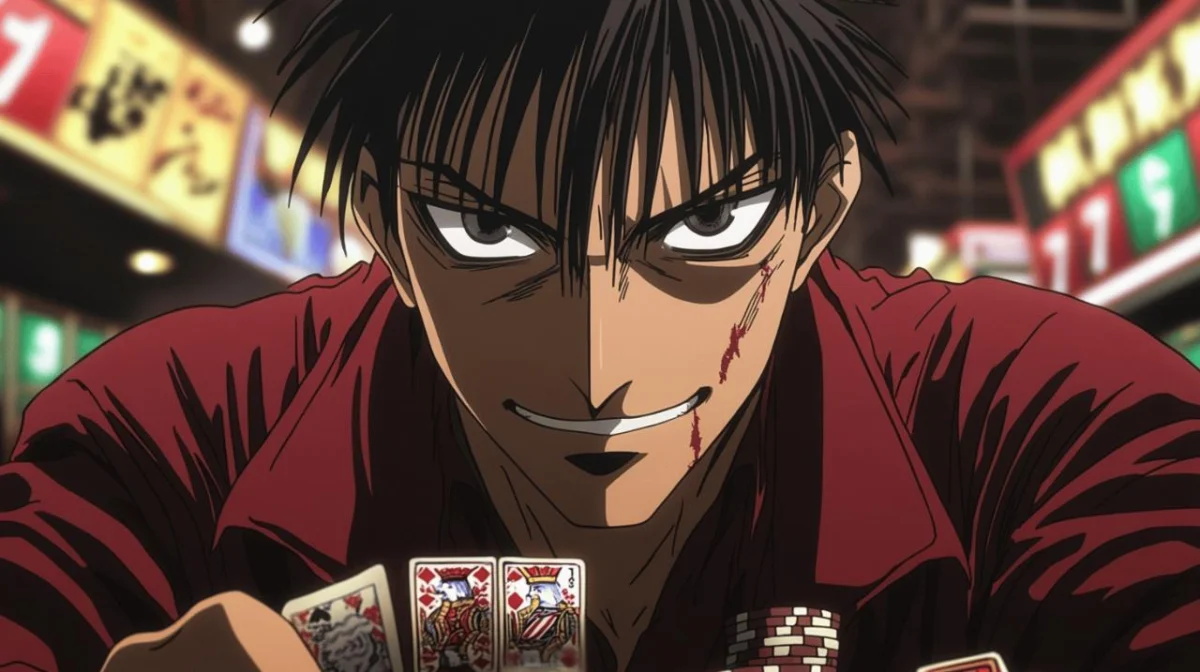
In the landscape of Japanese seinen manga, few works have managed to capture the visceral, suffocating essence of human desperation as effectively as Nobuyuki Fukumoto’s Kaiji: Ultimate Survivor. Since its inception in the pages of Young Magazine in 1996, the series has transcended the medium of comics to become a cultural touchstone. It is a harrowing psychological thriller that dissects the predatory nature of debt, the fragility of the human ego, and the cold, mechanical cruelty of high-stakes gambling.
With over 21.5 million copies in circulation as of 2019, Kaiji is more than a story about a gambler; it is a scathing indictment of a society that views the marginalized as disposable currency.
The Genesis of a Modern Classic: Main Facts
At its core, Kaiji is a character study of Kaiji Itou, a young man drifting through the apathy of post-bubble Japan. Living in a state of aimless poverty, Kaiji’s life is permanently altered when he is tricked into assuming the massive debt of a former acquaintance. He finds himself owing 3,850,000 yen (approximately 28,705 euros)—a sum that, in his precarious situation, is effectively an infinite debt.
The narrative hook is deceptively simple: Kaiji is offered a "chance" to clear his debt by boarding the Espoir, a cruise ship where desperate souls compete in rigged, high-stakes games of chance. What follows is not a tale of heroic redemption, but a brutal exploration of the "Game Theory" of survival. Fukumoto’s masterpiece strips away the glamour of gambling, revealing it as a raw, ugly struggle where intelligence, deception, and moral compromise are the only tools available for survival.
A Descent into the Abyss: Chronological Progression
The narrative arc of Kaiji is defined by a series of escalating ordeals, each more depraved than the last. The chronology of the series follows a logical, albeit terrifying, trajectory:
1. The Espoir and Restricted Rock-Paper-Scissors
The journey begins on the Espoir, where the "Restricted Rock-Paper-Scissors" game serves as an introduction to the series’ central philosophy: you are either a shark or prey. The game is designed to force cooperation and, subsequently, betrayal. It is here that Kaiji learns that in a system designed to crush the individual, trust is the ultimate liability.
2. The Human Derby and the Steel Beam
As the series progresses, the stakes transition from financial to physical. The "Human Derby" and the "Steel Beam Crossing" represent the peak of the series’ tension. Here, the characters are no longer just fighting for their bank accounts; they are fighting for their lives. The imagery of the steel beam—a narrow path suspended over a deadly drop—serves as a metaphor for the thin line between success and total annihilation in the modern economy.
3. The E-Card and the Underground Labor Camp
The middle chapters introduce the E-Card game, a psychological duel of wits against the series’ primary antagonist, Yukio Tonegawa. This arc cements the series as a psychological thriller, shifting the focus from physical danger to the "mental warfare" of reading one’s opponent. Following this, the "Underground Labor Camp" arc provides a sobering look at the reality of debt slavery, where the goal shifts from "winning big" to the slow, agonizing process of earning one’s freedom through manual labor.
4. The Pachinko SWAMP
The climax of the first major sequence, the "SWAMP" pachinko machine, acts as the ultimate challenge. With a prize pool of 700 million yen, the machine is rigged by the powerful Teiai Corporation. It is here that the series reaches its most sophisticated level of narrative tension, combining mechanical engineering, psychological manipulation, and the sheer audacity of a man with nothing left to lose.
Statistical and Societal Context: Supporting Data
The success of Kaiji is not merely anecdotal; it is rooted in its resonance with the economic anxieties of the Japanese public. The "Lost Decade" and the subsequent period of stagnation in Japan created a generation of "freeters"—young people who drift between part-time jobs with no path to financial security.
- The Debt Metric: The initial debt of 3.85 million yen is a deliberate choice by the author. It is a "realistic" amount—large enough to destroy a life, but small enough that it feels like it should be payable, thereby keeping the victim in a state of perpetual, anxious pursuit.
- Commercial Impact: The manga has spawned two full anime seasons (2007, 2011), three live-action feature films, and various spin-offs, including the popular Mr. Tonegawa: Middle Management Blues. The 21.5 million sales figure highlights a sustained interest across decades, proving that the theme of economic inequality is, unfortunately, timeless.
The Shadow of the Creditors: Official Perspectives
Within the world of Kaiji, the "official" voice is represented by the Teiai Corporation and its leader, Chairman Hyoudou. Their perspective is one of cold, aristocratic indifference. To them, the debtors are not humans; they are "trash."
The series portrays the predatory nature of the lending industry with surgical precision. The creditors use the desperation of the poor to run their own amusement park of suffering. They do not just want the money back; they want the psychological satisfaction of watching their debtors suffer. This dynamic reflects the real-world critique of predatory lending practices, where the system is designed to ensure that the borrower never truly exits the cycle of debt.
The Cultural Ripple Effect: Implications
The influence of Kaiji on global pop culture cannot be overstated. While the themes of "survival games" have existed in literature for centuries, Kaiji modernized the trope for the age of late-stage capitalism.
A Precursor to Modern Media
It is impossible to discuss the rise of the "survival game" genre—epitomized by the global phenomenon Squid Game—without acknowledging the path paved by Kaiji. The similarities are striking: the common denominator of massive debt, the isolation from society, the brightly lit but morally bankrupt games, and the "host" who watches the carnage for amusement. Kaiji acted as the blueprint for these narratives, establishing the trope of the "ordinary man" forced into an extraordinary, deadly situation.
Artistic Expression as Social Commentary
The art style of Nobuyuki Fukumoto is often criticized by newcomers for its angular, grotesque character designs. However, this is a calculated artistic choice. The "deformed" faces of the characters, twisted by greed, fear, and malice, serve as a visceral mirror to their internal states. When a character in Kaiji is pushed to the brink, their features literally distort, reflecting the loss of their humanity under the pressure of the system. This expressive style is a vital component of the series’ ability to communicate the intense, claustrophobic atmosphere of the underground world.
The Universal Appeal of the Underdog
Ultimately, the enduring legacy of Kaiji lies in its portrayal of the human spirit. Despite the darkness of the world, the series is anchored by Kaiji himself—a character who is deeply flawed, prone to selfishness and impulsive decisions, yet capable of profound empathy and tactical brilliance. He is not a traditional hero, but a man who refuses to break, even when the system tries to shatter his psyche.
Conclusion
Kaiji: Ultimate Survivor remains a landmark in manga history because it refuses to offer easy comfort. It is a cold, calculated, and often terrifying look at what happens when the structures of society collapse and are replaced by the raw, predatory logic of the gambling floor. By blending high-stakes drama with a searing critique of financial exploitation, Nobuyuki Fukumoto has crafted a story that feels as relevant today as it did in 1996.
For those who engage with the work, it serves as a warning: when the systems of power view human lives as mere betting chips, the only way to win is to realize that the game itself is the ultimate trap. As the series continues to influence new generations of creators, its legacy as a masterpiece of psychological horror and social commentary is firmly cemented in the pantheon of global literature.










No comments yet. Be the first to join the conversation!