

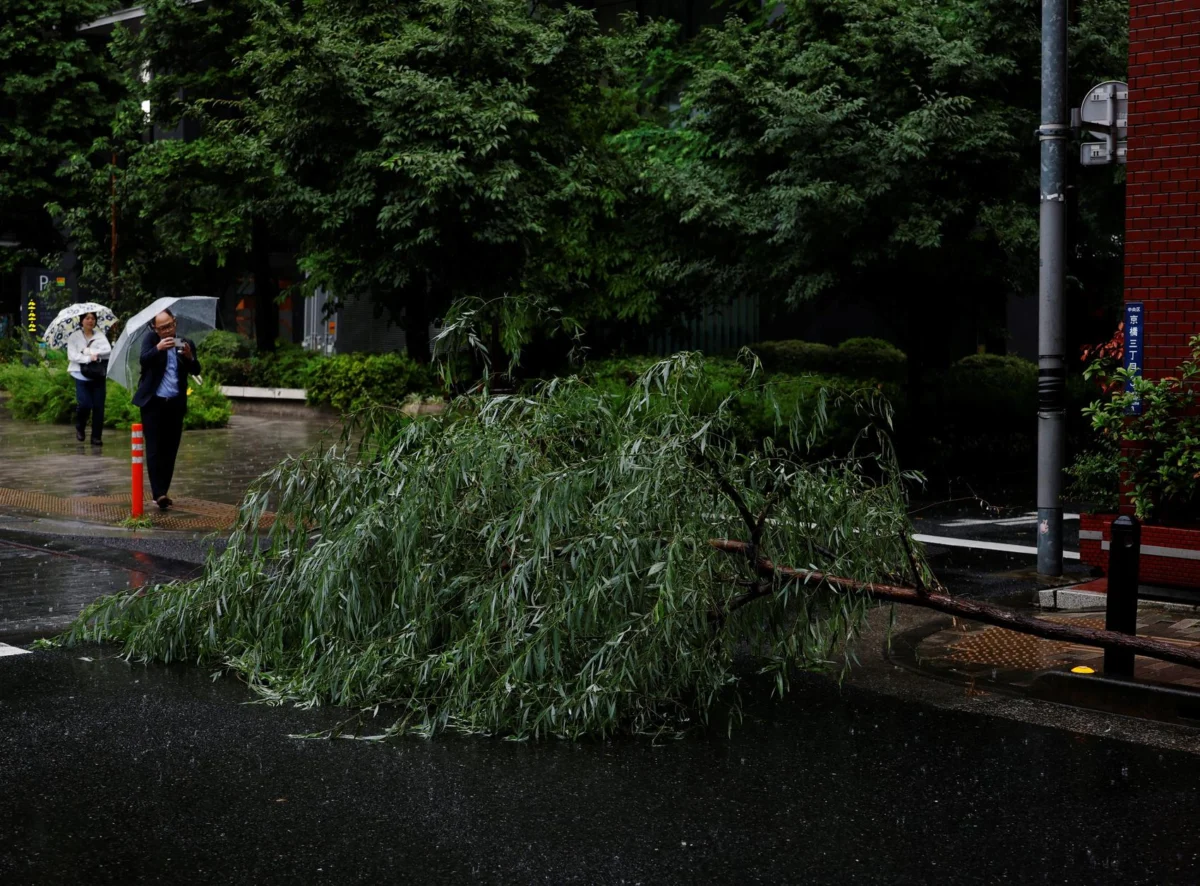
TOKYO — Japan is grappling with the devastating aftermath of Severe Tropical Storm Jangmi, which tore through the archipelago on Wednesday, leaving a trail of destruction that has paralyzed transport networks, shuttered major manufacturing hubs, and plunged tens of thousands of households into darkness.
The storm, which hit with punishing intensity, has prompted a massive emergency response as authorities scramble to mitigate the risks of further flooding and landslides. As of Wednesday afternoon, the Japan Meteorological Agency (JMA) issued urgent warnings for residents along the Pacific coast of eastern Japan, signaling that the threat remains acute as the system tracks northeast.
Main Facts: A System of Unrelenting Force
Severe Tropical Storm Jangmi, carrying a central atmospheric pressure of 985 hectopascals (hPa), battered the nation with maximum sustained winds of 25 meters per second (approx. 90 km/h). By early Wednesday afternoon, the eye of the storm was positioned roughly 150 kilometers south of Tokyo.
The meteorological profile of Jangmi has been defined by its sheer reach. Rather than a localized event, the storm has exerted pressure across a massive swathe of the country, from the southwestern island of Kyushu to the densely populated Kanto region surrounding the capital. The combination of fierce, gusting winds and "torrential rain" has overwhelmed drainage systems, leading to widespread reports of inundated infrastructure.
Government spokesperson Minoru Kihara confirmed in a press briefing that at least 15 individuals have sustained minor injuries due to wind-blown debris and falls. However, emergency services remain on high alert, fearing that the number of casualties could rise as crews reach more isolated regions affected by landslides and road blockages.
Chronology: A Day of Escalating Crisis
The progression of the storm began in the early hours of Wednesday, rapidly intensifying as it made its approach toward the Japanese mainland.
- Early Morning (06:00 – 09:00 JST): As Jangmi approached the coast, major manufacturing giants, including Toyota Motor and Suzuki Motor, made the proactive decision to halt operations. Toyota suspended activities at 13 of its domestic plants, while Suzuki shuttered all five of its production facilities in Shizuoka Prefecture.
- Mid-Morning (09:00 – 11:00 JST): The transport network began to disintegrate. Japan Airlines (JAL) and All Nippon Airways (ANA) announced a sweeping cancellation of nearly 900 international and domestic flights. Simultaneously, East Japan Railway (JR East) began suspending services in the Tokyo metropolitan area as safety thresholds for wind speeds were exceeded.
- Early Afternoon (12:00 – 14:00 JST): With the storm center closing in on the Tokyo region, government officials held an emergency briefing. Reports of power outages spiked, hitting 60,000 households. Social media platforms, particularly X (formerly Twitter), became a real-time map of the crisis, with hashtags related to "evacuation orders" and "flooded stations" trending as citizens shared footage of submerged subway entrances and rising street levels.
- Late Afternoon (15:00 onwards): While some manufacturers, such as Toyota and Suzuki, announced intentions to resume production by the evening, the JMA maintained high-level vigilance. The storm continued its northeasterly path, keeping the eastern seaboard of Japan under the threat of sustained, high-velocity wind and rainfall.
Supporting Data: The Scale of Disruption
The economic and logistical toll of Jangmi is substantial. The storm has not only disrupted the daily lives of millions but has also hit the heart of Japan’s industrial backbone.
Transport Paralysis
The aviation sector bore the brunt of the storm’s volatility. With 900 flights grounded, approximately 90,000 passengers found their travel plans upended. The cascading effect of these cancellations is expected to ripple through the domestic travel market for days as airlines struggle to rebook passengers and reposition aircraft.
Rail travel, a critical artery for Japan’s economy, saw widespread delays and suspensions. While bullet trains (Shinkansen) in Kyushu and western Japan experienced significant delays, the suspension of local lines in the Tokyo area effectively isolated commuters, forcing many to shelter in place or face grueling, weather-impeded journeys home.
Power and Infrastructure
The loss of electricity for 60,000 households has placed an enormous burden on regional utility providers. Crews are currently battling treacherous conditions to restore power, though fallen trees and debris-strewn roads have slowed progress. The JMA’s data indicates that the rainfall in some regions has already exceeded monthly averages for this time of year, saturating the soil and creating a high risk of "do-sha saigai" (landslide disasters) in mountainous areas.
Official Responses: Government and Local Strategy
The Japanese government’s response has been defined by a strategy of "early action." Government spokesperson Minoru Kihara’s message was blunt and direct: "If you sense any danger, please do not hesitate to take early action to protect your lives."
This directive is supported by the issuance of evacuation advisories to hundreds of thousands of residents across eight prefectures. These prefectures, spanning the southwestern, central, and eastern regions, have opened emergency shelters and activated local disaster prevention councils.
Municipal authorities have been heavily utilizing the J-Alert system—the nation’s satellite-based broadcast network—to push warnings directly to mobile devices. Despite these efforts, officials acknowledge that the sheer speed at which the storm intensified posed significant challenges for those in low-lying areas or close to riverbanks.
Implications: Building Resilience in an Era of Climate Volatility
The arrival of Severe Tropical Storm Jangmi serves as a stark reminder of Japan’s extreme vulnerability to climate-driven weather patterns. While the nation possesses some of the world’s most advanced disaster-prevention infrastructure—ranging from massive underground flood-diversion tunnels to earthquake-and-typhoon-resistant architecture—the frequency and intensity of these storms are testing the limits of these systems.
The Economic Impact
The suspension of Toyota and Suzuki plants underscores the fragility of "just-in-time" manufacturing in the face of natural disasters. Even a 12-to-24-hour shutdown can result in significant losses in production volume, affecting global supply chains. As climate change continues to influence the trajectory and strength of typhoons, industrial giants may be forced to rethink their geographical dependencies and inventory buffers.
Societal Adaptation
The role of social media in this crisis has been a double-edged sword. While it provided authorities with real-time data on localized flooding—allowing for more agile emergency responses—it also acted as a source of potential misinformation. Moving forward, the government is likely to integrate social media sentiment analysis more formally into their disaster response protocols.
Long-term Vigilance
As the storm continues its path, the focus of authorities will shift from immediate life-saving measures to long-term recovery and assessment. The government is expected to announce aid packages for the affected prefectures in the coming days, with a particular focus on the agriculture and small business sectors that have been battered by wind and rain.
"We are seeing a trend of storms that are not only more frequent but more erratic in their behavior," noted an independent climate researcher based in Tokyo. "The ‘old’ standards of disaster preparedness are no longer sufficient. Japan must now prepare for a reality where the extreme becomes the standard."
As the sun begins to set on a day of chaos, the nation remains on edge. The winds may eventually subside, and the waters may recede, but the impact of Jangmi will be felt for weeks to come, serving as a sobering testament to the power of nature and the ongoing challenge of maintaining order in a changing climate.
© Thomson Reuters 2026. All rights reserved.












No comments yet. Be the first to join the conversation!