Dwi Wanna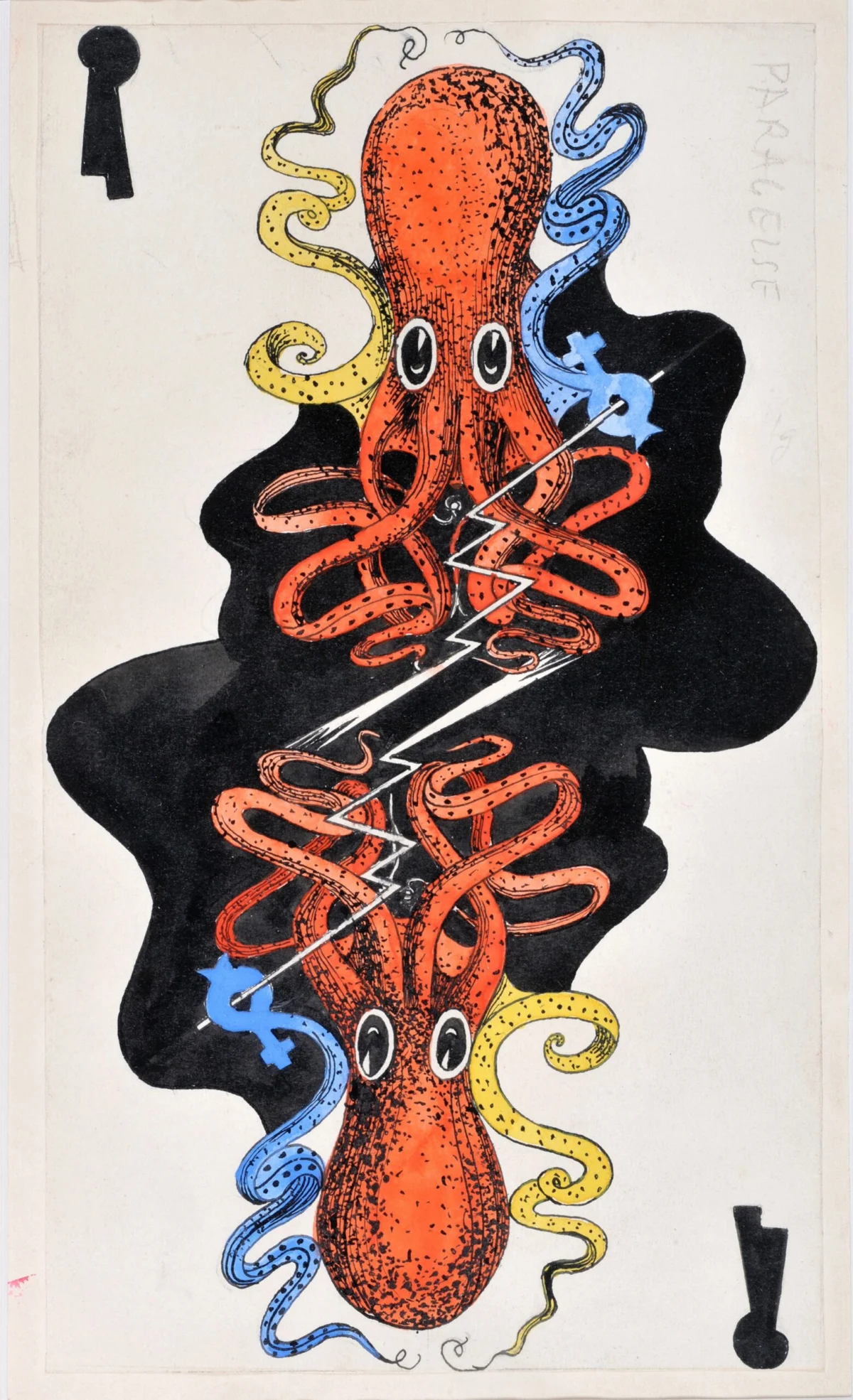
When the average person thinks of tarot, a singular, indelible image likely springs to mind: the Rider-Waite-Smith deck. With its distinctive, evocative illustrations by the British occultist and artist Pamela Colman Smith, this deck has served as the gold standard for practitioners for over a century. Yet, to view the tarot solely through the lens of the 1909 Smith-Waite publication is to ignore a rich, centuries-long tapestry of artistic expression and divinatory practice.
Later this month, The Morgan Library & Museum in New York will unveil a landmark exhibition, Tarot! Renaissance Symbols, Modern Visions. The show promises to pull back the veil on this complex tradition, tracing its trajectory from the opulent, gold-leafed courts of 15th-century Italy to the avant-garde studios of 20th-century Surrealists. It is a comprehensive examination of how a deck of cards became a vessel for philosophy, mysticism, and the human subconscious.
The Foundations: A Renaissance Origin Story
Long before the tarot became a staple of modern New Age spiritualism, it was the plaything of the European aristocracy. The Morgan’s exhibition highlights some of the earliest known examples of the craft, specifically focusing on three surviving decks commissioned by the Dukes of Milan during the 15th century.

These artifacts, known as the Visconti-Sforza tarot cards, are more than just historical curiosities; they are masterworks of Renaissance art. Produced in Milan or Cremona around 1456–1458, likely by the artist Bonifacio Bembo, these cards offer a glimpse into the vibrant, competitive, and highly intellectual court culture of the Italian Renaissance. Unlike the mass-produced, paper-thin decks of today, these were hand-painted, often utilizing precious pigments and gold leaf.
At the time, these cards were not primarily intended for the fortune-telling practices we recognize today. Instead, they were used for tarocchini, a popular trick-taking game. However, the iconography—Death, the Juggler, Time—was already deeply rooted in the moral and allegorical preoccupations of the era. By examining these early decks, the exhibition illustrates how the seeds of modern divination were sown not in a dark, back-alley parlor, but in the heart of the most sophisticated artistic centers of the European continent.
A Chronology of the Arcane
To understand the evolution of tarot, one must view it as a fluid language that has been rewritten by every generation it has touched.

- The 15th Century: The birth of the tarot as an aristocratic social tool. The Visconti-Sforza decks establish the primary archetypes of the Major Arcana.
- The 19th and Early 20th Centuries: The shift from gaming to esotericism. Influenced by the Hermetic Order of the Golden Dawn, artists like Pamela Colman Smith began to standardize the imagery. Her 1909 collaboration with A.E. Waite provided the deck with its "psychological" weight, turning abstract concepts into narrative scenes that felt accessible to the common reader.
- The Mid-20th Century: The Surrealist intervention. As the world reeled from the trauma of two World Wars, artists looked toward the tarot as a tool for unlocking the "other universe" of the unconscious. Figures such as André Breton, Victor Brauner, and Leonora Carrington utilized the deck to break free from the "strictures of modernist aesthetics."
Artistic Reimagining: The Surrealist Connection
One of the most compelling aspects of the upcoming exhibition is its focus on the mid-century obsession with tarot among the Surrealists. This was not merely an aesthetic choice; it was an ideological one. The Surrealists were deeply interested in the irrational, the dream state, and the potential for art to function as a bridge between the conscious and the subconscious.
Leonora Carrington, for instance, created a stunning, gilded deck in the 1950s that bypassed traditional imagery in favor of her own idiosyncratic, mythological symbolism. Similarly, the work of Remedios Varo, such as her 1957 piece The Other Clock (El otro reloj), demonstrates how the tarot provided a framework for artists to map internal landscapes that were otherwise inexpressible.
Salvador Dalí, the showman of the Surrealist movement, also famously contributed his own highly stylized, idiosyncratic version of the tarot. By integrating the cards into their practice, these artists were actively rejecting the rigid rationalism of the post-war era, seeking instead a "logic of the dream" that the tarot’s archetypal nature was uniquely suited to provide.

Supporting Data and Scholarly Context
The significance of the Morgan’s exhibition lies in its academic rigor. The show is not merely a display of "occult" objects; it is an investigation into the intersection of art history, sociology, and printing technology.
By displaying the original chromolithographs of the Rider-Waite-Smith deck alongside the hand-painted Renaissance pieces, the museum invites viewers to compare the evolution of technique. The exhibition features:
- Visual Documentation: Over 100 artifacts, including rare lithographic proofs from Roberto Matta’s 1944 series Arcane 17.
- Manuscript Evidence: Sketches and preparatory drawings, such as Pamela Colman Smith’s 1908 watercolor and ink "Sketch for Glass," which provide a rare look at the artist’s process before the final publication of her iconic imagery.
- Comparative Analysis: The exhibition catalog provides an in-depth analysis of how the iconography of "Death" or "The Chariot" has been repurposed to reflect the specific anxieties of different centuries.
Official Perspectives: The Museum’s Vision
The Morgan Library & Museum has framed this exhibition as a crucial intervention in the study of modern art. In official statements regarding the show, the curators emphasize that the project is intended to highlight how artists have consistently turned to the tarot as a "rebellion against the strictures of modernist aesthetics."

"The tarot has served as a sanctuary for the imagination," says a representative for the museum. "It allows creators to bypass the limitations of a purely objective reality and to explore other universes and possibilities. By bringing together these disparate eras—from the Dukes of Milan to the studios of the Surrealists—we hope to showcase the incredible durability and adaptability of these symbols."
The institution has also released a comprehensive, limited-edition catalog, available through their shop, which serves as both a historical record and a visual journey through the exhibition’s contents.
Implications: Why Tarot Matters Now
The timing of Tarot! Renaissance Symbols, Modern Visions is significant. In an age characterized by rapid technological advancement and a perceived "disenchantment" of the world, there has been a massive resurgence in the popularity of tarot. However, this popularity often exists in a vacuum, stripped of its historical and artistic lineage.

The implications of this exhibition are twofold. First, it serves to legitimize the tarot as a serious subject of art-historical inquiry. By placing the work of Surrealist giants like Varo and Carrington alongside Renaissance masters, the museum argues that the tarot is not just a tool for prediction, but a legitimate visual language that has shaped the trajectory of Western art.
Second, the exhibition challenges the visitor to consider the role of the "irrational" in our own lives. If the most brilliant minds of the 20th century turned to these cards to navigate the chaos of their times, what does that say about our modern reliance on them today?
As we move toward the exhibition’s opening on June 26, the message is clear: the cards on the table are not just paper and ink. They are a mirror held up to history, a canvas for the subconscious, and a testament to the enduring human need to find meaning in the mystery.

The exhibition "Tarot! Renaissance Symbols, Modern Visions" will be on view at The Morgan Library & Museum in New York from June 26 through October 4. For tickets and further information regarding the accompanying lecture series and catalog, please visit the museum’s official website.

 Asro
Asro
 Sagoh
Sagoh