Pevita Pearce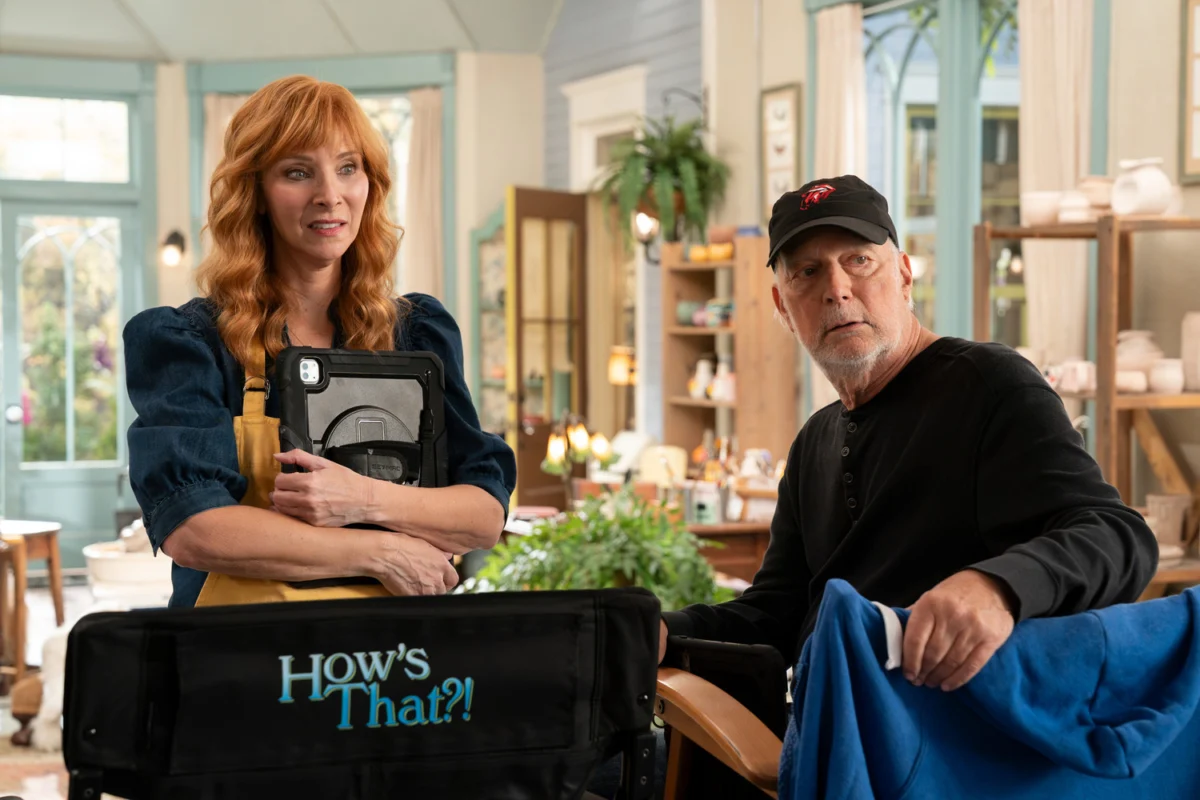
In the traditional pantheon of television history, the spotlight has historically gravitated toward the "Auteurs"—the writers, producers, and showrunners whose vision is often equated with the soul of a series. From the biting social commentary of Norman Lear to the intricate, novelistic narratives of David Chase and Matthew Weiner, television has been codified as a writer’s medium. Yet, this narrative ignores the fundamental mechanical and aesthetic labor of the directors and cinematographers who translated those scripts into the cultural lexicon.
To ignore the directorial contribution is to ignore the very foundation of the medium. There is no television without the visual grammar established by the pioneers of the 1950s, nor is there a Golden Age without the rhythmic precision of those who turned the multi-camera sitcom into a high-art form. Among these giants, none loomed larger than James Burrows, the legendary director who passed away on Friday at the age of 85. Burrows was not merely a technician; he was the primary architect of the look, feel, tone, and pacing of the American sitcom, serving as the connective tissue between the television of the past and the prestige landscape of the present.
A Legacy of Precision: The Chronology of an Icon
James Burrows did not simply work in television; he shaped its evolution across five decades. His career trajectory is a mirror of the medium’s own maturation. Burrows first stepped behind the camera for The Mary Tyler Moore Show in 1974, entering a landscape that was already beginning to value nuanced character work over slapstick.
He quickly distinguished himself through an uncanny ability to balance theatrical performance with the constraints of the multi-camera setup. Throughout the late 1970s and 1980s, Burrows became the industry’s "secret weapon." He directed 75 episodes of Taxi, a show that pushed the boundaries of the workplace sitcom, before co-creating the definitive sitcom of the 1980s: Cheers.
His resume reads like a syllabus for the History of American Comedy. He helmed dozens of episodes of Frasier and Friends, and served as the guiding hand for every single episode of Will & Grace—both during its initial groundbreaking run and its subsequent revival. Even in the twilight of his career, his work ethic remained undiminished; he directed all 10 episodes of the Hulu series Mid-Century Modern, proving that his command of the craft remained as sharp as it was during the mid-70s.
The Mathematics of Influence: Quantifying a Career
To understand the scope of Burrows’ impact, one must look at the data. His influence is not a matter of subjective opinion but of verifiable, staggering output. Across his illustrious career, Burrows accumulated 11 Emmy Awards and five Directors Guild of America (DGA) awards. He directed more than 50 comedy pilots, a staggering number that speaks to his status as the industry’s most trusted hand for launching new intellectual property.
The "1,000th Episode" milestone, which NBC celebrated with a massive primetime tribute in 2016, remains one of the most significant statistics in television history. By the time he hit that mark, Burrows had effectively directed the equivalent of decades of prime-time programming. His work on Cheers alone—237 episodes—provided a masterclass in spatial awareness and character blocking that is still studied in film schools today.
His influence, however, extends beyond the sheer volume of his credits. It is found in the DNA of every sitcom that followed. The "hangout comedy" structure, which he perfected with Friends and Will & Grace, became the standard template for network television. Even when the multi-camera format fell out of vogue, the rhythms, beats, and emotional beats established by Burrows remained the benchmark against which all other comedies were measured.
The Unseen Hand: Crafting the Aesthetic
Burrows stood on the shoulders of the technical pioneers who preceded him, such as cinematographer Karl Freund—the man who brought high-end film lighting to I Love Lucy. Like the directors of Playhouse 90 and the anthology era—men like John Frankenheimer and Sidney Lumet—Burrows understood that the director’s job was to prioritize performance within the frame.
His contributions were often invisible to the average viewer, which is perhaps his greatest achievement. He was a master of the "invisible cut," where the camera placement and movement served the dialogue rather than distracting from it. Consider the architecture of the Cheers bar or the specific, character-defining placement of the pillar in Monica’s apartment on Friends. These were not accidental; they were tactical, directorial decisions designed to maximize the comedic potential of every scene.
Burrows understood how to handle the depiction of intimacy and social tension, particularly on Will & Grace, where he navigated the complexities of gay identity and relationships with a sensitivity that was ahead of its time. He was the invisible hand that ensured that even in the wackiest of situations, the characters remained grounded and the emotional stakes felt real.
Official Responses and Industry Impact
In the wake of his passing, the outpouring of grief from Hollywood has been universal. Former collaborators and actors have cited his "crotchety but brilliant" nature as the catalyst for their best work. Lisa Kudrow and Michael Patrick King, who cast Burrows as himself in HBO’s The Comeback, viewed him not just as a veteran, but as a living symbol of an industry under siege.
In The Comeback, Burrows played a version of himself that served as a bulwark against the encroachment of reality television, artificial intelligence, and the general devaluation of the "work" of television. By casting him, King and Kudrow were making a statement: This is what quality looks like. Burrows played the role with a blend of empathy and sharp, forward-looking intelligence, proving that he was never a man stuck in the past, even while he was the keeper of its most sacred traditions.
Implications: The Future of the Sitcom
The death of James Burrows leaves a void that is, frankly, impossible to fill. In an era where "prestige TV" is often synonymous with grim, single-camera dramas, the multi-camera sitcom is frequently dismissed by critics as "lazy" or "outdated." This is a profound misunderstanding of the form.
The multi-camera setup is, in many ways, the most difficult format to master. It requires a director to manage the energy of a live audience, the timing of multiple actors, and the technical precision of four or more cameras simultaneously. It is a live-theatre-meets-cinema hybrid that Burrows treated with the seriousness of a Shakespearian production.
The implication of his passing is that the industry must now decide how to carry that torch forward. As we move further into an era of streaming algorithms and AI-generated scripts, the human element that Burrows championed—the ability to look a performer in the eye, adjust a beat for a laugh, and curate a moment of genuine human connection—becomes all the more precious.
Conclusion: A Legacy Beyond the Credits
There is a tendency to view television as a disposable medium, something to be consumed and discarded. James Burrows spent his life fighting that perception. He fought it by making shows that people watched not once, but hundreds of times—shows that became part of the furniture of our lives.
To look at the list of his credits is to look at the history of joy in American living rooms. He was the man who taught us how to laugh at the bar, in the taxi, and in the apartment across the hall. While the critics may have spent decades championing the "auteur" writers, the audience always knew the truth: James Burrows was the one who made the magic happen.
There was nobody like him, and as the industry moves forward, it will find that his absence is felt in every beat, every camera angle, and every laugh that rings out from a studio audience. The stage is darker today, but the light he cast on the medium will remain for generations to come. He was, in every sense of the word, the director of our lives.

 Nana Muazin
 Nana
Nana