Azzam Bilal Chamdy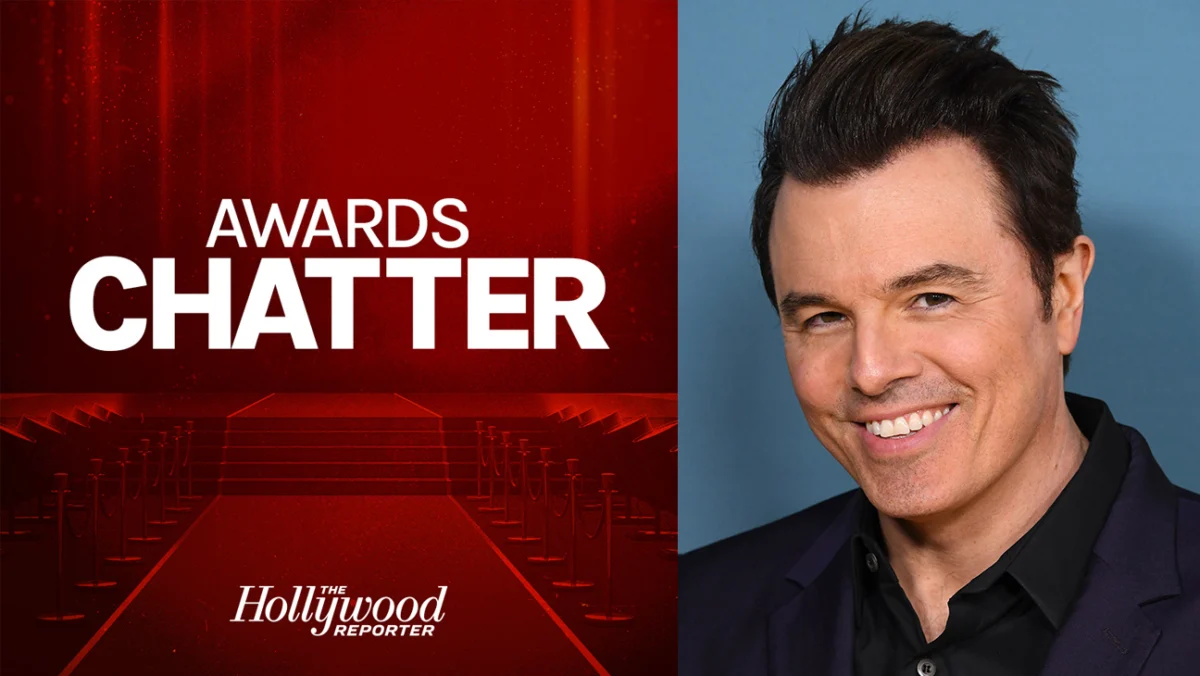
In the landscape of 21st-century entertainment, few figures cast a shadow as long—or as distinct—as Seth MacFarlane. A polymath whose career spans nearly three decades, MacFarlane has evolved from a wunderkind animator into a titan of the industry, helming a sprawling portfolio that includes television staples, blockbuster films, and a burgeoning slate of streaming content.
Fresh off receiving the prestigious Maverick Award at the Newport Beach TV Fest, MacFarlane sat down for an extensive conversation on The Hollywood Reporter’s Awards Chatter podcast. The discussion offered a rare, candid look into the mind of a creator who has spent half his life defining the comedic zeitgeist, while simultaneously nursing a healthy skepticism toward the institutions that govern it.
The Architect: A Three-Decade Trajectory
MacFarlane’s ascent is the stuff of Hollywood legend. At just 24 years old, he became the youngest executive producer in television history with the debut of Family Guy. What began as a subversive, underdog animated sitcom evolved into a cultural juggernaut, cementing his status as a power-player.
Today, through his production banner, Fuzzy Door Productions, MacFarlane maintains an iron grip on the comedy space. Family Guy is currently navigating its 24th season, while American Dad!—co-created with Mike Barker and Matt Weitzman—continues to thrive in its 22nd year. His recent foray into streaming has been equally fruitful; the Peacock series Ted, a prequel to his hit 2012 and 2015 films, has earned critical acclaim and high viewership, proving that MacFarlane’s specific brand of irreverent humor remains as potent as ever.
Chronology of Influence: From Disney to Primetime
During his interview, MacFarlane reflected on the tectonic shifts that shaped his career. He pointed to The Simpsons as the singular catalyst that diverted him from a conventional path at Disney toward the more jagged, high-stakes world of primetime animation.
"Prior to The Simpsons, there were animated shows where you could recognize the comedy was good—The Flintstones, Looney Tunes—but you weren’t necessarily laughing out loud," MacFarlane explained. "Then The Simpsons came along and, at least for our generation, changed everything. It was like nothing we’d seen. It shifted my trajectory from the Disney path toward something more primetime-oriented."
This shift would eventually lead to the creation of the Griffin family, a project that would defy expectations and longevity charts, fundamentally altering the economics and creative standards of adult animation for the next quarter-century.
The Emmy Conundrum: A Critique of Industry Awards
Perhaps the most biting portion of MacFarlane’s commentary was his assessment of the Primetime Emmy Awards. Despite his immense success, he holds little reverence for the accolades, citing systemic inconsistencies that he believes undermine the integrity of the awards process.
The crux of his frustration stems from the 2009 nomination of Family Guy for Best Comedy Series—the first animated show to receive such a nod since The Flintstones in 1961. "The Emmys are so f—ed up," MacFarlane stated bluntly. "It’s nonsense that we would get nominated for Best Comedy when The Simpsons had not been nominated ever. That’s weird. It’s also weird that Family Guy never won Best Animated Comedy in 25 years."
His critique suggests a disconnect between the voting body and the reality of television consumption. He characterized the voting process as potentially performative, questioning if the industry is "just checking boxes while they’re f—ing shaving." Ultimately, MacFarlane suggests that his disillusionment is a "healthy place to be," allowing him to prioritize audience satisfaction over the whims of the Academy.
The Ted Phenomenon: Bridging Film and Streaming
The transition of Ted from the big screen to the Peacock streaming platform was not, by MacFarlane’s admission, a long-held passion project. Instead, it was an opportunistic pivot born from an overall deal with NBCUniversal.
"I got the call from Susan Rovner, who was running NBC at the time, asking me, ‘Would you want to do a Ted TV series?’" MacFarlane recalled. "Based on the size of the overall deal they were giving me, I figured I’d better do whatever the hell they want."
However, MacFarlane was adamant about maintaining quality. He refused to produce a "diet soda" version of the foul-mouthed bear, insisting on a budget that allowed for the high-end CGI required to make the character feel integrated into a live-action world. With costs reaching $10 million per half-hour episode, the commitment to production value paid off, resulting in a series that felt like a natural extension of the films.
Regarding the future of the franchise, MacFarlane remains open. While a third season is not currently on the books, he is exploring the possibility of a direct-to-streaming feature film. "He’s a character we can bring back at any time," he noted, citing the ten-year gap between the second movie and the series as proof of the character’s enduring appeal.
Implications: The Future of the Empire
As MacFarlane looks forward, he faces the unique challenge of managing a legacy that refuses to fade. The numbers for Family Guy remain "consistently high," a reality that still surprises even the creator himself.
"I don’t know why that is," he admitted. "It’s been a quarter of a century that this thing has been on the air!"
Perhaps the most significant revelation from the interview is MacFarlane’s "break-glass-in-case-of-emergency" plan: a feature-length Family Guy movie. For years, fans have speculated about a theatrical outing for the Griffins, and MacFarlane confirmed that the concept is fully formed in his mind. However, he treats it as a strategic asset.
"I’ve always had a pretty clear idea of what it’s going to be," he said. "It’s that arrow in the quiver that I keep for when everything else goes to s—t. I always assume that if I have a really dismal professional failure, the only thing that can cleanse the palette of the audience is the Family Guy movie. That’s when I’ll do it."
Conclusion: A Maverick at Work
Seth MacFarlane’s career is a testament to the power of adaptation. By balancing the demands of major studio contracts with a personal, often irreverent creative vision, he has managed to remain relevant in an industry that famously chews up and spits out creators.
Whether he is voicing three different characters on a show he created in the 90s, directing high-budget CGI spectacles, or accepting lifetime achievement awards at festivals, MacFarlane remains a paradox: a traditional Hollywood mogul who is deeply suspicious of the system that made him. As he continues to oversee his vast creative portfolio, one thing remains certain: as long as there is an audience for his brand of humor, Seth MacFarlane will find a way to meet that demand, likely on his own terms and with a cynical wink toward the status quo.
The "Maverick" label bestowed upon him at Newport Beach feels increasingly appropriate. In an era of formulaic content, MacFarlane’s ability to sustain multiple hit franchises while maintaining a distinct, recognizable creative voice is not just impressive—it is a rarity that has fundamentally defined the television landscape of the last three decades.

 Jia Lissa
 Iffa Jayyana