

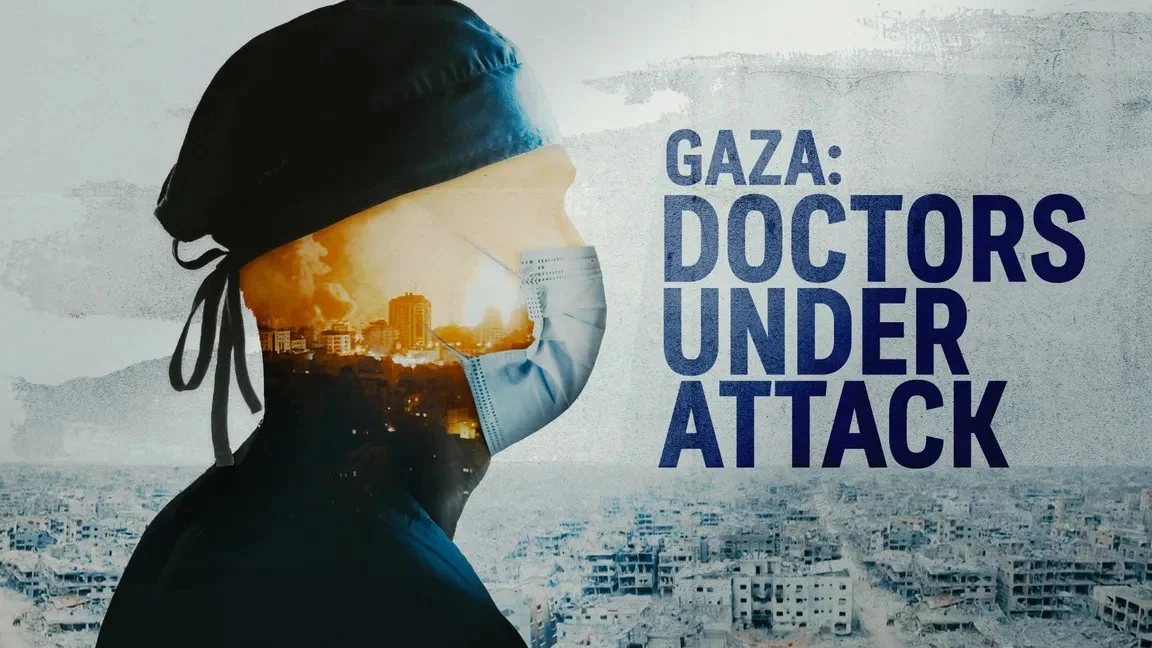
The 2026 BAFTA TV Awards, held at London’s prestigious Royal Festival Hall, were intended to be a celebration of British television excellence. However, the ceremony transformed into a site of intense political confrontation on Sunday night when the team behind the documentary Gaza: Doctors Under Attack utilized their moment in the spotlight to deliver a blistering indictment of both the state of Israel’s military conduct and the editorial policies of the BBC.
The documentary, which investigated the systematic destruction of medical infrastructure in the Gaza Strip, had been commissioned by the BBC but was subsequently shelved by the broadcaster, citing "impartiality concerns." When the project later secured the BAFTA for Best Current Affairs, its creators transformed their acceptance speech into a searing critique of media censorship and the humanitarian catastrophe unfolding in the Middle East.
A Staged Defiance: The Acceptance Speech
The tension was palpable as British journalist Ramita Navai and executive producer Ben De Pear took the stage. The award, a validation of their investigative efforts, served as the launchpad for a coordinated challenge against the industry’s most powerful public broadcaster.
"This award means so much to us," Navai began, her voice steady but sharp. "Israel has killed over 47,000 children and women in Gaza so far. Israel has… targeted every single one of Gaza’s hospitals. It has killed over 1,700 Palestinian doctors and health care workers. It has imprisoned over 400 in what the UN now calls a ‘medicide.’"
Navai did not shy away from the controversy surrounding the film’s distribution. "These are the findings of our investigation that the BBC paid for but refuses to show," she declared. "But we refuse to be silenced and censored."
Ben De Pear, a former editor of Channel 4 News, followed with a somber dedication. He honored the local Palestinian journalists who risked their lives to secure the footage and data necessary for the documentary. "They did so amongst the killing spree that killed over 250 of their colleagues, journalists in Gaza," De Pear stated.
In a final, provocative act, De Pear looked directly into the camera—knowing that the BBC would be broadcasting the ceremony on a time-delayed loop later that evening—and asked, "Given you dropped our film, will you drop us from the BAFTAs screening later tonight?"
The Chronology of a Shelved Investigation
The conflict between the filmmakers and the BBC is not a recent development. The investigation, which centered on the targeting of medical facilities, was initially greenlit during a period of intense international scrutiny regarding the war in Gaza.
- Development and Commissioning: The BBC commissioned the project, recognizing the necessity of reporting on the collapsing health sector in the region.
- Editorial Friction: As the findings began to emerge, internal friction grew. The BBC’s editorial standards board reportedly raised concerns regarding the framing of the narrative, specifically the attribution of intent regarding the destruction of medical facilities.
- The "Shelving" Decision: Despite the project’s completion, the BBC opted not to air the documentary. The official justification—"impartiality concerns"—sparked immediate backlash from independent journalists who argued that the refusal to air evidence of potential war crimes was a failure of the public service mandate.
- Distribution Pivot: The filmmakers, refusing to allow the work to be buried, sought alternative avenues to bring the evidence to light. The film eventually found a platform through other channels, culminating in its recognition by the British Academy of Film and Television Arts.
- The BAFTA Recognition: The jury’s decision to award the film the prize for Best Current Affairs suggests a divide between the industry’s peer-review standards and the corporate editorial boards of major broadcasters.
Supporting Data: The Scale of the "Medicide"
The findings presented in Gaza: Doctors Under Attack align with mounting documentation from international human rights organizations and the United Nations. The term "medicide," used by Navai during her speech, refers to the systematic destruction of a population’s ability to heal itself.
- Hospital Degradation: According to the investigation, nearly every major medical facility in Gaza has sustained damage or total destruction. The film provides granular evidence—satellite imagery, patient testimonials, and first-hand accounts from surviving medical staff—to substantiate the claim that these were not "collateral damage" but targeted strikes.
- The Human Toll: The statistics cited by Navai—1,700 health care workers killed—underscore the collapse of the medical infrastructure. This loss of life goes beyond the immediate casualty count, as the remaining population is left without access to trauma care, neonatal support, or treatment for chronic conditions.
- Journalistic Mortality: De Pear’s mention of 250 dead journalists highlights a broader issue: the extreme danger of reporting from the conflict zone. International press freedom watchdogs have repeatedly called for the protection of journalists in Gaza, citing the highest rate of press mortality in any 21st-century conflict.
Official Responses and Internal Tensions
The BBC has faced mounting pressure to explain its decision-making process. Critics, including prominent human rights lawyers and media analysts, have accused the broadcaster of "soft-pedaling" in the face of political pressure from the Israeli government and its allies in the UK.
A BBC spokesperson, responding to queries regarding the BAFTA incident, maintained that the decision to shelve the film was "strictly an editorial matter," based on the organization’s requirement to maintain neutrality in a "highly polarized and sensitive conflict." However, the spokesperson declined to comment on the specific allegations made by Navai and De Pear, citing a policy of not engaging in public debates with award-winning participants.
Conversely, the BAFTA organization has faced its own internal deliberations. While the body has not issued a formal statement on the content of the speech, the decision to allow the full, unedited version of the ceremony to air—despite the direct challenge to the broadcaster—is being viewed as a significant assertion of artistic freedom over corporate broadcast interests.
Implications: The Future of Conflict Journalism
The clash at the BAFTA TV Awards represents a broader crisis in modern journalism. There is a growing disconnect between investigative journalists, who seek to document reality on the ground, and legacy media institutions that are increasingly wary of the political fallout associated with reporting on controversial geopolitical conflicts.
1. The Chilling Effect
The "shelving" of such investigations risks creating a "chilling effect," where producers may avoid high-risk or politically sensitive topics to ensure their work is actually broadcast. This narrows the scope of public discourse and limits the information available to the electorate.
2. The Rise of Independent Platforms
The success of Gaza: Doctors Under Attack despite being dropped by a major broadcaster signals a shift in the media landscape. Increasingly, filmmakers are turning to independent production houses, streaming services, and international distribution networks to bypass the gatekeepers of traditional public broadcasting.
3. The Question of Impartiality
The incident has reopened the debate over the definition of "impartiality." Does impartiality require a neutral stance on the destruction of medical infrastructure, or is the documentation of such events, regardless of the perpetrator, the highest form of journalistic integrity? As the industry grapples with these questions, the tension between the BBC’s institutional caution and the aggressive pursuit of truth by independent documentarians is likely to intensify.
As the 2026 awards ceremony concludes, the primary takeaway is not which programs won, but the realization that the platform of the awards show has become one of the few remaining spaces where the industry can hold its own power structures accountable. Whether the BBC will eventually revisit its decision to bury the film remains to be seen, but the filmmakers have ensured that, regardless of the broadcast, the conversation regarding the "medicide" in Gaza will not be silenced.











No comments yet. Be the first to join the conversation!