Azzam Bilal Chamdy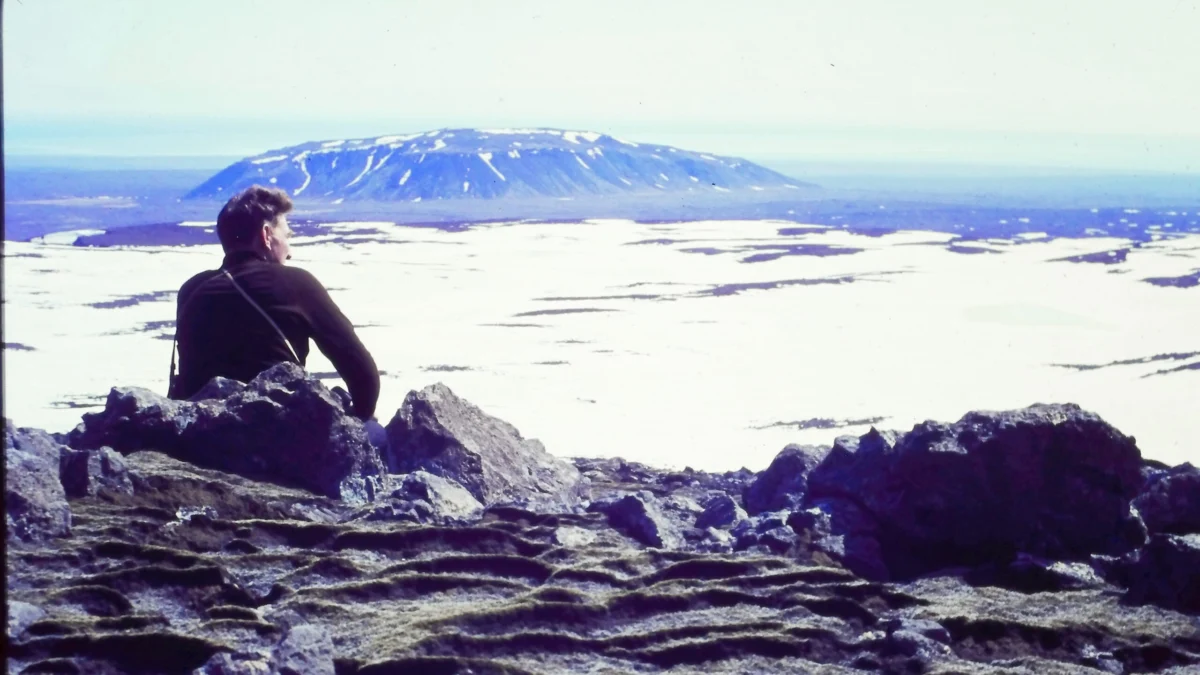
Editor’s Note: This review was originally published during the 2026 Sundance Film Festival. National Geographic Documentary Films will open the film at NYC’s Angelika Film Center on Friday, May 29, and LA’s Laemmle Royal on Friday, June 5.
The Imprint of Eternity: An Introduction to Time and Water
In the canon of environmental cinema, few films manage to balance the cold, empirical data of climate change with the warmth of human intimacy. Sara Dosa, the Oscar-nominated director of Fire of Love, returns to the screen with a work that functions less like a standard documentary and more like a transcendental time capsule. Time and Water, her latest feature, serves as a bridge between the mythic past of Iceland and a future that is rapidly slipping through our fingers.
Framed through the perspective of celebrated Icelandic writer Andri Snær Magnason, the film is an ambitious exploration of memory. It posits that the Earth itself is the ultimate archive—its glaciers serving as literal, frozen records of our planet’s history. As these ancient ice sheets melt, they are not merely disappearing; they are erasing the data of our past. The film asks a haunting, central question: If the ice is our history, what remains of us when it is gone?
A Chronology of Loss: From Glaciers to Archives
The narrative structure of Time and Water is intentionally non-linear, reflecting the "geological time" that Magnason juxtaposes against our modern, hurried existence. The film begins with a deliberate, analog aesthetic: the sound of VHS tracking and the blue flicker of an old television screen. It is an invitation to witness a message meant for the future.

Magnason, now 53, narrates the film as a storyteller of his nation’s soul. He recounts the formation of Iceland—a land born from the violent, beautiful collision of fire and ice. This introduction is a sensory immersion, featuring breathtaking cinematography of volcanic ash, emerald-green moss, and the ethereal dance of the Aurora Borealis. However, the tone shifts rapidly as Magnason discusses his grandparents, Jón and Hulda, who were among the first pioneers to traverse Iceland’s glaciers in the 1950s.
Through their recovered 16mm color footage, the audience is taken deep into the interior of a glacier. There, we are introduced to the "sound" of ice—a subtle, creaking movement that signifies a living, breathing entity. The chronology of the film highlights the tragedy of our modern era: the death of the Okjökull glacier in 2019. Once a vibrant, shifting giant, its stagnation marked a turning point in history. It was 700 years old, yet in the span of a few human generations, it was silenced forever.
Supporting Data: The Science of Melting
Time and Water does not shy away from the harsh realities of the climate crisis. It anchors its poetic musings in alarming, indisputable scientific projections. Researchers estimate that within the next 200 years, Iceland’s glaciers—the very heartbeat of the landscape—could disappear entirely.
The film draws a compelling parallel between the National Archives of Iceland, where Magnason once worked, and the natural archives of the glaciers. In the National Archives, he discovered rímurs—traditional, melancholic song-poems that served as repositories of cultural history. He realized that just as these songs must be passed from the mouths of the elderly to the children to survive, the Earth’s history is an oral and physical tradition that requires stewards.

While the human archive is mutable and can be recorded on film or paper, the geological archive is fragile. When a glacier melts, the chemicals, air bubbles, and trapped isotopes that tell the story of the Earth’s climate over millennia are released into the atmosphere and lost. This "data loss" is presented as a form of global bankruptcy, where we are squandering our biological capital for short-term economic gain.
Perspectives and Official Responses
While the film is personal, it carries the weight of institutional concern. National Geographic Documentary Films, which is distributing the project, has positioned Time and Water as a centerpiece in the ongoing dialogue about environmental responsibility.
The film highlights the intersection of "craven capitalism" and environmental degradation. By contrasting the 1950s-era optimism of explorers like Jón and Hulda with the modern, frantic efforts to document what is being lost, Dosa critiques the systemic failure of the current era. Industry experts and environmental scientists consulted for the film’s development emphasize that the "disappearance" of the glaciers is not an abstraction; it is a measurable, terrifying shift in the Earth’s albedo and water cycles.
The Intergenerational Burden: Implications for the Future
The most poignant sequence in the film is a deliberate thought exercise performed by Magnason. He films his daughter, Hulda, in conversation with his 96-year-old grandmother. Through this interaction, he attempts to "stretch" time, connecting the birth of his grandmother in 1924 to the projected old age of his daughter in 2104.

This bridge, spanning nearly two centuries, illustrates the urgency of the climate crisis. If the grandmother’s memories define the past, the daughter’s future is currently being written by our present actions. The film’s philosophical implication is clear: we are failing to pass on a habitable world because we have prioritized the "months and years" of political and economic cycles over the "centuries and millennia" of the planet’s life cycle.
A Final Warning
The climax of the film centers on the memorial plaque placed at the site of the former Okjökull glacier. Magnason was the architect of its inscription, a message that serves as the final, chilling verdict of the documentary:
"This monument is to acknowledge that we know what is happening and what needs to be done. Only you know if we did it."
This is the central tension of Time and Water. While the film is visually stunning and emotionally resonant, it offers no easy catharsis. It is a work of "staunchly political" art that refuses to let the viewer off the hook. As much as one might admire Dosa for the bittersweet beauty of her cinematography, the film leaves us with the uncomfortable reality that much of the damage may already be irrevocable.

Conclusion: Why Time and Water Matters
Time and Water is a masterclass in documentary filmmaking that manages to be both a love letter to the majesty of the natural world and a wake-up call to its fragility. By blending the personal—the home movies of a family—with the universal—the life and death of a glacier—Sara Dosa has created a film that is as intimate as it is expansive.
In a world saturated with "climate anxiety," Time and Water succeeds because it doesn’t just show us the ice melting; it shows us what we are losing in terms of heritage, memory, and the physical archive of our existence. It is a reminder that the only way to keep the "verse" of our planet alive is to ensure it is remembered, protected, and fought for by those who will inherit the year 2104. Whether that effort will be enough remains the ultimate, unanswered question of our time.
Grade: A
“Time and Water” premiered at the 2026 Sundance Film Festival. National Geographic Documentary Films will release it in the U.S. later this year. To stay updated on the latest in film criticism and exclusive features, subscribe to the "In Review" newsletter by David Ehrlich, available now through IndieWire.

 Jia Lissa
 Iffa Jayyana