

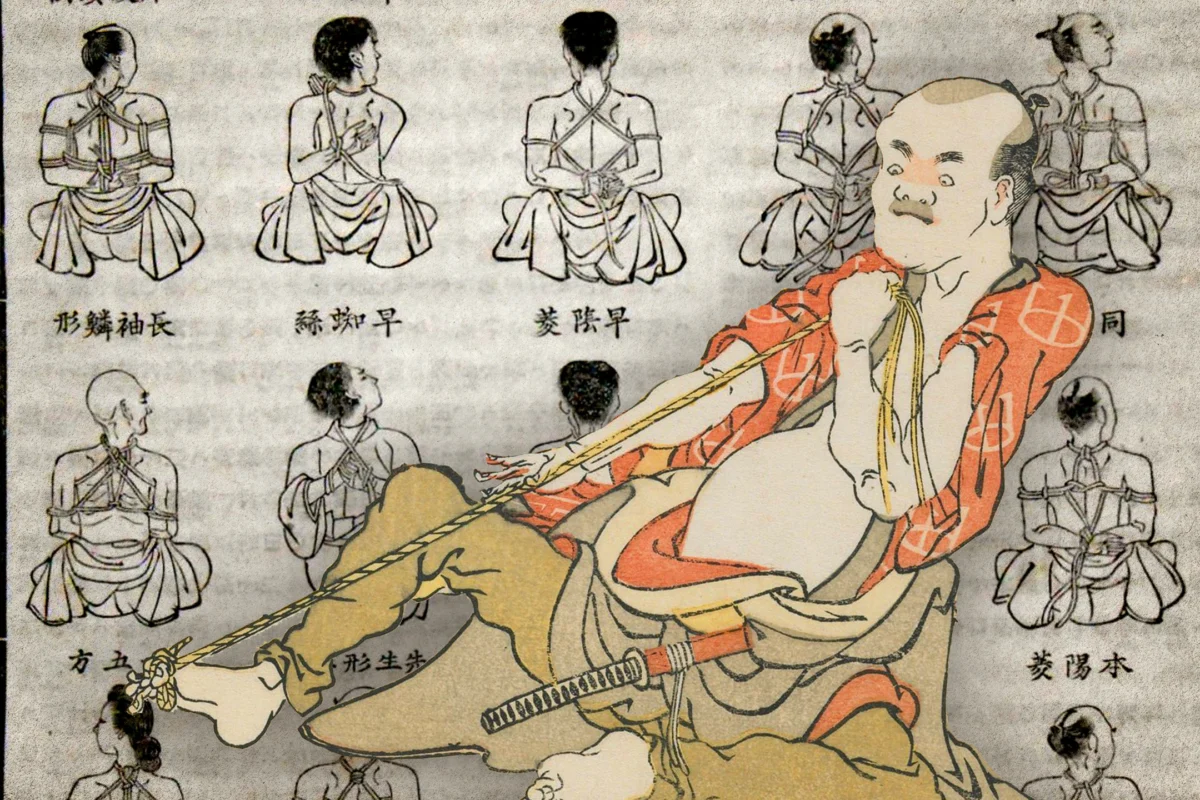
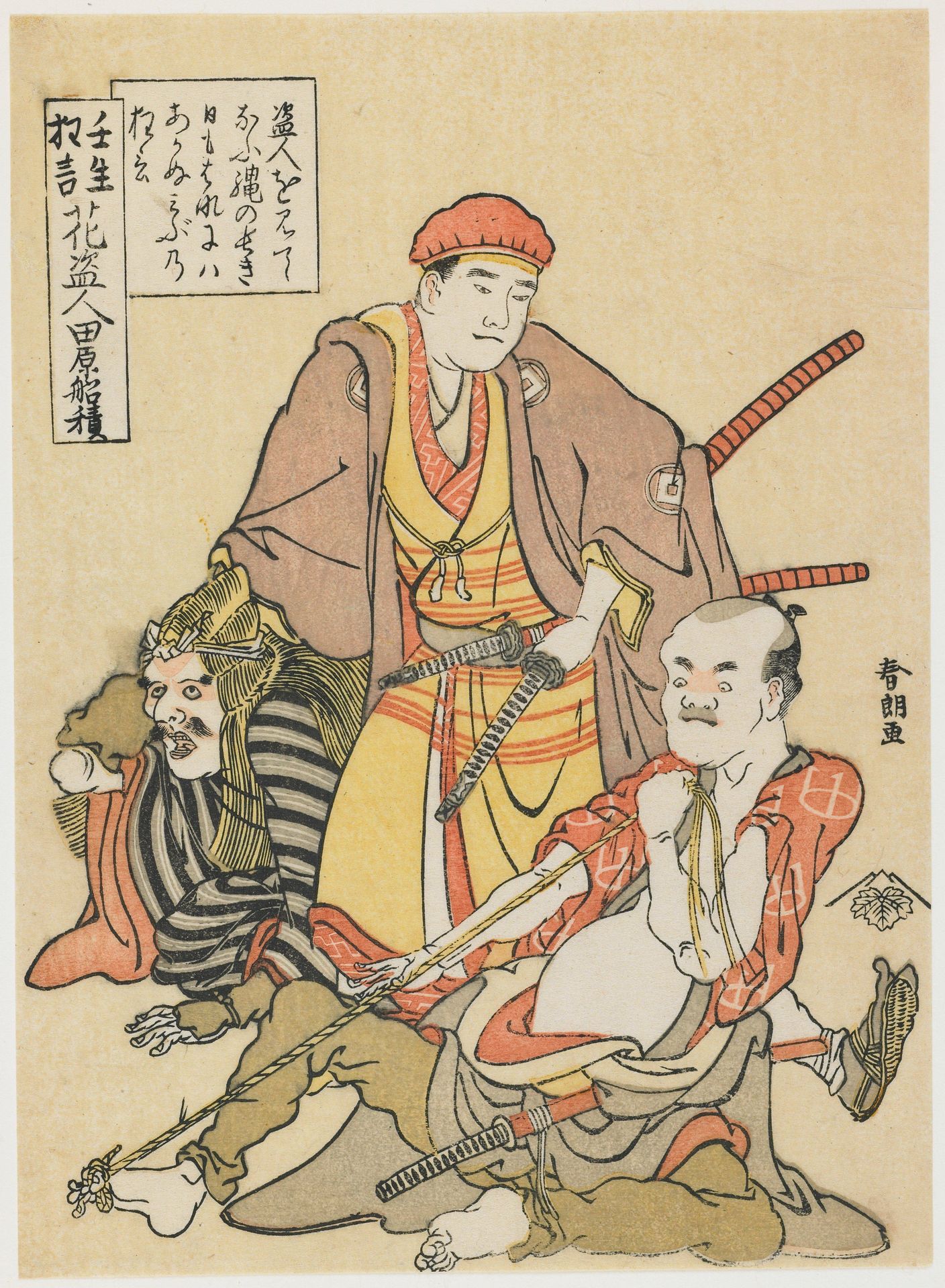
In the bustling streets of Edo—the sprawling, vibrant capital of Japan during the Tokugawa Shogunate (1603–1867)—a merchant standing outside his storefront could glean the entire life story of a passing prisoner without hearing a single word. As a samurai police officer led a captive by a hemp rope, the merchant might note the specific pattern of the knots, the color of the cord, and the way the suspect was positioned. Within seconds, the merchant would know the prisoner’s social status, the nature of their crime, and their ultimate fate: execution, exile, or the dark confines of the Denmacho prison.
This silent language was hojojutsu, or "the art of rope-binding." More than a simple method of restraint, it was a sophisticated martial discipline that transformed the humble rope into a tool of public shaming, social classification, and, when necessary, brutal combat.
The Evolution of Restraint: From Warring States to Edo Peace
The origins of hojojutsu are deeply rooted in the violent transition from the chaotic Warring States period (Sengoku Jidai) to the relative stability of the Edo era. During the centuries of near-constant civil war, Japanese warriors developed various methods for subduing enemies on the battlefield. When the Tokugawa Shogunate unified the country, these battlefield techniques were refined and codified.
A Chronology of Control
- 1467–1603 (Sengoku Period): The proto-stages of rope-binding emerged. These were utilitarian, often brutal methods designed to quickly neutralize armored combatants and drag them from the field for interrogation or execution.
- 1603–1867 (Edo Period): As the samurai transitioned from warriors to administrators and law enforcement officers, hojojutsu evolved. It became an essential skill for the machi-bugyo (city magistrates) and their subordinates, the samurai police. It moved away from pure field-torture toward a highly regulated system that prioritized public order and symbolic communication.
- Late 19th Century to Present: With the Meiji Restoration and the modernization of Japan’s police force, traditional hojojutsu was largely replaced by modern handcuffs and steel restraints. However, the art form was preserved by traditional martial arts (kobudo) schools and, intriguingly, transitioned into the aesthetic and erotic practices of shibari and kinbaku.
Reading the Rope: The Semiotics of Binding
To the untrained eye, a prisoner in Edo might have appeared simply "tied up." To the contemporary observer, however, the binding was a visual ledger. The techniques utilized principles of leverage, friction, and anatomy to create intricate, often beautiful, knot patterns that acted as a social identification card.
The Significance of the Knot
The presence of a visible knot was the primary indicator of status and culpability. In the cultural landscape of Edo, being bound with knots—specifically around the neck or arms—was a profound source of disgrace, effectively stripping the prisoner of their human dignity and treating them as an animal.
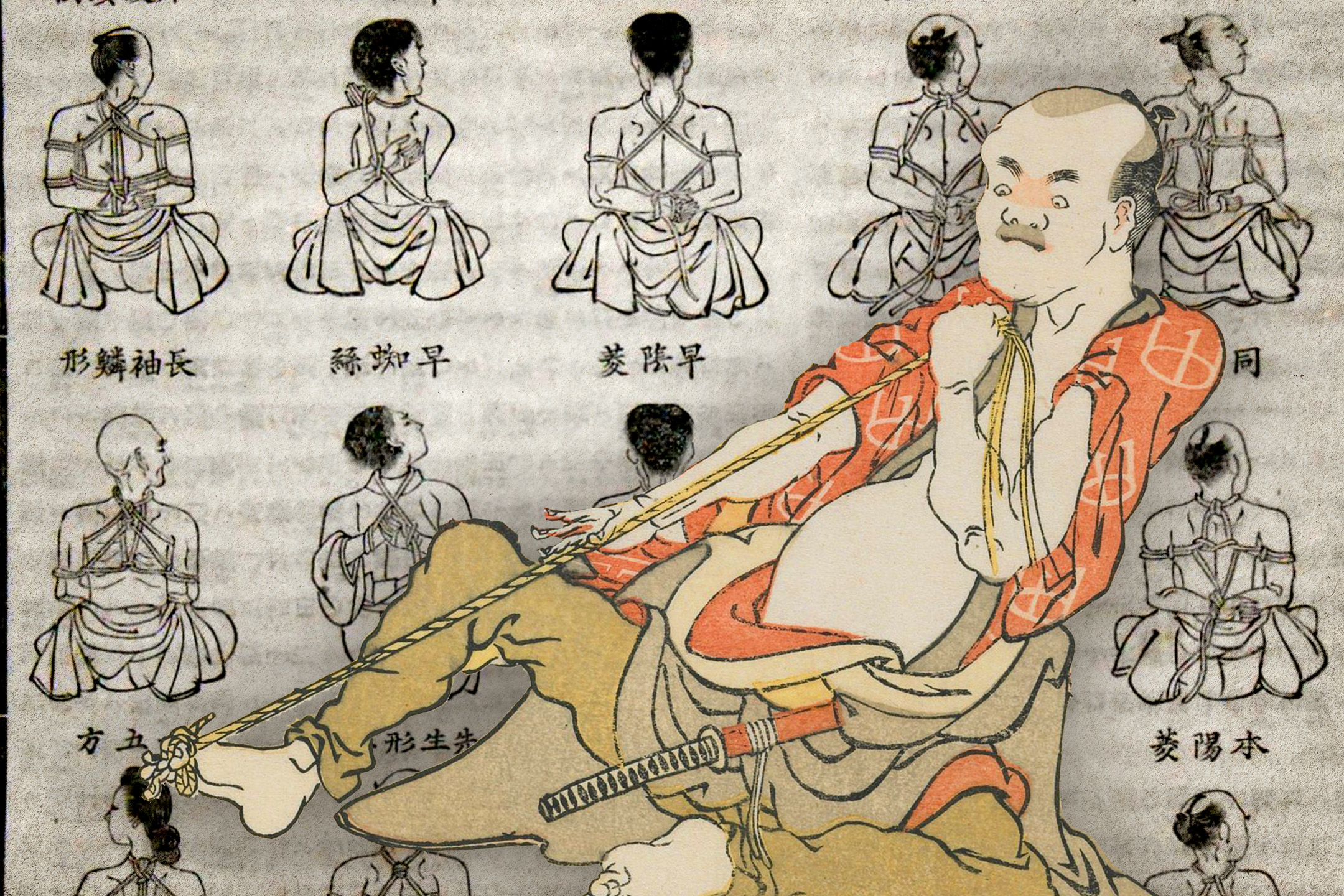
Conversely, suspects who had not yet been convicted were often treated with a degree of discretion. They might be bound in ways that remained hidden under their clothing, or they might be restrained without formal, visible knots. This distinction ensured that the public could immediately differentiate between a suspect awaiting trial and a condemned criminal being led to the execution grounds.
Categorical Bindings
The hojojutsu schools developed specific "tying recipes" based on the prisoner’s demographic:
- The Double Diamond: Reserved for the samurai class, this pattern signified the gravity of a crime committed by a member of the elite.
- Breast-Hooking Ties: Primarily used for women, these were designed to be both secure and compliant with the modesty standards of the era.
- Specialized Restraints: There were unique patterns for children, Buddhist monks, the visually impaired, and even the "strongmen" of the day, ensuring that the police could safely manage any threat level.
Supporting Data: Materiality and Authority
The materials used in hojojutsu were as symbolic as the knots themselves. The ropes, or nawa, were categorized by their function and durability.
The Aesthetics of Law Enforcement
The hayanawa (fast rope) was typically a simple, unadorned hemp cord, intended for immediate capture and temporary holding. In contrast, the honnawa (main rope) was an elaborate, heavy-duty tool used for high-profile transport.
A fascinating detail noted by historians is the frequent use of red-dyed rope. While the dye—often derived from animal blood—helped preserve the hemp fibers by infusing them with salt, it also served a psychological purpose. The vibrant red color was striking, intimidating, and unmistakably tied to the state’s monopoly on violence.
The Shogunate’s attention to detail extended to seasonal changes. Authorities would often swap the rope’s color or tone to match the cycle of the year. While some might view this as a purely aesthetic choice, it served as a powerful declaration of state capacity: by dedicating the resources to manage, dye, and maintain a rotating inventory of specialized ropes, the Shogunate signaled to the populace that they were organized, wealthy, and firmly in control of the law.
The Samurai SWAT Team: Combat and Coercion
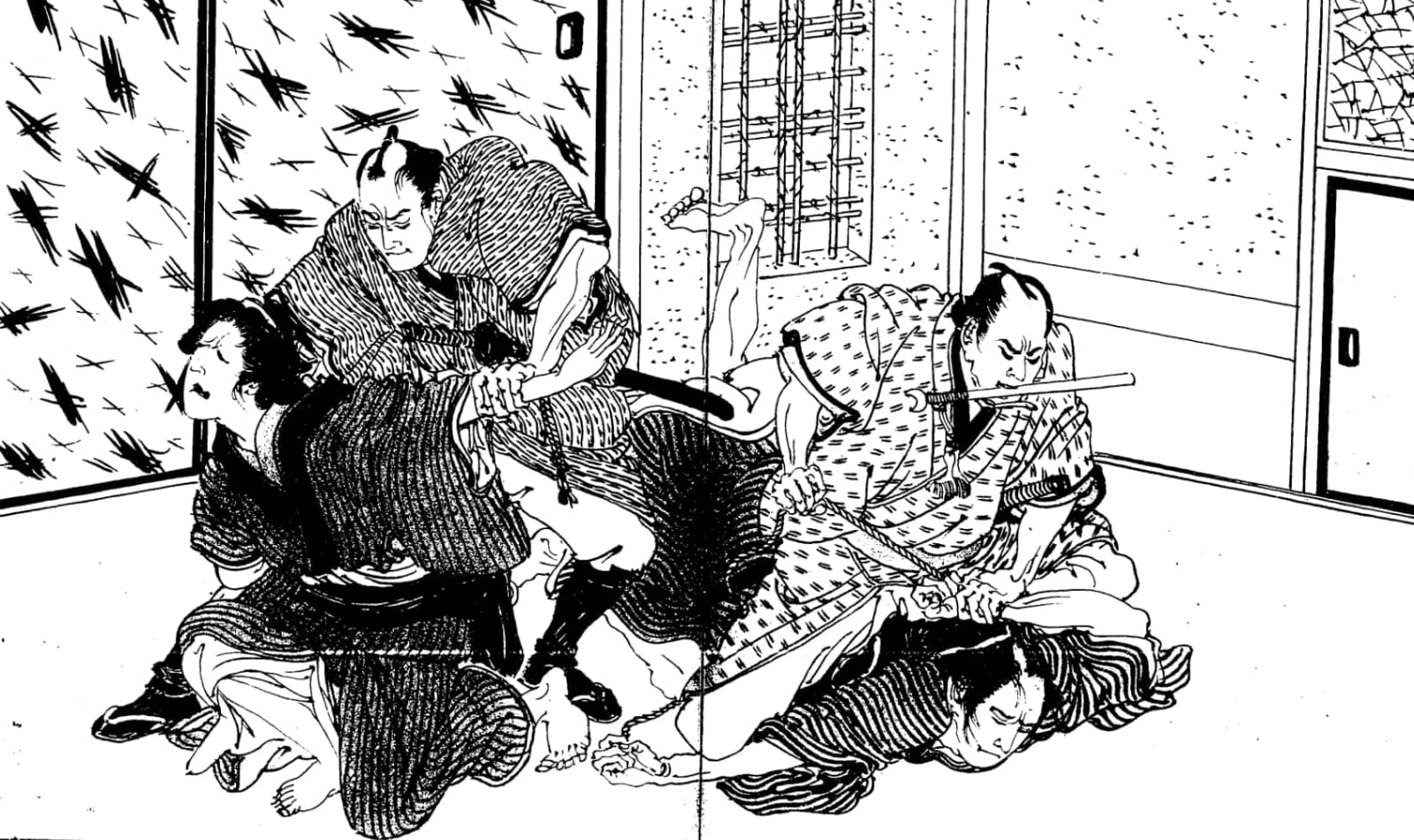
It is a common misconception that the Edo police were merely guards. Many served as an elite, decentralized "SWAT" force. Because these officers were often prohibited from carrying lethal weapons (swords) in the course of their duties to avoid unnecessary bloodshed, they relied on hojojutsu not just as a transport mechanism, but as an offensive martial art.
The Rope as a Weapon
In instances where an arrestee resisted, the rope became a formidable defensive tool. Experienced officers could utilize the honnawa—often equipped with iron rings or hooks—to disarm, trip, or lock the joints of a violent suspect.
Furthermore, the art of hojojutsu was studied to master the human body’s pain points. By applying precise pressure on nerve clusters and restricting blood flow through specific binding angles, officers could neutralize threats with minimal exertion. For heinous offenders, these techniques were intentionally applied to cause prolonged discomfort, effectively serving as a precursor to formal interrogation and punishment.
Implications: The Legacy of the Knot
The practice of hojojutsu offers a unique lens through which to view the Tokugawa period. It highlights a society that was obsessed with order, hierarchy, and the public performance of justice. Every movement of the samurai police and every twist of the rope was designed to reinforce the social contract: the state provides security, and in exchange, the individual must submit to the state’s defined hierarchy.
Modern-Day Interpretations
Today, the legacy of hojojutsu survives in two distinct spheres. Within the world of kobudo (traditional martial arts), it is preserved as a historical discipline, studied by those interested in the tactical history of feudal Japan. Simultaneously, the aesthetic principles of the art have been integrated into the world of shibari and kinbaku.
While the context has shifted from the harsh, authoritarian streets of Edo to the consensual, intimate spaces of modern eroticism, the fundamental elements remain the same: an appreciation for the tension between restraint and release, and the recognition of the rope as a tool of deep, complex communication.
In conclusion, hojojutsu was never just about holding a prisoner in place. It was a sophisticated intersection of martial arts, forensic psychology, and state-sanctioned theater. To understand the rope is to understand the soul of Edo Japan—a society that found order in chaos and turned the act of capturing a human being into a refined, unmistakable art.












No comments yet. Be the first to join the conversation!