Lina Hope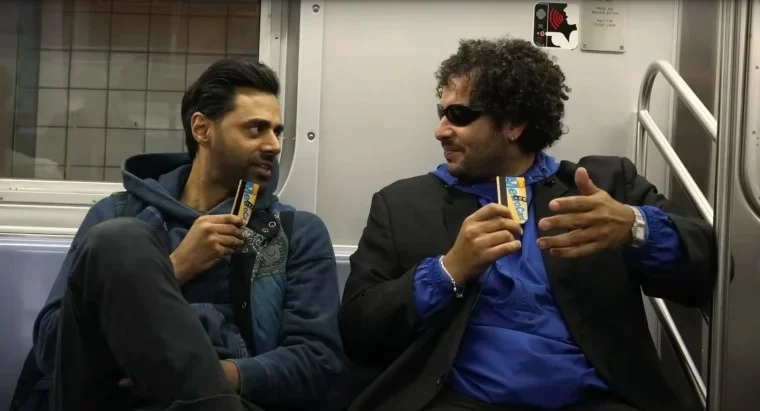
In an era defined by the polished artifice of high-budget streaming productions and the uncanny valley of AI-generated content, there is something radical about a show that relies on nothing more than the screech of subway wheels, a decent microphone, and a willingness to embrace the unpredictable. Kareem Rahma’s YouTube series, Subway Takes, has emerged as a cultural touchstone by stripping the talk show format down to its barest essentials. By capturing unfiltered, often absurd, and deeply human conversations on public transit, Rahma has created a blueprint for modern, low-footprint filmmaking that prioritizes authenticity over technical perfection.
The Genesis of a Viral Experiment
The premise of Subway Takes is deceptively simple: Rahma sits across from a guest—ranging from complete strangers to high-profile comedians like Eric André—on a moving train. They discuss everything from the ethics of potlucks to the intricacies of the social contract and the existential dread of modern romance.
For Rahma, the project began not as a calculated bid for internet stardom, but as a low-stakes creative experiment. “I’m literally not working in Hollywood, so let me go do this thing that will probably fail,” Rahma told IndieWire. “I actually thought it was a really dumb idea because I’ve had so many of those that I was like, ‘What are the odds that this one’s good?’”
The answer, as it turns out, is that the odds were in his favor. Since its inception, the show has scaled from a two-person operation to a global production, with transit systems in London, Berlin, and Chicago serving as the backdrops for Rahma’s signature style of conversational inquiry.
Chronology: From Guerilla Filmmaking to Global Transit
The evolution of Subway Takes reflects a broader shift in digital media. In the early days, the production footprint was minimal: Rahma, a camera operator, and a friend. This "run-and-gun" mentality was not just a stylistic choice but a logistical necessity. To maintain a low profile in the cramped, often volatile environment of the New York City subway system, the team had to operate with extreme discretion.
As the show gained traction, the team expanded, incorporating a rotation of producers and camera crews. However, the core ethos remained unchanged: keep the footprint small, cause the least amount of disruption to fellow passengers, and maintain the "fluid" nature of the environment.
The schedule is now a well-oiled machine, typically operating between 11:00 a.m. and 2:00 p.m. on trains traversing the East River between Manhattan and Brooklyn. This specific window allows the crew to find cars that are sparsely populated, ensuring that the shoot does not inconvenience commuters. It is a testament to the show’s respectful approach that despite years of filming in public, Rahma reports that he has never encountered a hostile reaction from commuters.

The Logistics of Public Production
The success of Subway Takes hinges on the ability to thrive in a non-controlled environment. While traditional talk shows rely on soundproof stages, custom lighting rigs, and hours of pre-production, Rahma’s team must adapt to the rhythmic constraints of the transit system.
The "Low-Footprint" Methodology
The logistical challenge of filming with high-profile guests adds a layer of complexity. As Rahma notes, celebrities often arrive with entourages, which can quickly crowd a train car. To mitigate this, the production enforces strict rules:
- Minimalist Equipment: Using lightweight, high-quality camera setups that don’t require external power or bulky tripods.
- Natural Light and Sound: Embracing the ambient noise of the train, which adds to the "grounded" aesthetic of the series.
- No Special Accommodations: Guests, regardless of their fame, are treated as commuters. As Rahma explains, "Unless you’re, like, Cate Blanchett or J. Lo, sometimes you’re just mixed with other people."
This lack of artifice is the show’s greatest strength. When a guest like Eric André joins the fold, they aren’t shielded by publicists or security detail. They are just another person on the train, which disarms the viewer and creates a level of intimacy rarely seen in traditional media.
The Editing Room: Distilling Chaos into Content
If the filming is the "guerilla" part of the process, the editing is where the "craft" shines. Distilling fifteen minutes of erratic, noisy conversation into a punchy, viral-ready video requires a surgical touch.
Rahma credits his team of editors for maintaining a balance that avoids the pitfalls of "slop content." The goal is to make the conversation feel dynamic and fast-paced without sacrificing the soul of the interaction. By cutting around the dead air and highlighting the most "hooky" moments, the team transforms a mundane train ride into a narrative experience.
Official Responses and Reflections
In interviews, Rahma has spoken candidly about the steep learning curve he faced as an interviewer. The transition from chatting with friends to interviewing seasoned performers was not always seamless. He cites an episode with comedian Bill Burr as a pivotal moment in his development.
"There was an episode with Bill Burr that was really hard for me," Rahma admitted. "This guy just totally destroyed me in the first 15 seconds; made me feel like I was bad at my job. And then I got it back on track after like 10 or 15 minutes, and by the end of it, he was chummy and happy and complimented me on my skills."

This experience served as a validation of his growth. Rahma realized that his "skill" wasn’t necessarily in the technical execution of the interview, but in the ability to hold space for the guest, set them at ease, and navigate the ego-driven dynamics of celebrity culture.
Implications: The Future of "Authentic" Media
Subway Takes arrives at a critical juncture in the digital landscape. In the "Year of Our Lord 2026," as Rahma puts it, audiences are increasingly weary of manufactured perfection. With the rise of deepfakes and AI-generated personas, there is a palpable hunger for "realness."
Combatting the "Slop"
Rahma views his show as an antidote to the content glut. "I think in a world where everything feels fake, and sometimes is fake with AI and such, it’s a breath of fresh air to see something so normal, and just like real life," he says. The show’s popularity proves that audiences are not just looking for high-definition visuals; they are looking for a connection that feels unscripted and untainted by corporate polish.
Scaling the "Subway" Model
The potential for the Subway Takes model is immense. As Rahma looks toward the future, he is eyeing international expansion, with potential seasons in Seoul or Tokyo. However, he remains cautious. The success of the show is deeply tied to the "train etiquette" of the region. Adapting the format to the quieter, more reserved transit systems of East Asia will require a delicate touch, further proving that the show’s success is as much about cultural anthropology as it is about comedy.
Conclusion
Subway Takes is more than a YouTube series; it is a case study in modern production. It demonstrates that in an age of infinite digital noise, the most effective way to cut through is to embrace the mundane. By taking the talk show out of the studio and onto the subway, Kareem Rahma has reminded us that the most interesting stories don’t require a green screen—they just require a willingness to listen, a bit of patience, and the courage to stop at every station along the way. As the industry continues to grapple with the ethics and implications of AI and automated content, shows like Subway Takes serve as a vital reminder that the "stupidest" ideas often contain the most profound truths.

 Jia Lissa
 Iffa Jayyana