Nana
Nana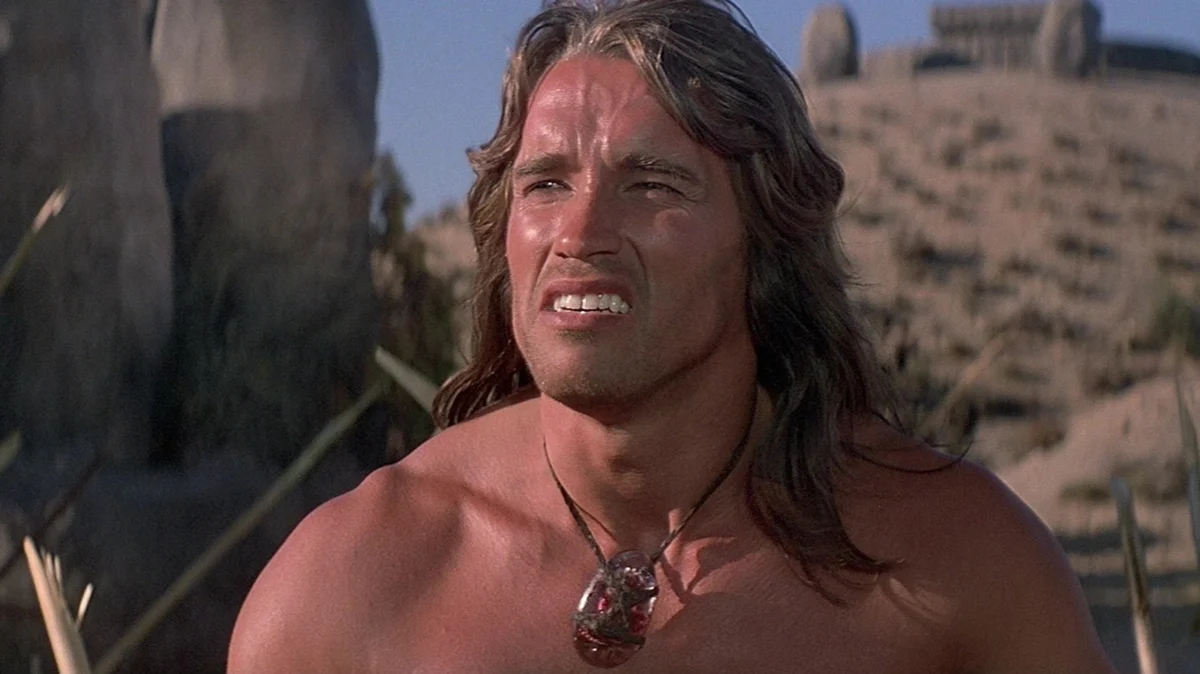
In the pantheon of "what could have been" cinema, few projects carry the sheer, audacious charisma of a pirate epic starring Arnold Schwarzenegger. Before the gargantuan success of Disney’s Pirates of the Caribbean turned the high seas into a goldmine for studio executives, the 1990s were a volatile, high-stakes era for action filmmaking. During this period of unchecked ambition, Schwarzenegger and director Chuck Russell—the creative force behind The Mask and A Nightmare on Elm Street 3: Dream Warriors—contemplated a radical reimagining of Rafael Sabatini’s classic 1922 novel, Captain Blood.
While the project never set sail, it remains a fascinating footnote in the history of blockbuster filmmaking, representing a collision between the golden age of literary swashbuckling and the peak of the muscle-bound action hero era.
The Genesis of an Austrian Pirate
The allure of Captain Blood lies in its pedigree. Sabatini’s protagonist, Peter Blood, is a physician turned slave turned legendary pirate captain—a man of intellect and swordplay. In the 1990s, the prospect of casting the world’s most recognizable action star in a period swashbuckler was an idea that held significant commercial gravity.
In an exclusive interview, director Chuck Russell reflected on the project’s development, noting that the vision was not just a vanity project, but a genuine attempt to define the pirate genre for a new generation. "It was very much like Pirates of the Caribbean before Pirates of the Caribbean," Russell explained. "In fact, it was a popular script that may have inspired Pirates a little bit, but it was a big, fun, action pirate movie, and I thought, ‘This Austrian pirate? No reason not to do that.’"
![Arnold Schwarzenegger Almost Starred In An Ambitious Pirate Movie [Exclusive]](https://www.slashfilm.com/img/gallery/arnold-schwarzenegger-almost-starred-in-a-pirate-movie-based-on-a-famous-literary-character-exclusive/l-intro-1781211457.jpg)
However, the project faced an uphill battle from the start. Despite the high-concept appeal, Schwarzenegger possessed a deep-seated hesitation regarding period-accurate costume dramas. The actor, whose star power was cemented by futuristic sci-fi and modern-day action, was wary of the constraints inherent in historical settings. "Arnold was uncomfortable with doing a period piece," Russell added. "Which is why he brought me Eraser."
Chronology of a Failed Voyage
The timeline of Captain Blood is inextricably linked to the fiscal instability of Carolco Pictures, the legendary studio behind Terminator 2: Judgment Day. In the mid-90s, Carolco was teetering on the edge of a precipice, desperate for a franchise-starter that would keep them afloat.
The collapse of the Schwarzenegger-led Captain Blood didn’t occur in a vacuum; it was part of a larger chain reaction of canceled epics. Prior to focusing on Captain Blood, the studio had been heavily invested in a project titled Crusade. Directed by the provocative Paul Verhoeven, Crusade was envisioned as a sprawling historical epic—a tonal hybrid of Spartacus and Conan the Barbarian.
The studio’s eventual refusal to bankroll the $100 million-plus budget for Crusade led to a public and acrimonious split between Verhoeven and the studio. With the Crusade dream dead, the studio pivoted aggressively toward the pirate genre as a potential salvation, leading to the greenlighting of Cutthroat Island (1995). The failure of Cutthroat Island—a film that remains one of the most infamous financial disasters in cinema history—essentially shuttered Carolco Pictures and effectively buried any remaining interest in high-budget pirate films for the better part of a decade.
![Arnold Schwarzenegger Almost Starred In An Ambitious Pirate Movie [Exclusive]](https://www.slashfilm.com/img/gallery/arnold-schwarzenegger-almost-starred-in-a-pirate-movie-based-on-a-famous-literary-character-exclusive/intro-1781211457.jpg)
The Shadow of "Cutthroat Island"
To understand why Schwarzenegger’s Captain Blood was shelved, one must look at the climate surrounding Cutthroat Island. The film, which famously cost over $115 million in 1995 dollars, was a gargantuan risk. When it flopped, it didn’t just lose money; it created a toxic atmosphere in Hollywood regarding the pirate genre.
The failure of Cutthroat Island served as a cautionary tale that likely echoed in the ears of any major star considering a swashbuckling role. For Schwarzenegger, the decision to pivot toward the contemporary techno-thriller Eraser was a strategic retreat into a genre where he held absolute dominance. While Eraser provided fans with the high-octane spectacle they expected—complete with iconic sequences involving CGI crocodiles and terminal velocity parachute jumps—the world lost the chance to see Schwarzenegger deliver a period-accurate, rapier-wielding performance.
The Literary Legacy: Why "Captain Blood" Persists
Despite the film’s failure to materialize, the source material remains a pillar of adventure literature. Rafael Sabatini’s Captain Blood is the archetype for the "chivalrous rogue." Unlike the bloodthirsty pirates of historical record, Peter Blood occupies a space of romantic heroism, mirroring the anti-establishment sentiment that audiences gravitate toward in modern franchises like Pirates of the Caribbean.
The 1935 film adaptation, starring the legendary Errol Flynn, remains the gold standard of the genre. Flynn’s performance defined the visual and tonal language of the swashbuckler—witty, brave, and inherently charismatic. It is easy to see why Russell and Schwarzenegger were drawn to the material; it is a story about the triumph of the individual against the stifling bureaucracy of empires.
![Arnold Schwarzenegger Almost Starred In An Ambitious Pirate Movie [Exclusive]](https://www.slashfilm.com/img/gallery/arnold-schwarzenegger-almost-starred-in-a-pirate-movie-based-on-a-famous-literary-character-exclusive/an-infamous-pirate-movie-flop-exists-because-an-arnold-schwarzenegger-historical-epic-didnt-take-course-1781211459.jpg)
Implications for Modern Blockbuster Cinema
The unrealized Captain Blood serves as a case study in the evolution of intellectual property in Hollywood. In the 1990s, studios were often hesitant to bet on period pieces due to the perceived risk of "alienating" modern audiences. Today, the landscape is entirely different. Historical adventure films are now global commodities, heavily reliant on franchise building and world-building that mirrors the very script that was once deemed too risky for Schwarzenegger.
The influence of that abandoned script is a lingering ghost. As Chuck Russell noted, elements of the Captain Blood screenplay likely trickled into the creative ether that eventually birthed the Jack Sparrow era. The failure to make the film didn’t mean the idea was flawed; it meant the industry’s infrastructure was not yet prepared to support such a massive, imaginative undertaking.
Conclusion: The "Eraser" Trade-off
While the loss of an Schwarzenegger-led pirate epic is a source of eternal curiosity for film buffs, there is a silver lining. The redirection of that energy into Eraser allowed the star to lean into the unique strengths of the 90s action aesthetic. We received a film that is, in its own right, a quintessential slice of the era’s "maximalist" action style.
As we look back at the development files of the 1990s, Captain Blood stands as a reminder that the best movies are sometimes the ones that never get made—existing instead as a tantalizing "what if" that allows us to imagine the Governator standing on the deck of a galleon, sword in hand, ready to take on the British Navy. Sometimes, the most important part of a legacy is the ambition that preceded it, even if the final product never reaches the shore.

 Nana Wu
 Jia Lissa