

Welcome back to TechCrunch Mobility, your definitive source for the evolution of transportation and the increasingly central role artificial intelligence plays in the future of movement. If you’re not already subscribed to our newsletter, click here to join the conversation and receive these insights directly in your inbox.
After a brief hiatus, I’ve returned to find the landscape of autonomous vehicles (AV) in a state of significant flux. The industry is currently defined by two major narratives: the cooling of once-promising corporate partnerships and a tightening regulatory noose aimed at ensuring public safety.
The Great Uncoupling: Waymo and Uber’s Evolving Strategy
The most notable development during my time away was the quiet dissolution of the Waymo-Uber partnership in Phoenix. While the two giants continue to facilitate robotaxi services in Atlanta and Austin, the Phoenix split raises a critical industry question: Is the era of "frenemy" collaboration in the robotaxi sector nearing its expiration date?
In my assessment, the most compelling story isn’t the termination of these contracts, but the inevitable pivot to direct competition. We are already witnessing an escalation in rhetoric, with Uber executives occasionally taking pointed, albeit thinly veiled, shots at Waymo’s operational model. As these remaining partnerships reach their natural end, I expect that these diplomatic barbs will evolve into aggressive, direct market maneuvers. The primary battleground will likely be regulatory policy, specifically in high-value urban markets where robotaxi companies are currently lobbying for broader operational access.
NHTSA’s “Call to Action” and the First Responder Crisis
Beyond corporate rivalries, the autonomous vehicle industry faced a significant federal intervention this week. Jonathan Morrison, Administrator of the National Highway Traffic Safety Administration (NHTSA), issued a firm directive to all autonomous vehicle developers, emphasizing that the persistent interference of robotaxis with first responders and law enforcement is no longer tolerable.
The Federal Mandate
Morrison’s language was uncharacteristically sharp, signaling a shift from observation to enforcement. “Let me be clear: the inability to detect and appropriately respond to such situations represents a functional insufficiency,” Morrison stated. “Emergency scenes are not rare or extreme ‘edge cases.’ As such, NHTSA is today issuing a call to action for AV developers and operators to immediately focus their resources on fixing this issue.”

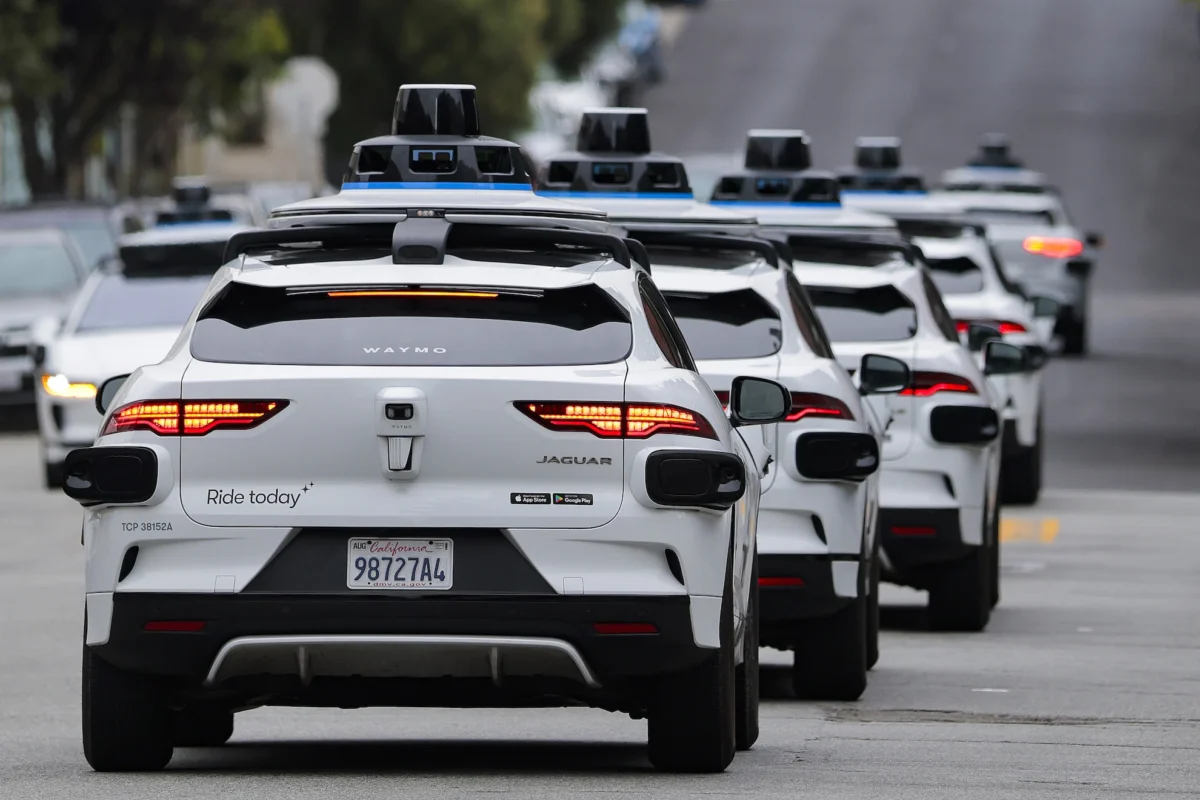
While the directive was sent to every AV developer listed under the Department of Transportation’s Standing General Order, it is difficult not to interpret this as a targeted message toward Waymo. Given that Waymo currently maintains the largest footprint of any robotaxi fleet in the United States—operating extensively in Los Angeles, San Francisco, and Phoenix—they have been at the center of numerous documented incidents involving emergency vehicles.
Localized Pressure in San Francisco
The federal pressure arrives on the heels of mounting local frustration. In San Francisco, Supervisor Bilal Mahmood has formally announced his intention to launch an inquiry into the impact of autonomous vehicles on public infrastructure. The catalyst for this move was the fallout from a July 4 fireworks show, which resulted in a massive traffic gridlock. Reports from the ground were damning: numerous Waymo vehicles were left stranded, their batteries drained by the congestion, eventually requiring them to be towed and further complicating the city’s ability to manage emergency response routes.
Chronology of Regulatory and Operational Developments
To understand how we arrived at this critical juncture, we must look at the recent timeline of events:
- Early 2026: Waymo expands its presence in major U.S. cities, solidifying its position as the market leader in the robotaxi space.
- March 2026: A comprehensive TechCrunch investigation highlights the frequency of Waymo’s run-ins with first responders, suggesting these were not isolated anomalies but systemic operational challenges.
- Late June 2026: Waymo and Uber quietly conclude their partnership in Phoenix, signaling a shift in their long-term strategic alliance.
- July 4, 2026: A post-fireworks traffic meltdown in San Francisco results in a fleet of stranded, dead-battery robotaxis, drawing public ire and sparking a municipal inquiry.
- July 2026: NHTSA releases its updated 2026 Regulatory Plan, alongside a federal directive demanding that AV developers present concrete technical "solutions" to emergency vehicle interference by the end of the month.
The Regulatory Horizon: FMVSS and Future-Proofing
While the headlines focus on the friction between robotaxis and emergency responders, the federal government is simultaneously preparing for the next generation of vehicle design. The recently updated 2026 Regulatory Plan and Unified Agenda includes proposed changes to the Federal Motor Vehicle Safety Standards (FMVSS).
These standards, which historically govern everything from steering column placement to pedal accessibility, are being reconsidered to accommodate the radical designs of modern startups. Companies like Tesla and Zoox are currently pioneering vehicles that lack traditional human-centric controls. By updating these standards, the government is essentially acknowledging that the era of the human driver is beginning to fade, providing a clearer path to certification for purpose-built, steering-wheel-less autonomous transport.
Financial Health: Rivian’s Billion-Dollar Gamble
In the realm of capital markets, Rivian dominated the headlines this week. The EV manufacturer announced the sale of 86.25 million Class A common shares at $15.50 each, successfully raising approximately $1.32 billion in new capital.

Market Context
This cash infusion arrives at a pivotal moment. With the R2 SUV hitting the market last month and the company raising its 2026 sales forecast to between 65,000 and 70,000 vehicles, the capital is likely earmarked for the high costs of scaling production. While Rivian has seen robust growth in its R1 and commercial delivery vehicle (EDV) segments, the company remains unprofitable. Scaling a vehicle line is notoriously capital-intensive, and this raise serves as a reminder that even for the most promising EV startups, the road to profitability is paved with heavy investment.
Supporting Data: Recent Funding and Market Activity
The broader mobility ecosystem continues to see high-stakes activity outside of the major automakers:
- Bidbus: The Los Angeles-based startup raised $15 million in a Series A round led by Ibex Investors. By creating a digital marketplace that forces dealerships to bid on used vehicles, they are attempting to inject transparency into a notoriously opaque industry.
- Lyft’s International Expansion: In a strategic play to bolster its micromobility portfolio, Lyft is acquiring Serveo’s bike-share business in Spain.
- TaiSan’s Sodium-Ion Bet: U.K.-based battery startup TaiSan raised £4.65 million to further its research into sodium-ion technology, a potential alternative to the current lithium-heavy supply chain.
- Manna Aero: The Irish drone delivery company is making a major push into the U.S. market, breaking ground on a factory in Tulsa, Oklahoma, with the goal of hiring 1,000 employees over the next few years.
Implications: The Path Forward
The convergence of the NHTSA’s directive, the breakdown of major corporate partnerships, and the ongoing struggle to integrate AVs into dense, human-driven urban environments paints a clear picture. The "honeymoon phase" for autonomous vehicles—characterized by light oversight and high enthusiasm—is over.
The Consequences of Compliance
For companies like Waymo, the next 30 days are critical. The NHTSA’s demand for "solutions" to emergency vehicle interference is not a suggestion; it is a regulatory ultimatum. If developers cannot prove their systems can reliably yield to first responders, we may see a forced reduction in operational areas or, in the worst-case scenario, the suspension of operating permits.
The Broader Mobility Ecosystem
Beyond the robotaxi sector, the industry is grappling with external threats and internal pivots. The massive data breach at AssuranceAmerica, which exposed the driver’s license numbers of 6.9 million Americans, serves as a sobering reminder of the cybersecurity risks inherent in digitized transportation. Simultaneously, the launch of "anti-Elon" ETFs suggests that the market is becoming increasingly polarized regarding the leadership styles of the figures driving the EV revolution.
Final Thoughts
As we move into the second half of 2026, the industry is entering a "professionalization" era. The focus is shifting from simple, impressive demos to the grit of policy compliance, sustainable unit economics, and public safety integration.

For those of you looking to deepen your understanding of the early-stage landscape, I highly recommend checking out the new season of the Build Mode podcast. Hosted by Isabelle Johannessen, it provides an essential masterclass for founders navigating the current, complex fundraising environment.
Stay tuned. The road ahead is winding, but the data suggests it is becoming much more regulated.
Disclaimer: When you purchase through links in our articles, we may earn a small commission. This does not affect our editorial independence.











