

In an era defined by the rise of monolithic walled gardens and opaque, black-box artificial intelligence systems, the fundamental promise of the internet—as a free, open, and decentralized space—is under unprecedented strain. As tech giants tighten their grip on user data and platform accessibility, a new documentary, Code for the People, seeks to re-ignite the public’s passion for the open-source movement.
Funded by Automattic, the powerhouse behind WordPress, Tumblr, and WooCommerce, the film is more than a corporate-backed project; it is a manifesto for digital autonomy. Directed by the acclaimed filmmaker Bao Nguyen, Code for the People argues that the preservation of the digital commons is not merely a technical concern for engineers, but a civil rights issue for every individual who navigates the modern web.
The Core Mission: Protecting the Open Web
At its heart, Code for the People functions as a clarion call to action. It traces the journey of Automattic CEO Matt Mullenweg and the evolution of the company, which stands as a rare example of a for-profit entity built entirely upon the bedrock of open-source philosophy.
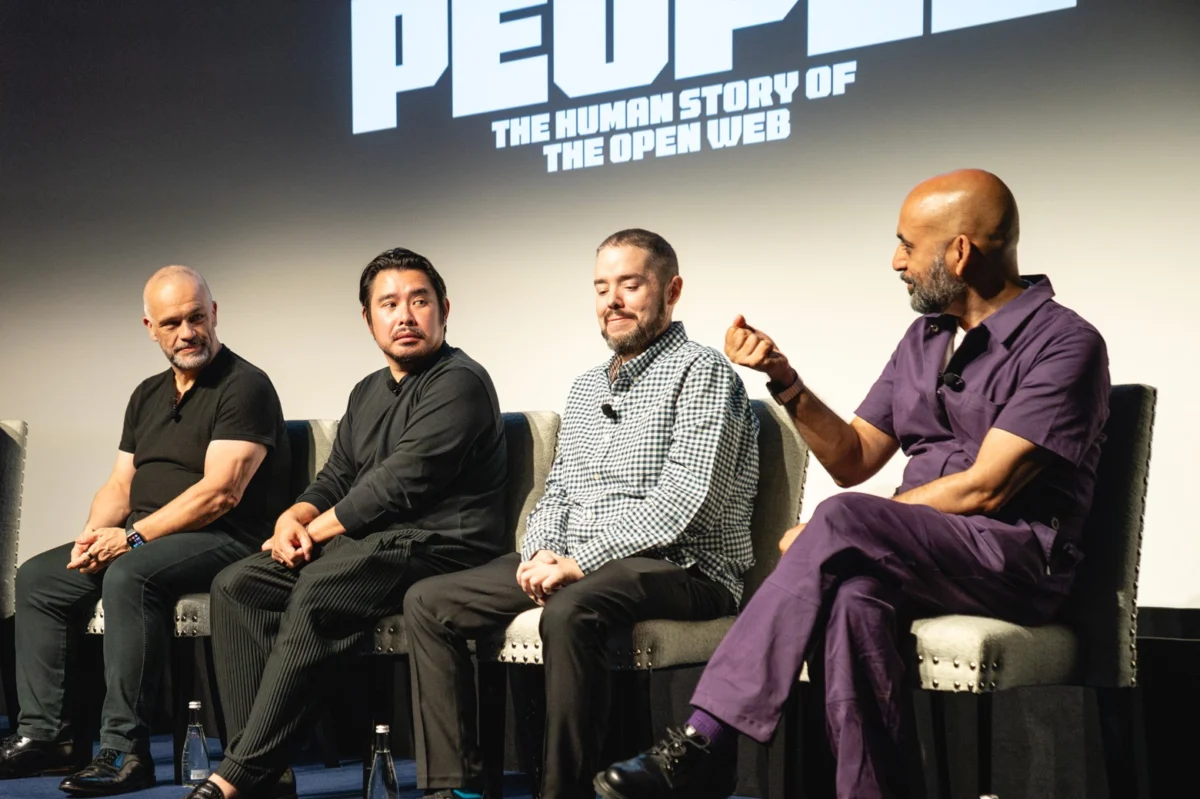
The documentary, which runs for approximately 20 minutes, premiered in New York City on July 1 at the Crosby Street Hotel, followed by a panel discussion moderated by Variety. The film serves to demystify the complex, often invisible world of open-source code, illustrating how it powers the infrastructure of our daily lives. By deconstructing these technical layers, Nguyen hopes to inspire a new generation of netizens to reclaim their agency in a digital world increasingly dominated by centralized control.
A Chronology of the Open-Source Ideal
To understand the urgency of Code for the People, one must look at the history of the web’s development.
- The Early Days (The "Wild West"): In the internet’s infancy, the web was built on open protocols. It was a space where innovation was decentralized, and interoperability was the standard.
- The Rise of the Silos: Throughout the 2010s, social media conglomerates began to build "walled gardens." By trapping user data and restricting the ability to port information between platforms, these companies commodified the user experience, effectively ending the era of the open web.
- The AI Pivot: The recent explosion of Generative AI has introduced a new threat: "black-box" systems. These models are built using massive datasets scraped from the public web—often without consent—and housed within closed, proprietary systems that the public cannot audit or understand.
- The Present Moment: With the release of Code for the People (scheduled for free public access on July 9 at codeforthepeople.com), the conversation has shifted toward a "protopian" future—a vision that acknowledges current dystopias but offers a tangible, optimistic roadmap for reform.
Supporting Data and Philosophical Foundations
The tension between the open web and closed systems is not merely a matter of ideology; it is a battle over the future of human connectivity.
The "Protopian" Vision
Director Bao Nguyen, known for his work on Be Water and The Greatest Night in Pop, emphasizes that he is a storyteller rather than a technologist. This perspective was crucial in shaping the film’s narrative. "I wanted to make a film that was more ‘protopian,’ that gave practical ideas of how we can move forward and learn from the values we have as human beings," Nguyen explained during the post-screening Q&A.
He noted that his initial cut of the film was nearly three hours long—a testament to the depth of the subject matter—but he worked to distill it into a digestible 20-minute experience that empowers the layperson to understand why their digital footprint matters.
The Economic Case for Open Source
During the panel discussion, Paolo Belcastro, the artistic director of the Domains Maisons at Automattic, addressed the common skepticism regarding for-profit companies utilizing open-source models. He argued that the perceived conflict between "profit" and "openness" is a false dichotomy.
"You cannot convince people to use open-source software because it gives them freedom or because it gives them ownership," Belcastro argued. "At the end of the day, people are looking for convenience. Investing in the product is what allows us to provide a better user experience." According to Belcastro, when Automattic contributes to the open-source ecosystem, they are essentially helping their competitors, but the end result is a collective elevation of the entire web. When the ecosystem is better, the user wins—and ultimately, the company providing the best experience thrives.
Official Responses and Expert Perspectives
The Variety-moderated panel brought together voices from across the tech spectrum to discuss the implications of the documentary.
Anil Dash on the Ethical Crisis
Anil Dash, a prominent technologist, writer, and board member of the Electronic Frontier Foundation, delivered a scathing critique of current AI practices. "The big AI tools do not practice consent about what they do to the web, to creators, and to the rest of the world," Dash remarked.
He challenged the industry’s current trajectory, which favors a "winner-takes-all" approach to AI. "Thinking about there being one option in a technology category is so broken-brained," he stated. "It’s like thinking there should be one restaurant. There should be lots of little mom-and-pop restaurants and all different kinds of cuisines. The same is true in technology."
The "Landowner" Metaphor
A significant takeaway from the discussion was the concept of digital land ownership. Belcastro and Eric Binnion, the payments engineering lead at Automattic, emphasized that users often feel trapped because they do not own their digital "land."
"Having your own domain is a way to say, ‘This is my little piece of this internet land. I own it, and nobody can get away from me,’" Belcastro said. Binnion took it a step further, offering a direct call to action for the audience: "I would challenge all of you, if you don’t already have a domain, to go buy one and start a ‘link in bio’ landing page. You can do it on WordPress.com in five minutes. That is your space on the open web."
Implications: The Shift in Power Dynamics
The implications of Code for the People reach far beyond software development. The film argues that as users become increasingly aware of the dangers of data extraction and platform entrapment, they are beginning to vote with their wallets.
Anil Dash observed a growing sentiment among users who are willing to pay for open-source tools specifically to avoid the "extortion" of closed commercial products. This represents a fundamental shift in power: consumers are beginning to realize that "free" platforms often cost them their privacy and digital freedom, while paid, open-source alternatives offer a safer, more sustainable investment in their own autonomy.
Reclaiming the Future
The documentary positions the open web as a critical piece of modern infrastructure, similar to a public park or a library. When we allow private companies to "enclose" these spaces, we lose the ability to innovate, speak freely, and own our digital legacies.
By framing the issue through the lens of human stories rather than just lines of code, Code for the People aims to normalize the idea of digital stewardship. Whether it is owning your domain, opting for decentralized software, or demanding consent in the training of AI models, the documentary asserts that the power to shape the future of the internet still rests with the people—provided they are willing to claim it.
As the film prepares for its wider release on July 9, the message is clear: the digital commons are not a relic of the past, but the only viable foundation for a free and prosperous future. The choice between a fragmented, corporate-controlled internet and a vibrant, open web is one that will be made by the users themselves, one domain and one line of code at a time.










