


The annual announcement of the Primetime Emmy nominations is, by design, a celebration of the medium’s peak—a curated list of the most innovative, resonant, and technically proficient storytelling on television. Yet, every year, the industry is met with a glaring omission that prompts a chorus of bewilderment from critics and audiences alike. For the 2026 cycle, that collective groan of frustration belongs to the fanbase and critical champions of HBO’s Industry.
Despite producing what is arguably its most daring, narratively complex, and culturally relevant season to date, Industry was entirely absent from the 2026 Emmy ballot. For a show that has evolved from a niche financial thriller into one of the most blistering character studies of the decade, this total snub is not merely an oversight; it is a fundamental failure of the Television Academy to recognize a series that is defining the zeitgeist of the 2020s.
Main Facts: A Series Defined by Evolution
Created by former investment bankers Mickey Down and Konrad Kay, Industry began its life as a high-octane look at the brutal initiation of young graduates at Pierpoint & Co., the London branch of a global financial behemoth. While early marketing leaned into the "money shouting" aesthetic—a frantic, high-stakes environment where jargon served as a weapon—the show has since matured into something far more profound.
By the time the fourth season concluded, the series had shed its initial skin. It no longer relies on the shock value of its early episodes; instead, it offers a scalpel-sharp dissection of power, class, moral decay, and the inescapable gravitational pull of greed. At its center remains Myha’la, whose portrayal of Harper Stern remains one of the most compelling anti-hero arcs in modern television. Harper’s descent from a hungry, marginalized outsider to a ruthless, morally compromised operator is the engine of the series, supported by an ensemble cast that currently ranks among the strongest on television.
Chronology of a Masterpiece
The journey of Industry to this point has been a steady climb toward excellence, a trajectory that makes its current lack of recognition all the more puzzling.

- Season 1 & 2: Established the world of Pierpoint, introducing the core dynamic between Harper, Yasmin Kara-Hanani (Marisa Abela), and their mentors. The show gained a cult following for its visceral, sensory approach to finance.
- Season 3: The series pivoted toward a broader exploration of the "old boys’ club" and the intersection of finance and politics. The introduction of Kit Harington as Sir Henry Muck signaled a shift toward more high-profile, complex character dynamics.
- Season 4: The most recent season—the one ignored by Emmy voters—represented a creative apex. It featured the expansion of the cast to include industry veterans like Kiernan Shipka and Charlie Heaton, alongside the return of the show’s core anchors. The narrative stakes reached a boiling point, moving from boardroom maneuvering to the exploration of systemic corruption, fraud, and the ethical abyss of the elite.
Supporting Data: Why the Academy Missed the Mark
To understand the gravity of the snub, one must look at the specific elements that Industry mastered in its latest season. While the Academy often favors shows with broad, safe appeal or historical prestige, Industry operates in the trenches of contemporary anxiety.
The Acting Ensemble
The performances in Industry are not just "good"; they are transformative. Marisa Abela’s portrayal of Yasmin Kara-Hanani, a woman grappling with the trauma of her upbringing and the corrupting influence of her own privilege, is a masterclass in psychological layering. Her transition in Season 4—moving from a victim of her father’s machinations to a facilitator of darker, more systemic abuses—is one of the most difficult and nuanced arcs in recent memory.
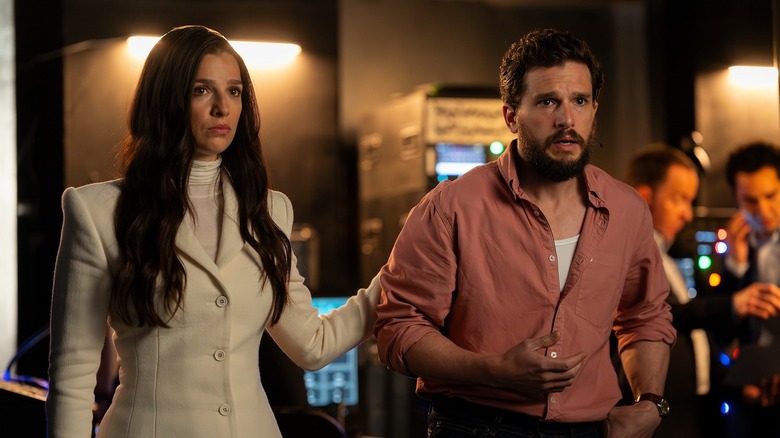
Similarly, Ken Leung’s Eric Tao provided a grounded, gritty counterpoint to the younger cast, while Kit Harington’s turn as the petulant, destructive Sir Henry Muck was a revelation. Harington, long associated with the archetypal hero of Game of Thrones, shed every ounce of that goodwill to inhabit a character defined by his own stupidity and inherited power. That he was overlooked by the Academy suggests a lack of appetite for actors playing against their established archetypes.
Thematic Resonance
The show’s focus on the "Tender" scam—a fraudulent business venture designed to enrich the already wealthy while devastating the vulnerable—mirrors the real-world exhaustion felt by many in the current economic climate. By centering its plot on the intersection of late-stage capitalism and moral bankruptcy, Industry has become the most honest reflection of our troubled times. It is a show that is not afraid to make its audience uncomfortable, a quality that is frequently the hallmark of "best drama" winners—unless, it seems, the show is Industry.
Official Responses and Industry Context
While the Television Academy remains silent on individual snubs, industry analysts have long noted a "prestige bias" that plagues the Emmys. Shows that are perceived as "niche" or "aggressive" often struggle to break into the top categories until their final seasons, if at all.

Critics have been vocal in their disappointment. Reviewers across the board have hailed the fourth season as the show’s finest, frequently citing its writing, cinematography, and the sheer audacity of its character arcs. The lack of nominations has sparked a heated discourse on social media and in trade publications, with many pointing out that the Academy’s voting body seems increasingly out of touch with the shows that younger, more engaged demographics are actually watching and discussing.
Implications: The Cost of Ignoring the Avant-Garde
The failure to nominate Industry has broader implications for the future of the medium. When the Academy consistently overlooks shows that push the boundaries of storytelling, it sends a message that "prestige" is synonymous with comfort, not challenge.
1. The Erasure of Risk
By favoring established winners and safer dramas, the Emmys risk becoming a closed loop of self-congratulation. Industry is a risky show. It uses jarring pacing, complex financial dialogue, and morally grey protagonists to force the audience to look at truths they might rather ignore. By excluding it, the Academy discourages other showrunners from taking similar risks.
2. A Disconnect with the Audience
There is an widening chasm between what the industry honors and what the audience values. Industry has found its audience through word-of-mouth and deep engagement—the kind of "water cooler" conversation that used to be the hallmark of a hit show. When the Emmy nominations fail to align with this energy, the credibility of the awards themselves is diminished.
3. The "Final Season" Trap
If the pattern holds, the Academy may wait until the fifth and final season to offer a consolation prize, a trend that feels patronizing to both the creators and the fans. A show’s excellence should be rewarded in real-time, not retroactively.
Conclusion: A Call to Watch
The 2026 Emmy snubs will eventually be forgotten by the voters, but the impact of Industry will likely endure. It is a rare piece of television that possesses a clear, uncompromising vision. While it may not have the golden statuettes to prove its worth, it has something arguably more valuable: the respect of a dedicated audience and the status of being a "show’s show"—the kind of series that peers and critics alike will look back on in five or ten years as the one that defined this era.
If you are looking for a reason to ignore the Emmy ballot and trust your own taste, look no further than Industry. It remains, regardless of what the Academy thinks, the best drama series on television. You can catch the full run of this searing, essential drama on HBO Max.










