

In the landscape of modern humanitarian technology, breakthroughs often arrive via multi-million-dollar government grants or corporate-sponsored research labs. However, in 2015, the world’s attention shifted to a middle-school classroom in Florida. Hannah Herbst, a 15-year-old student with a keen sense of observation and a heart for global connectivity, managed to achieve what many engineers spend decades attempting: a sustainable, low-cost solution for energy poverty.
Her invention, dubbed "The Beacon," is a prototype hydroelectric generator capable of harnessing the kinetic energy of moving water to produce electricity. With a price point of just $12 in raw materials, the device stands as a testament to the power of ingenuity, proving that the most complex problems—such as global energy inequality—can often be solved with simple, accessible, and sustainable physics.
The Genesis of an Idea: A Pen Pal’s Plight
The story of The Beacon began not in a high-tech laboratory, but in the intimate space of personal correspondence. Herbst maintained a pen-pal relationship with a nine-year-old girl living in Ethiopia. Through their letters, Herbst became acutely aware of the stark differences between her own daily life in the United States and the reality of life in developing nations, where basic access to electricity is often an insurmountable luxury.
"I can’t even imagine a day without electricity," Herbst noted in an interview with Business Insider. That realization shifted from a sympathetic observation to a personal mission. Recognizing that a significant portion of the world’s population lives in regions with limited infrastructure but abundant access to natural water sources—such as rivers, streams, and coastal currents—Herbst began conceptualizing a device that could bridge this gap.
Her "eureka" moment occurred while boating with her family. Observing the immense force of the currents pushing against their vessel, she realized that this kinetic energy was being wasted. If that movement could be captured and converted, it could serve as a reliable, renewable power source for off-grid communities.
Chronology of Innovation: From Concept to Accolade
The 2015 Discovery Education 3M Young Scientist Challenge
Herbst’s journey toward national recognition began with her entry into the 2015 Discovery Education 3M Young Scientist Challenge. Out of a nationwide field of applicants, she was selected as one of nine finalists. This selection granted her a unique opportunity: a three-month mentorship under the guidance of Jeffrey Emslander, a senior scientist at 3M.
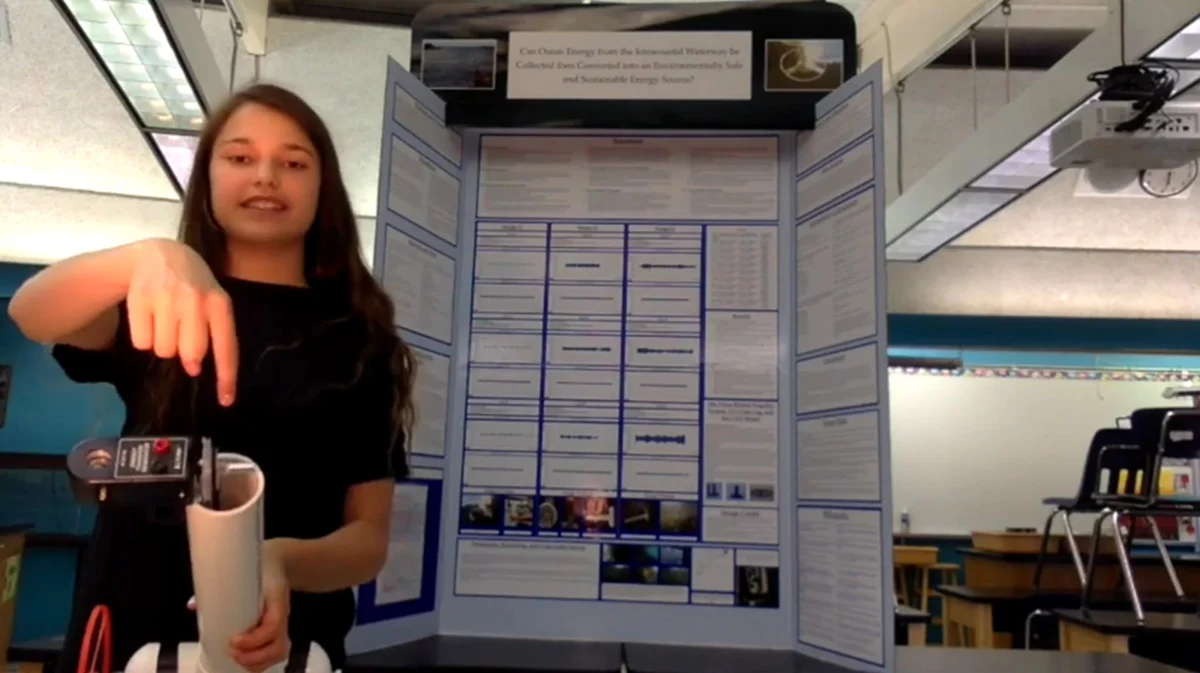
Under Emslander’s tutelage, Herbst refined her initial sketches into a functional, robust prototype. She experimented with various materials, focusing on sustainability and cost-effectiveness. The result was a device constructed from recycled components, including a 3D-printed propeller and a simple pulley system housed within a PVC pipe. When submerged in moving water, the propeller rotates, driving the generator to produce a steady stream of usable electricity.
The Winning Moment
At the conclusion of the challenge, Herbst’s "Beacon" was named the overall winner, earning her the title of "America’s Top Young Scientist" and a $25,000 prize. The judges were particularly impressed by the device’s scalability and its immediate humanitarian application. Unlike many experimental student projects, The Beacon was designed with a specific utility in mind: providing enough power to run desalination pumps for clean water production.
Post-Challenge Trajectory
Following her win, Herbst’s commitment to the project only deepened. She utilized her prize money not only to continue her research but also to support her pen pal in Ethiopia, fulfilling her original promise to help. In an interview with Fast Company, she declared her intent to "open source" the project, ensuring that the blueprints, material lists, and data would be available to anyone in the world without cost. This commitment to democratization reflects a growing trend in the scientific community: moving away from proprietary intellectual property toward collaborative, global problem-solving.
Supporting Data: Engineering the Beacon
The technical architecture of The Beacon is a study in efficiency. By utilizing a hydroelectric generator, the device bypasses the intermittent nature of solar or wind energy, which can be unreliable depending on the weather or time of day.
- Materials: Recycled PVC, 3D-printed components, and standard electrical wiring.
- Mechanism: A pulley system converts the rotation of the propeller into mechanical energy, which is then fed into a generator.
- Output: In early testing, the device successfully powered two LED lights.
- Scalability: Herbst projected that a larger, scaled-up version of the design could potentially generate enough power to charge three car batteries in under an hour.
This specific energy threshold is critical. Three car batteries provide roughly the power required to operate a small-scale water desalination system. By providing electricity to power these pumps, The Beacon effectively addresses two of the most pressing needs in developing nations: lighting and clean drinking water.
Scientific Context and Global Implications
The Beacon fits into a broader, ongoing shift in energy research. As the world moves away from fossil fuels, researchers are looking for "micro-solutions"—technologies that can function independently of a centralized electrical grid.
Water as the Future
The success of Herbst’s design echoes other significant advancements in the field of renewable energy. For instance, recent breakthroughs in "water battery" technology out of China have challenged the hegemony of lithium-ion batteries by offering longer lifespans and more stable energy density. Similarly, the automotive industry, led by companies like Toyota, continues to push the boundaries of hydrogen-powered propulsion, which relies on the chemical properties of water to create clean energy.
The implications for The Beacon are profound. By creating a device that is cheap to build and easy to maintain, Herbst effectively lowered the barrier to entry for humanitarian aid organizations. Instead of shipping heavy, expensive generators that require hard-to-find fuel, NGOs could theoretically provide communities with the simple instructions and basic parts needed to build their own power sources locally.
Beyond the Beacon: Hannah Herbst’s Continuing Legacy
While The Beacon catapulted Herbst into the spotlight, she did not rest on her laurels. Her path since 2015 has been defined by a relentless pursuit of scientific excellence and a dedication to social impact.
Academic and Professional Milestones
Herbst’s resume following her 2015 win is substantial. She became a fixture at the Intel International Science and Engineering Fair, securing top honors in 2016, 2017, and 2019. Her work expanded beyond renewable energy into the realm of translational medical sciences, where she received accolades from the Ashtavadhani Vidwan Ambati Subbaraya Chetty Foundation.
Golden Hour Medical
Today, Herbst is the founder and CEO of Golden Hour Medical. Her pivot to the medical sector is a natural evolution of her early work; just as she sought to use engineering to solve energy poverty, she is now leveraging it to improve healthcare accessibility. Her company focuses on developing emergency medical devices that are intuitive enough for non-medical professionals to use in high-stress, low-resource environments. This reflects the same core philosophy that birthed The Beacon: that the most powerful inventions are those that empower the individual.
Conclusion: A Model for Future Scientists
Hannah Herbst’s story serves as more than just a feel-good news piece; it is a blueprint for the next generation of innovators. Her work demonstrates that the intersection of empathy and engineering is where the most meaningful progress is made.
By identifying a problem, listening to those affected by it, and applying scientific rigor to create an accessible solution, Herbst proved that age is no barrier to impact. As we face global challenges ranging from climate change to public health crises, the model she established—open-source, low-cost, and community-focused—remains the most viable path toward a more equitable and electrified world.
Whether it is powering a lightbulb in a remote village or designing life-saving medical gear, the legacy of The Beacon continues to glow, illuminating a future where technology is defined not by its price tag, but by its capacity to serve humanity.









No comments yet. Be the first to join the conversation!