Sagoh
Sagoh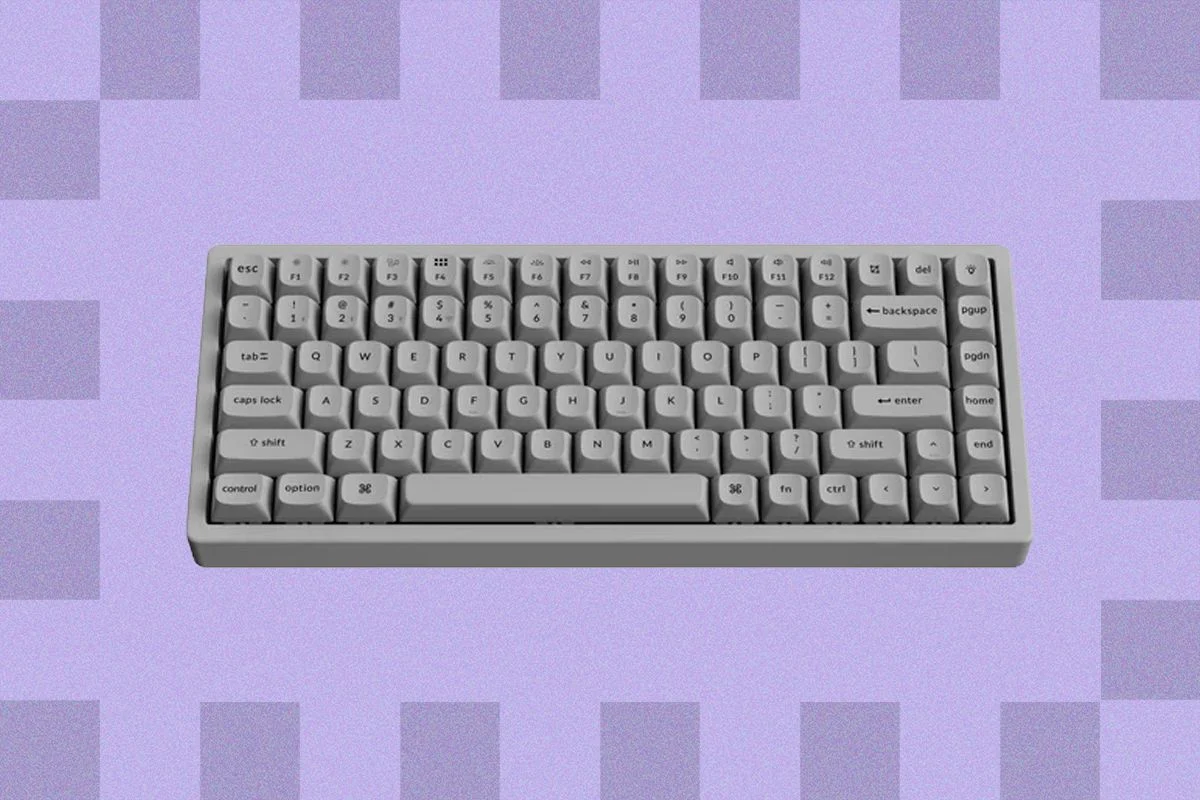
In the increasingly saturated world of mechanical keyboards, where manufacturers often chase the aesthetic of transparent plastic or sleek, anodized aluminum, Keychron has taken a daring—if divisive—leap into the world of industrial brutalism. The Keychron K2 HE Concrete Edition is not merely a peripheral; it is a statement piece. By utilizing raw, unsealed concrete as the primary chassis material, Keychron has invited users to reconsider what a desktop tool can be. However, as our testing reveals, this choice introduces a complex set of trade-offs that pit high-end internal engineering against the unpredictable nature of raw construction materials.
Main Facts: Engineering Meets Raw Architecture
At its core, the K2 HE Concrete Edition is a study in contrasts. While the exterior screams industrial minimalism, the internal architecture remains firmly rooted in the premium enthusiast space. The keyboard features PCB-mounted stabilizers, a configuration vastly superior to the cheaper plate-mounted alternatives found in entry-level boards. These stabilizers arrive pre-lubricated from the factory. While the application is admittedly generous—evidenced by visible, slight clumping on the outer housings—the functional result is exceptional. The typing experience is remarkably smooth and consistent, characterized by a complete lack of the "rattle" or stickiness that often plagues mass-produced boards.
The board’s internal heartbeat is a set of Hall Effect (HE) switches. While these offer a reliable, responsive, and tactile experience, they represent a surprising regression from the cutting-edge Tunneling Magnetoresistance (TMR) switches featured in Keychron’s previous high-profile ceramic release. Despite this step backward in technical innovation, the HE switches perform admirably, offering a snappy rebound and a weighted feel that remains satisfying for both rapid-fire competitive gaming and long-form document composition.
A Chronology of the Concrete Experience
The journey with the K2 HE is one of shifting perspectives. Upon unboxing, the immediate sensation is one of profound density. The concrete chassis provides an immovable, grounded typing experience that plastic or aluminum simply cannot replicate.
- Phase One: The Novelty. In the first few days, the textured, cool-to-the-touch surface feels like a design triumph. It stands out on any desk, offering a tactile grip and a visual weight that feels premium and intentional.
- Phase Two: The Accumulation. As the week progresses, the reality of unsealed concrete begins to set in. Unlike powder-coated metal, raw concrete is porous. Whether it was the natural oils from fingertips, a stray droplet of coffee, or residue from a surface cleaner, the keyboard began to develop a distinct visual history.
- Phase Three: The Philosophical Dilemma. By the end of the testing period, the user is forced to choose: is this a stain, or is it a "patina"? If you prioritize a pristine, factory-fresh aesthetic, the K2 HE will inevitably lead to frustration. If, however, you view electronics as tools that evolve with their environment, the marks become a personalized chronicle of use.
Supporting Data: Performance Under Pressure
When stripping away the unique chassis, we are left with a highly competent gaming peripheral. The integration of a 1,000 Hz polling rate ensures that the responsiveness of the HE switches is translated to the monitor with minimal latency.
The Switch Performance Comparison
| Feature | Tunneling Magnetoresistance (TMR) | Hall Effect (HE) |
|---|---|---|
| Innovation Level | High (Cutting Edge) | Moderate (Industry Standard) |
| Response Time | Extremely Fast | Fast / Reliable |
| Consistency | Superior | Excellent |
| Availability | Rare | Widespread |
While the transition back to Hall Effect switches might seem like a regression to enthusiasts seeking the "next big thing," it is important to note that the K2 HE remains, by any objective metric, a top-tier performer. The switches snap back with a crispness that is essential for FPS gaming, and the weight of the concrete housing acts as a dampener, absorbing the sharp acoustic "clack" often associated with lighter keyboard builds.
The Maintenance Conundrum: Can You Clean Concrete?
The porous nature of the K2 HE chassis raises an inevitable question: how does one maintain a material designed for sidewalks in a high-traffic office environment? During our review process, we encountered several mystery smudges.

The inherent difficulty in cleaning this device is that it lacks the protective clear-coat found on standard furniture or appliances. While a user might be tempted to reach for heavy-duty solvents—such as brake cleaner or even a pressurized air/water solution—the potential for the liquid to seep into the internal electronics is a non-negligible risk.
It is worth noting that the manufacturer has not provided a specific maintenance protocol for the concrete shell. We advise extreme caution. While the material is theoretically durable enough to handle common household spills, the risk of permanent discoloration or moisture damage to the internal PCB makes "cleaning" a high-stakes activity that most users should approach with skepticism.
Implications: The Future of Peripheral Design
The K2 HE Concrete Edition serves as a harbinger for a trend in "brutalist peripheral design." As the mechanical keyboard market reaches a point of diminishing returns regarding switch technology, manufacturers are increasingly turning to materials science to differentiate their products.
The Trade-offs of Brutalism
- Aesthetic Uniqueness: Unrivaled. It creates an instant focal point for any workspace.
- Ergonomic Stability: Superior. The sheer mass of the board prevents it from shifting, even during the most intense gaming sessions.
- Environmental Sensitivity: High. The porous material is a magnet for oils and stains, necessitating a "hands-off" approach to maintenance.
- Technological Regression: Notable. The choice to pivot away from TMR switches suggests that Keychron may be prioritizing the "look and feel" of the chassis over the bleeding-edge performance of their internal components.
For the prospective buyer, the implication is clear: this is not a keyboard for the "squeaky-clean" minimalist. It is a device for the individual who values character over convenience. It represents a bold experiment in industrial design that succeeds in providing a superlative typing feel, even if it fails the practical test of long-term cleanliness.
Conclusion: A Masterpiece or a Mess?
The Keychron K2 HE Concrete Edition is an enigma. It is a masterpiece of stabilizer tuning and structural stability, yet it is a flawed execution of material choice. By choosing a medium that reacts to its environment—absorbing oils, changing color, and defying traditional cleaning methods—Keychron has created a keyboard that is effectively a "living" object.
If you are an enthusiast who enjoys the tactile sensation of a heavy, stable board and you aren’t afraid of a few character-building smudges, the K2 HE is a compelling, if unconventional, choice. However, if your desk is a sanctuary of order and you demand that your electronics look the same on day 1,000 as they did on day one, you would be better served by the more traditional, albeit less adventurous, options in Keychron’s existing lineup. The K2 HE is, ultimately, a triumph of personality over practicality—and in a world of homogenous plastic, that is worth acknowledging.


 Iffa Jayyana
 Asep Darmawan