Lina Irawan
For over two decades, Peter Jackson’s The Lord of the Rings trilogy has stood as the gold standard for high-fantasy filmmaking. Universally acclaimed, commercially dominant, and cinematically revolutionary, the films are credited with bringing J.R.R. Tolkien’s dense, scholarly mythos to the masses. Yet, in the shadow of this global triumph lay a deep-seated, familial resentment. The late Christopher Tolkien—the author’s son and the primary custodian of his literary legacy—remained a staunch, vocal critic of the cinematic adaptations, viewing them not as tributes, but as distortions.
To understand this disconnect, one must look beyond the box office receipts and examine the profound ideological chasm between the purist guardian of a literary kingdom and the Hollywood auteur tasked with translating it for the 21st century.
The Architect of Middle-earth’s Preservation
To grasp why Christopher Tolkien felt such visceral distaste for the films, one must first acknowledge his unique position. Following his father’s death in 1973, Christopher did not merely inherit a copyright; he became the steward of an unfinished, intricate, and deeply philosophical legendarium.
Christopher spent decades meticulously editing, organizing, and publishing his father’s vast collection of notes, including The Silmarillion, The Children of Húrin, and the exhaustive 12-volume History of Middle-earth. For Christopher, these works were not "content" or "intellectual property" in the modern sense; they were sacred texts. His life’s work was dedicated to ensuring that the scholarly depth and linguistic beauty of his father’s world remained untainted. When Peter Jackson arrived with a blockbuster mentality, he was, in Christopher’s eyes, a bulldozer entering a cathedral.
A Chronology of Contentions
The friction between the Tolkien Estate and the cinematic industry began long before the cameras started rolling on The Fellowship of the Ring.
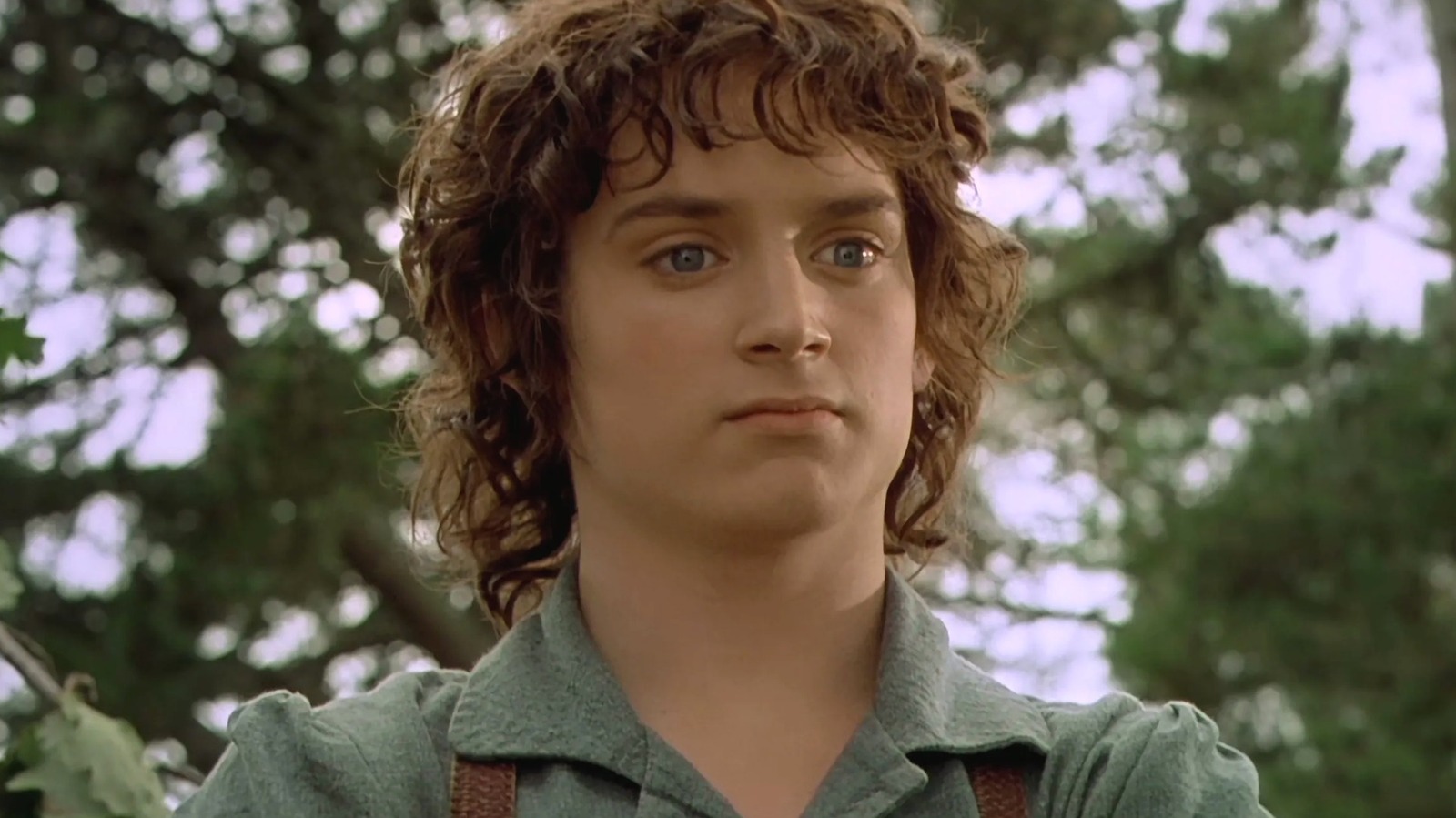
- 1990s: Negotiations regarding the film rights were fraught. While J.R.R. Tolkien had sold the rights to United Artists in 1969, the transition of these rights to New Line Cinema and the subsequent involvement of Peter Jackson occurred under a cloud of legal complexity.
- 2001–2003: As the trilogy released to record-breaking success, Christopher Tolkien remained largely silent in public, though reports from those close to the Estate suggested a growing alarm regarding the "Hollywood-ization" of the source material.
- 2012: The silence broke. In a landmark interview with the French newspaper Le Monde, Christopher unleashed his most scathing critique, describing the films as an "evisceration" of the source material.
- 2017–2022: The tension resurfaced during the development of Amazon’s The Rings of Power. Reports indicated that the Estate actively sought to keep Peter Jackson at arm’s length from the series, fueling rumors that the "ghosting" of the director was a deliberate move to distance the new project from his established visual aesthetic.
The Core Grievance: Commercialization vs. Aesthetic Integrity
The crux of Christopher’s argument in his 2012 interview was that the films transformed his father’s "serious" work into a product for mass consumption.
"Tolkien has become a monster, devoured by his own popularity and absorbed into the absurdity of our time," Christopher lamented. He argued that by stripping away the thematic nuance and the "philosophical impact" of the books, the films reduced a complex literary achievement to a series of action sequences designed to appeal to a demographic aged 15 to 25.
For the purist, the "action-movie" label was the ultimate insult. Where readers saw a slow-burn exploration of morality, mortality, and the decline of magic, the films—in Christopher’s view—saw a franchise opportunity. The removal of characters like Tom Bombadil, the compression of time, and the amplification of martial conflict were seen as concessions to a shallow, modern audience that lacked the patience for the depth of the original prose.
The Generational Divide: Simon Tolkien’s Perspective
Interestingly, the Tolkien family was not a monolith in its opinion. The friction over the films famously caused a rift within the family itself. Simon Tolkien, J.R.R. Tolkien’s grandson, took a markedly different approach.
In a 2001 interview with The Telegraph, Simon revealed that he had been in favor of a more collaborative and positive relationship with the filmmakers. He noted that his desire to embrace the films was ultimately "overruled by my father." This revelation highlighted that the hostility toward Jackson was not necessarily a universal family mandate, but a strategic decision led by the patriarch of the Estate, who viewed the films as a threat to the integrity of the books.
Implications for Modern Adaptations
The relationship between the Tolkien Estate and Peter Jackson offers a masterclass in the challenges of modern adaptation. When a work of literature reaches the cultural status of The Lord of the Rings, it essentially becomes public mythology.
The Estate’s protective stance highlights a fundamental tension:
- The Purist Perspective: Books are static, sacred entities that require fidelity to be preserved. Any deviation is a betrayal of the author’s intent.
- The Cinematic Perspective: Adaptations are a new medium. To survive the transition from page to screen, a work must be reinterpreted. Jackson’s success was not in spite of his changes, but because of them; he understood the grammar of film in a way that required shifting the pacing and focus of the original narrative.
Conclusion: Two Worlds, One Legacy
The debate over whether Christopher Tolkien was "too harsh" misses the point of his role. As the custodian of the legendarium, his primary duty was not to the fans, nor to the film industry, but to the memory of his father’s intent.
From the perspective of the film-going public, the movies are an indispensable cultural phenomenon that introduced millions to the world of Middle-earth. Without Jackson’s trilogy, the current renaissance of interest in Tolkien’s lore—including the Amazon series and the renewed printing of his books—would likely not exist on this scale.
Ultimately, both visions have a right to exist. The books remain on the shelf, untouched and infinite in their complexity, while the films exist as a vibrant, kinetic, and flawed tribute. The "chasm" that Christopher Tolkien identified is, perhaps, the inevitable byproduct of greatness; when a work is this loved, it ceases to belong to the author alone and enters the messy, often contradictory, public imagination. Christopher Tolkien may have turned his head away, but the rest of the world remains captivated by the light of Eärendil, whether it is reflected through the ink of a page or the flicker of a cinema screen.


 Ali Ikhwan
 Lina Hope