

Spoiler Warning: This review contains spoilers for Black Sun, the opening movements of Fevered Star, and discusses thematic elements spanning the entirety of the Between Earth and Sky trilogy. Readers who have not yet completed the series are advised to proceed with caution.
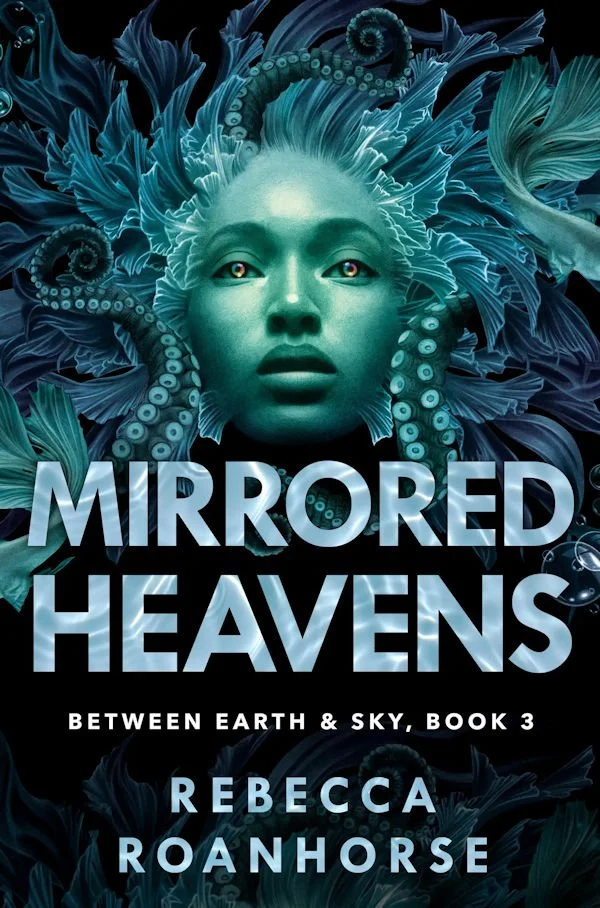
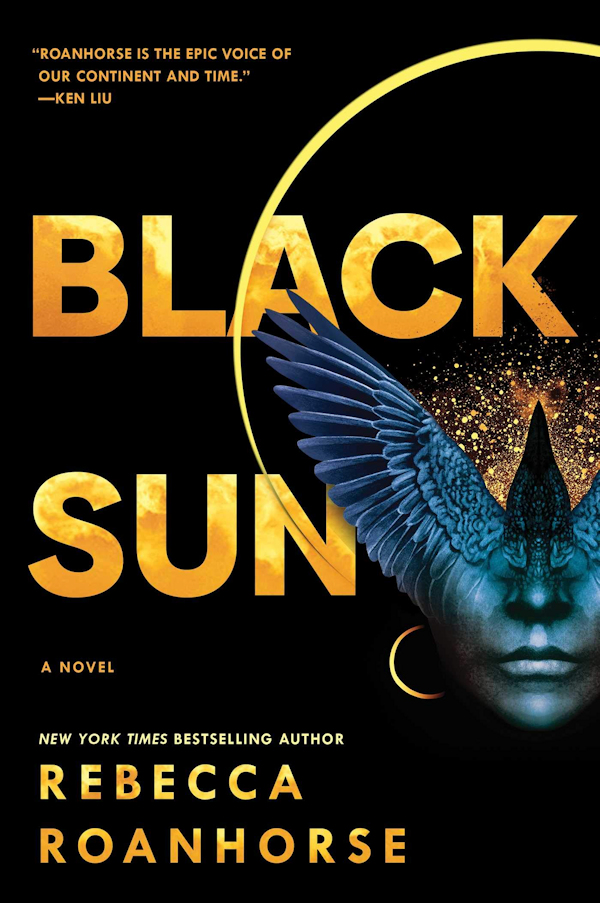
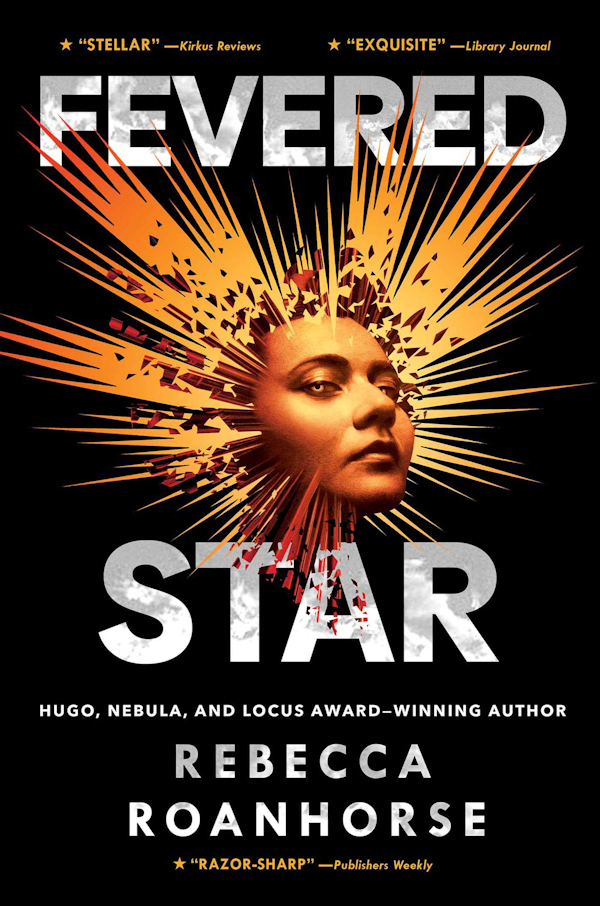
In the rapidly shifting landscape of contemporary fantasy, few works have achieved the architectural precision and emotional resonance of Rebecca Roanhorse’s Between Earth and Sky trilogy. Comprising Black Sun, Fevered Star, and the concluding volume, Mirrored Heavens, the series stands as a monumental achievement in worldbuilding and character-driven narrative.
Despite the series reaching its dramatic conclusion two years ago, it remains an under-discussed masterpiece in broader literary circles. For those who prioritize intricate political machinations, mythological weight, and prose that breathes with the pulse of its characters, this trilogy is not merely a recommendation—it is an essential addition to any serious reading list.
The Convergence: An Overview of the Meridian
The Between Earth and Sky trilogy is set upon the continent of Meridian, a land defined by its sacred geographies and the crushing weight of its religious and political hierarchies. The narrative centers on the holy city of Tova, a hub of power where four "Sky-made" clans—the Carrion Crow, Winged Serpent, Water Strider, and Golden Eagle—navigate a fragile peace.
The story ignites during the winter solstice, a period of sacred alignment, as four disparate lives converge on Tova. Naranpa, a Sun Priest hailing from the marginalized "dry-earth" districts, struggles to maintain her authority against a council of peers who view her with suspicion. Meanwhile, Serapio, a vessel of vengeance groomed by the Carrion Crow through a brutal blood ritual, arrives as the living avatar of a vengeful god. His path is steered by Xiala, a Teek sea captain gifted with the power of song, and Okoa, a young man thrust into the leadership of his clan following the mysterious death of his mother.

What follows is not a standard hero’s journey, but a complex tapestry of systemic collapse. When the sun is eclipsed, the resulting power vacuum leaves the continent of Meridian in a state of permanent turmoil, forcing these young protagonists to navigate a world that has been systematically dismantled by the older generation’s obsession with legacy and retribution.
Chronology and Narrative Progression
The series is a masterclass in pacing, moving from the singular focus of the solstice in Black Sun to the geopolitical fragmentation seen in Fevered Star and Mirrored Heavens.
The Breaking of the World
In Black Sun, the narrative operates as a pressure cooker. The convergence of characters is not merely incidental; it is the result of decades of political engineering. Serapio’s assault on the Watchers during the eclipse serves as the series’ inciting incident, shattering the Treaties that maintained order. Naranpa, betrayed by her closest ally, Iktan, finds herself cast out, forced to navigate the underworld of Tova before her eventual evolution into a "god-touched" visionary.
The Scattering
As the story progresses into Fevered Star and Mirrored Heavens, the narrative scope expands. Xiala’s journey is particularly poignant; her capture by Iktan leads her to the city of Hokaia, where she confronts the architect of the continent’s misery: Balam. Through these movements, the reader witnesses the transformation of the Teek captain from a reluctant mercenary into a reluctant queen, defending her people against total erasure.
The Resolution
The trilogy’s conclusion is notable for its refusal to offer easy answers. The disparate threads—the god-vessel Serapio, the visionary Naranpa, the political pawn Okoa, and the exiled captain Xiala—are drawn together not by destiny, but by the cold, calculating machinations of Balam, the white jaguar prince. The final volume effectively ties up the myriad loose ends, providing a resolution that feels earned rather than forced.
Supporting Data: The Anatomy of the Characters
One of the most striking aspects of Roanhorse’s writing is the distinctiveness of her character voices. In a genre where large casts often lead to homogenization, Roanhorse succeeds by imbuing each perspective with a unique cadence.
- Xiala and Naranpa: These two serve as the emotional anchors of the series. Their dialogue is crisp, reflective of their distinct backgrounds, and entirely devoid of the "strong female character" tropes that often plague fantasy. Whether they are engaging in sharp-tongued banter or displaying profound vulnerability, they feel like living, breathing individuals.
- The Antagonistic Presence: The characterization of Balam is a triumph of villainy. He is a force of pure, distilled malice whose influence permeates every layer of the plot. Conversely, the arc of Iktan—characterized by a narcissism so profound it becomes a catalyst for the series’ tragedy—offers a fascinating, if divisive, study in moral decay.
- The Evolution of the "Chosen One": Serapio’s arc is particularly subversive. Initially framed as the potential antagonist, his evolution into a sympathetic, tragic figure serves to critique the "destiny" trope. He is a puppet of the gods and his own mother, and his struggle to reclaim his agency is the heartbeat of the series.
Thematic Implications: Coincidence and Agency
The Between Earth and Sky trilogy serves as a profound meditation on the cycle of generational trauma. The primary theme running through the three volumes is the tension between the inevitability of the gods and the agency of the individual.
Roanhorse uses the "chosen one" archetype as a structural skeleton but refuses to dress it in the comfort of traditional morality. Instead, she presents a world where the characters are "funneled" toward destruction by the previous generation. The metacognition present in the internal monologues of the characters—who are acutely aware that their lives are being shaped by forces larger than themselves—adds a layer of depth that enhances the reader’s immersion rather than breaking the fourth wall.
Furthermore, the series provides an intricate critique of power. Whether it is the religious authority of the Watchers or the shadow magic wielded by Balam, the series posits that power, when untethered from empathy, leads inevitably to the destruction of the very foundations it seeks to protect.
Critical Reception and Industry Impact
Since the publication of Black Sun, the critical consensus has been overwhelmingly positive. L. A. Young, writing for Fantasy Faction in 2020, accurately identified the series as a landmark moment in the genre. However, with the full trilogy now available, we can view the work in its totality.
Rebecca Roanhorse has established herself as a titan of modern fantasy. Her ability to execute complex, multi-POV narratives without ever resorting to "info-dumping" is a testament to her mastery of craft. The information regarding the clans, the gods, and the political history of Meridian is revealed organically, woven seamlessly into the dialogue and observations of the characters.
Why This Series Demands Attention
The Between Earth and Sky trilogy is more than just a captivating read; it is a vital piece of contemporary literature. It challenges the conventions of the genre while simultaneously honoring them, creating a reading experience that is as intellectually stimulating as it is emotionally gripping.
While some readers may find the redemption arcs of certain characters—specifically Iktan—to be a point of contention, this does not diminish the overall quality of the narrative. The minor flaws serve only to highlight the sheer ambition of the project. For readers looking for a series that manages to be grand in scope yet deeply intimate in character focus, there is no better choice.
In conclusion, the Between Earth and Sky trilogy is a master class in worldbuilding, voice, and narrative structure. Roanhorse has not only written one of the best fantasy series of the decade; she has set a new benchmark for what the genre can achieve. If you have yet to step onto the shores of Meridian, the time to do so is now. The solstice awaits.










