


In the modern household, the refrigerator is the unsung hero of the kitchen. It is the silent sentinel that preserves our nutrition, prevents foodborne illnesses, and provides the simple luxury of a chilled beverage on a sweltering afternoon. Yet, because it performs its duties with such consistent reliability, we often take it for granted—until the hum of the compressor falls silent, the milk spoils, and we are faced with the daunting reality of a major appliance failure.
Understanding the lifecycle of a refrigerator is not merely a matter of household management; it is a critical financial strategy. Replacing a primary kitchen appliance is a significant capital expenditure, and understanding how to extend its life—or when to cut your losses—can save homeowners thousands of dollars over the course of a decade.
The Average Lifespan: What the Data Tells Us
When assessing the longevity of a kitchen staple, industry experts generally cite an average lifespan of 12 years. However, this figure is a statistical mean, not an expiration date. Depending on the build quality, the complexity of the features, and the rigor of the maintenance schedule, some units may falter within seven or eight years, while others, particularly simpler, older models, can persist for two decades or more.
The primary driver of this variance is the "feature creep" inherent in modern appliance design. While high-tech refrigerators—boasting integrated tablets, internal cameras, complex water filtration systems, and dual-ice-maker configurations—offer undeniable convenience, they also introduce multiple points of potential failure. Each auxiliary component, from a solenoid in an ice dispenser to the motherboard controlling the digital interface, is a prospective weak link. In contrast, basic top-freezer models, which prioritize core cooling functionality over smart connectivity, often prove to be more durable precisely because they lack these complications.
Chronology: The Lifecycle of a Refrigerator
To manage your appliance effectively, it is helpful to view its life in distinct stages:

The Early Years (Years 0–5): The Warranty Period
During this phase, the refrigerator should perform flawlessly. If issues arise here, they are almost exclusively attributed to factory defects or improper installation. Most manufacturers offer a limited warranty on the sealed system (the compressor, evaporator, and condenser) for five years. It is during this time that owners should register their product and ensure it is leveled properly to avoid undue stress on the door hinges and the internal cooling loop.
The Mid-Life Phase (Years 5–10): The Maintenance Pivot
By the fifth year, the "honeymoon period" is over. This is when environmental factors—dust buildup on coils, fluctuating power supply, and seal degradation—begin to impact performance. This is the critical window where proactive cleaning can add three to five years to the appliance’s life.
The Twilight Years (Years 10–15+): The Cost-Benefit Analysis
Once a refrigerator enters its second decade, the likelihood of a major component failure—such as a failing compressor or a leaking coolant line—increases significantly. At this stage, homeowners must shift from a mindset of "repair" to one of "assessment." If the cost of a repair exceeds 50% of the price of a comparable new unit, industry consensus suggests that retirement is the most logical financial path.
Supporting Data: Why Reliability Varies
Reliability is not distributed equally across the market. Data from consumer advocacy groups and repair technician surveys consistently indicate that brand reputation is a reliable, though not infallible, indicator of longevity.
High-end brands such as Sub-Zero or Viking often prioritize industrial-grade components, leading to a longer expected life. However, even these brands are not immune to the laws of entropy. The real differentiator is often the "serviceability" of the machine. A refrigerator that is designed with accessible, modular parts is always going to be more economical to repair than a "smart" unit where a failing Wi-Fi chip might effectively brick the entire cooling control system.

Furthermore, the environment plays a starring role. A refrigerator located in a humid, unconditioned garage will suffer from accelerated corrosion and cooling stress compared to one placed in a climate-controlled kitchen. Heat sources—such as placing a fridge directly next to an oven—force the compressor to run longer and harder, accelerating the wear on the motor and the electrical relay.
Official Maintenance Guidelines: How to Extend Your Investment
Longevity is not an accident; it is the result of a disciplined maintenance regime. To ensure your refrigerator reaches or exceeds the 12-year average, follow these industry-standard practices:
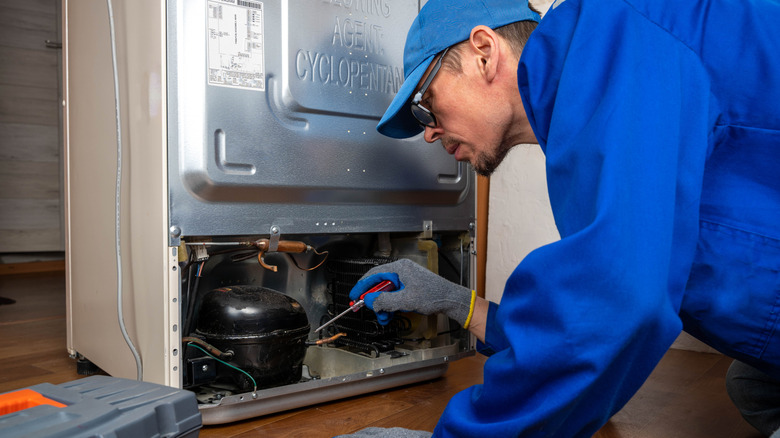
1. The Condenser Coil Protocol
The condenser coils are the lungs of your refrigerator. If they are coated in dust, pet hair, or kitchen grease, the heat exchange process is severely throttled. The compressor must run longer to compensate, which generates excess heat, causes energy bills to spike, and leads to premature mechanical failure. These coils should be vacuumed or brushed clean at least twice a year.
2. Gasket Maintenance
The rubber seal (gasket) around your refrigerator door is the first line of defense against thermal leakage. If the gasket is dirty, cracked, or misaligned, cold air escapes, and warm, humid air enters. This forces the unit to work overtime and leads to ice buildup in the freezer. Wipe the gaskets down with warm, soapy water monthly, and check them for cracks annually.
3. Proper Ventilation and Loading
A refrigerator requires "breathing room." Blocking the vents inside the fridge with oversized containers or packing the unit so tightly that air cannot circulate prevents the appliance from maintaining a uniform temperature. Similarly, ensure there is at least an inch of clearance on all sides of the unit so that heat can dissipate from the back and top.
4. Filtration Management
Water and air filters are not optional suggestions; they are vital for the health of the internal plumbing. Replacing these on the manufacturer’s recommended schedule (usually every six months) prevents mineral buildup and clogs that can cause leaks or damage the ice maker’s solenoid valves.
Identifying the "Telltale Signs" of Impending Failure
How do you know when the end is near? While there is no "check engine" light for a refrigerator, there are auditory and functional cues that suggest a terminal decline:
- Auditory Anomalies: A refrigerator should have a consistent, low-level hum. Rhythmic clicking (often caused by a failing start relay), high-pitched grinding (suggestive of a failing fan motor), or loud rattling (which may indicate a loose compressor mount) are all early warning signs.
- Thermal Inconsistency: If your freezer is cold but the refrigerator section is warm, or if you find yourself constantly adjusting the thermostat to keep food from spoiling, the internal cooling system is struggling. This often points to a refrigerant leak or a faulty evaporator fan.
- Excessive External Heat: While it is normal for the sides of a refrigerator to be warm, they should never be "hot to the touch." Excessive heat is a red flag that the condenser coils are failing to vent heat effectively, placing extreme stress on the compressor.
- The Compressor Cost Factor: The compressor is the heart of the machine. According to national repair cost averages, replacing a compressor can cost between $700 and $1,250. Given that a brand-new, high-efficiency unit can often be purchased for a slightly higher price—complete with a new warranty and modern energy-saving technology—repairing a dead compressor in a unit that is already over a decade old is rarely the economically sound choice.
Implications for the Consumer
The decision to replace or repair is a balance between environmental impact and personal finance. From an environmental standpoint, maintaining an appliance for its full potential life is superior to frequent upgrades. However, from a utility standpoint, older refrigerators are significantly less energy-efficient than modern Energy Star-certified models. A 15-year-old refrigerator may consume double the electricity of a new one, meaning that the "cost" of the old machine is hidden in your monthly utility bills.
In summary, the average 12-year lifespan is a baseline, not a limit. By understanding the mechanical realities of your appliance, performing routine maintenance on coils and seals, and listening to the sounds of your machine, you can ensure that your refrigerator remains a reliable partner in your kitchen for years to come. When the time eventually arrives to retire your unit, prioritize efficiency and serviceability to ensure that your next investment provides the same longevity and peace of mind.











No comments yet. Be the first to join the conversation!