

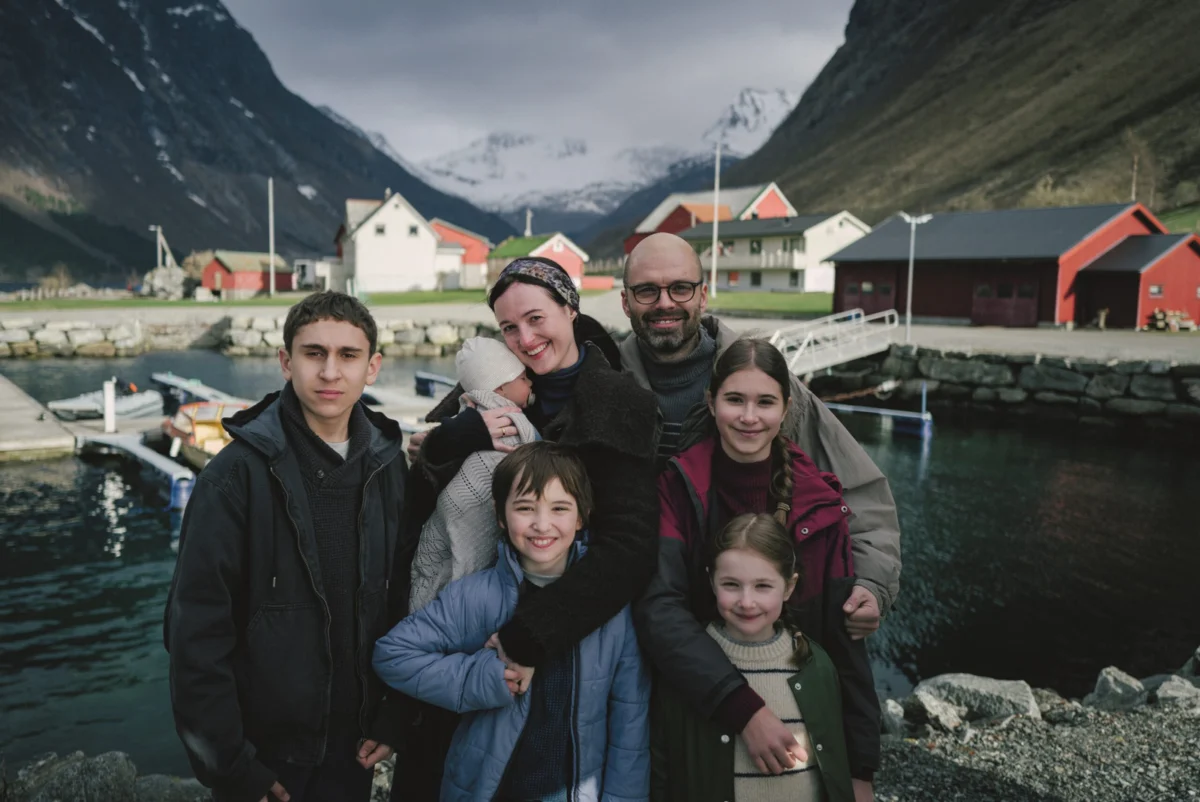
In the cold, crystalline air of a Norwegian landscape, where the silence of the water is broken only by the distant thrum of societal expectation, Romanian auteur Cristian Mungiu finds the setting for his latest, most unsettling examination of human fallibility. His new film, Fjord, serves as a characteristically fraught and tangled drama that vivisects the reactionary pitfalls of globalization. If Mungiu’s previous work, R.M.N., examined the simmering resentments of a village at the edge of Europe, Fjord moves the theater of conflict to the heart of Scandinavia—specifically to Stranda, a region nestled within the breathtaking, UNESCO-listed geography that defines the Norwegian aesthetic.
It is a choice of location that is as pointed as it is ironic. Norway is consistently ranked as one of the happiest countries in the world by the annual World Happiness Report. Yet, in the hands of Mungiu, this "happiest place on earth" becomes a crucible for a terrifying, modern form of intolerance—a type of exclusion that wears the progressive, soft-spoken mask of bureaucratic empathy.
The Relocation: A Family in Transition
The film introduces us to Mihai Gheorghiu (played with a startling, stoic intensity by Sebastian Stan), a Romanian software engineer who, following the sudden death of his parents, decides to uproot his family from the chaotic, urban bustle of Bucharest. Accompanied by his wife, Lisbet (a performance of fragile, willow-like grace by Renate Reinsve), and their five children, Mihai seeks the stability of a fjord-side life.
For Lisbet, who was raised in the area, the move is a homecoming; her mother remains in the vicinity, providing a tether to the local community. However, the Gheorghius are devoutly religious, and their conservative worldview finds immediate friction against the secular, ultra-liberal utopianism of their new neighbors. While Mihai remains focused on the practical benefits of the relocation—the schools, the healthcare, and the promise of a peaceful life—the film quickly makes it clear that the "good neighbor" policy championed by the town is not a universal mandate, but a conditional one.
Chronology of a Crisis
The descent into tragedy in Fjord is marked by a series of micro-aggressions that slowly coalesce into a life-altering crisis. The Gheorghius’ neighbors, characterized by their own modern parenting styles and a suspicion toward the "traditional" rigidity of the Romanian newcomers, view Mihai’s disciplinary methods with mounting alarm.
The friction is best exemplified in the character of the local schoolmaster, Markus Scarth Tønseth. He watches with a mixture of pity and judgment as Mihai implements a strict point system for his children, occasionally enforcing punishments that the local community deems archaic. The irony, which Mungiu carefully constructs, is that while the community judges the Gheorghius, they turn a blind eye to their own domestic instability. Mats, a neighbor, has a teenage daughter, Noora, who is a self-destructive "hellion," engaging in risky behaviors that suggest the local society is not the paradise it claims to be.

The turning point occurs when a teacher discovers minor bruising on the Gheorghius’ eldest daughter, Elia. This discovery triggers the intervention of the Norwegian Child Welfare Service. What follows is a harrowing, stomach-churning sequence that forms the emotional core of the film. Government workers descend upon the home, and despite the family’s frantic explanations, the state removes all five children—including a nursing infant—citing the "best interests of the children."
Supporting Data: The Anatomy of a State Abduction
Mungiu’s visual approach in this film is noticeably more restrained than his previous work, trading his signature long, soul-scorching takes for a more clinical, observational style. This shift is deliberate. By stripping away the kinetic energy of his past films, he forces the audience to confront the cold, systematic nature of the state’s intrusion.
The scene of the children’s removal is shot with a chilling, matter-of-fact rhythm. The officials, repeating the mantra, "We are here to help," behave with a detached, institutionalized kindness that makes the abduction feel even more sinister. It is a moment that challenges the viewer’s own political sensibilities. Can a liberal viewer, who generally supports the protection of children, watch this scene and not feel a sense of violation? Mungiu argues that the answer is "no," as he posits that the Gheorghius are being railroaded by a system that has decided their "difference" is synonymous with "danger."
Official Responses and Cultural Clashes
The film’s narrative eventually spirals into a high-stakes courtroom drama. As the legal proceedings unfold, the film explores how the nuances of language and culture create insurmountable walls. It is suggested, for example, that the children’s testimony against their father—the primary evidence used to justify their continued separation—may be the result of a profound linguistic miscommunication between the Romanian-speaking children and their Norwegian interrogators.
Meanwhile, the public response to the case grows increasingly polarized. Mihai, desperate to reclaim his family, finds himself manipulated into amplifying his own hardline ideologies to gain support from conservative protesters across Europe. The film captures the terrifying speed at which individual tragedy can be co-opted by extremist movements, as the quiet fjord town becomes a flashpoint for a continent-wide culture war.
Implications: The Failure of the "Good Neighbor"
At its heart, Fjord is a film about the failure of empathy. Mungiu does not shy away from the fact that Mihai’s own beliefs—such as his disapproval of gay marriage—are often at odds with the values of his neighbors. However, the film asks a difficult question: Does holding an unpopular belief justify the destruction of one’s family?

The title of the film itself, Fjord, represents both the geographic beauty and the deep, dark chasm that separates the characters. The characters are unable to "apologize when they are wrong," a command Mihai gives his children in the film’s opening scene, yet one he is incapable of following himself. The Norwegian officials, similarly, are trapped in their own certainty, blinded by their conviction that their way of life is the only moral path.
The implications for the audience are clear: we are living in a time where the "nicest" societies are increasingly capable of profound, state-sanctioned cruelty when faced with those who do not assimilate. Mungiu’s work acts as a mirror, reflecting our own biases back at us. Why is the question of what it means to be a "good neighbor" so rarely asked of ourselves?
As the seasons change in the film and the Gheorghius remain separated from their children, Fjord leaves us with a haunting image of an avalanche crashing near the local school. It is a visual metaphor for the impending destruction caused by the rigidity of human judgment.
Conclusion: A Masterpiece of Ambivalence
Fjord is not a film that provides easy answers or moral absolution. It is a slow-burn meditation on the friction between individualism and state control, a story that digs its heels into the reality of a culture clash that has no clear winner. Mungiu has crafted a piece of cinema that is as uncomfortable as it is necessary. By the time the credits roll, the audience is left not with a sense of clarity, but with a lingering, visceral sense of unease.
The film premiered in Competition at the 2026 Cannes Film Festival, where it was met with intense debate. NEON is set to release it in theaters later this year, and it is almost certain to be one of the most discussed films of the season. If Fjord serves as any indication, Cristian Mungiu remains one of the few filmmakers capable of stripping away the veneer of modern life to reveal the chaotic, desperate, and often cruel human impulses that reside just beneath the surface. It is a masterful, if deeply troubling, achievement.
Grade: B+










No comments yet. Be the first to join the conversation!