Lina Irawan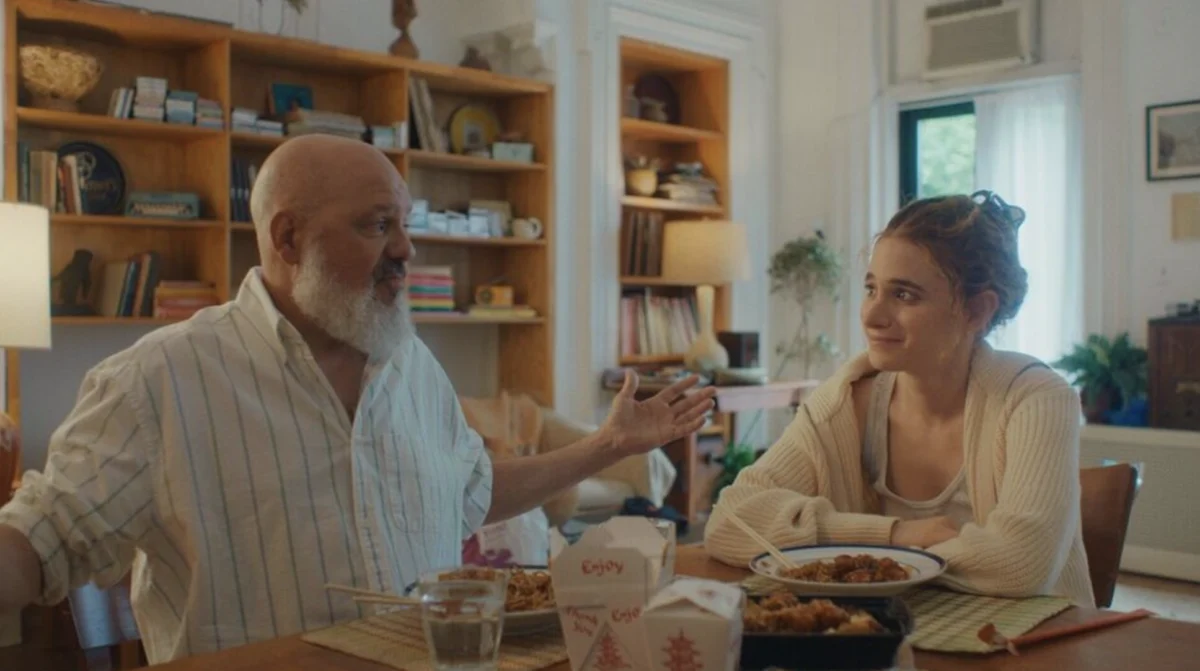
In the landscape of modern independent cinema, there is a recurring archetype: the adrift, creative New Yorker, perpetually hovering on the precipice of adulthood but never quite stepping over the edge. Ellie Sachs’ directorial debut, Lucy Schulman, which recently premiered at the 2026 Tribeca Film Festival, does not merely inhabit this space—it leans into it with a self-awareness that is as refreshing as it is cozy.
While the titular character is, by most metrics, a woman with very little “going on,” the film manages to turn her lack of trajectory into a surprisingly pleasant viewing experience. It is a work that acknowledges its own lack of urgency, trading high-stakes drama for the kind of low-calorie, high-comfort storytelling that has become a staple of the festival circuit.
The Premise: A Life of Quiet Stagnation
The film follows Lucy Schulman (played with disarming charisma by Ellie Sachs herself), a woman whose existence is defined more by what she doesn’t do than what she does. She is a lover of literature who spends more time dating authors than turning pages; she works at an independent bookstore but lacks the professional rigor to be considered a dedicated employee. Her social circle is a curated mix of genuine high-achievers and effortlessly cool posers, and Lucy occupies a space between them—witty enough to blend in, but lacking the drive to stand out.
The narrative engine of the film is sparked by an inciting incident that would, in a more traditional drama, signal a complete breakdown. Following a messy breakup with a philandering writer (played with slimy charm by Hasan Minhaj), Lucy finds herself back at square one. However, the film subverts the “rock bottom” trope; as the narrative suggests, for someone who hadn’t climbed very high to begin with, the fall is less of a cataclysmic crash and more of a gentle stumble down a flight of stairs.
Chronology of a Quarter-Life Crisis
The film’s structure follows a familiar, cyclical rhythm of the "indie-NY-coming-of-age" genre:
- The Catalyst: The opening act establishes Lucy’s comfort zone—a world of literary pretension and romantic instability—which is shattered by the betrayal of her partner.
- The Retreat: Seeking refuge, Lucy returns to the childhood home she shares with her father, Peter (David Cross). This cycle of returning home after every romantic failure has become a reliable, almost rhythmic, anchor in her life.
- The Pursuit: Lucy attempts to pivot into a new romance, which inevitably leads to the neglect of her long-standing support system.
- The Realization: Through a series of minor, low-intensity misunderstandings, Lucy eventually arrives at the quintessential indie epiphany: that she must learn to exist comfortably in her own solitude before she can define her path forward.
Supporting Data: The Power of the Father-Daughter Dynamic
If the film has a beating heart, it is the relationship between Lucy and her father, Peter. David Cross delivers a performance that acts as the film’s moral and emotional gravity. Peter is the antithesis of the "troubled parent" trope; he is a man without rough edges, endlessly accommodating, and fundamentally incapable of disappointment.

Their dynamic is defined by a codependency that feels warm rather than toxic. For the audience, Peter’s unwavering support provides a safety net that keeps the film’s stakes perpetually low. In a world where even minor inconveniences are treated with the seriousness of a tragedy, Peter’s presence serves as a reminder that Lucy Schulman is not interested in genuine suffering, but in the manageable "first-world problems" of a specific class of creative urbanite.
The Aesthetics of "Vibes-Based" Cinema
Sachs’ direction displays a keen understanding of her audience. She is not attempting to subvert the tropes of the genre; she is, instead, perfecting them. In the world of Lucy Schulman, misunderstandings are resolved with a quick conversation, a stomach ache is a valid reason to cancel plans, and the emotional resonance of a scene is derived from its "vibe" rather than its plot density.
This commitment to low-stakes realism is why the film feels so familiar. It doesn’t ask the audience to worry about the future of its protagonist; it asks them to enjoy the specific aesthetic of her present. The film exists in a lineage that traces back to Frances Ha, offering a level of comfort similar to the reliable predictability of a holiday rom-com.
Implications for the "Indie" Genre
The premiere of Lucy Schulman at Tribeca highlights a broader trend in independent filmmaking: the rise of the "lifestyle film." As distribution models shift and the theatrical landscape becomes increasingly dominated by blockbuster franchises, there is a growing appetite for films that offer a gentle, observational experience.
Sachs has succeeded in creating a project that serves as an effective showcase for her multifaceted talents—writing, directing, and starring. Her restraint behind the camera suggests a director who is "in on the joke." She understands that the audience doesn’t necessarily need a unique, groundbreaking story; sometimes, they simply want a well-executed variation on a theme they already love.
Critical Analysis and Market Reception
From a critical standpoint, Lucy Schulman occupies a specific niche. It is not a film that will likely change the trajectory of cinema, nor does it aspire to. It is, however, a masterclass in tone. The film effectively creates a "low-stress" environment where the stakes are so minimal that an audience member could step out for a coffee and return without feeling like they’ve missed a pivotal plot turn—and yet, the moment they return, they are likely to find themselves once again charmed by the dialogue or the chemistry between the leads.

For the Tribeca audience, the film was a palette cleanser. Its sincerity is its greatest strength, preventing it from feeling cynical despite its reliance on well-worn tropes. While it may be difficult for the protagonist to claim her life is unique, the film’s success lies in its ability to make that lack of uniqueness feel relatable and, ultimately, comforting.
Final Verdict
Lucy Schulman is a film about the beauty of the unremarkable. It is a testament to the fact that, in the right hands, the "everyday" can be compelling. Whether this film finds a broad U.S. distribution remains to be seen, but its reception at Tribeca indicates a clear demand for stories that prioritize mood, character, and atmosphere over high-octane narrative arcs.
For those who grew up on the mumblecore movement or the whimsical urban dramas of the 2010s, Lucy Schulman is a welcome addition to the canon. It is wholesome, self-aware, and unabashedly small in scale. In a world that is often chaotic and demanding, there is an undeniable appeal to a film that asks so little of its audience, and gives them such a pleasant place to rest for ninety minutes.
Grade: B-
“Lucy Schulman” premiered at the 2026 Tribeca Film Festival. It is currently seeking U.S. distribution.


 Sagoh
Sagoh
 Nana Wu