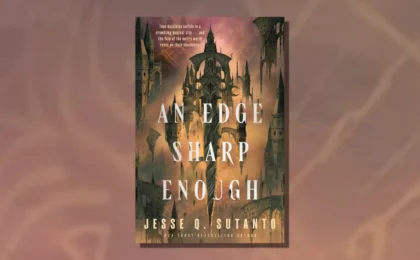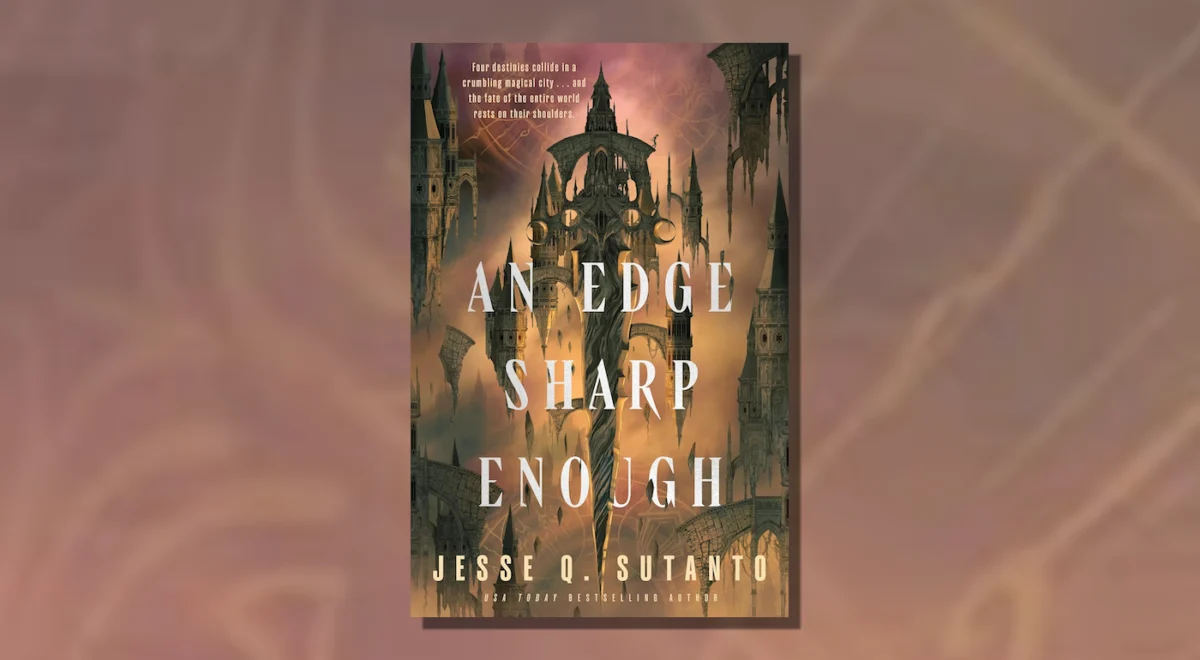
In the literary landscape of 2026, few releases are as highly anticipated as An Edge Sharp Enough, the latest dark fantasy tour de force from acclaimed author Jesse Q. Sutanto. Set to hit bookshelves on November 17th via Harper Voyager, the novel serves as both a high-stakes geopolitical thriller and an intimate exploration of power, obsession, and the fragility of peace.
As the publishing world prepares for the release, early excerpts and industry buzz suggest that Sutanto has crafted an expansive, multi-continental epic that challenges the traditional tropes of the "chosen one" narrative, opting instead for a gritty examination of trauma, systemic oppression, and the cost of revolution.
The Convergence of Fates: Main Narrative Pillars
An Edge Sharp Enough operates on a dual-track narrative that spans the divide between the isolated, militant fortress of Tchu-Morrokhai and the technologically advanced, yet crumbling, city of Velingard.
The Assassin of Tchu-Morrokhai
The story introduces readers to Mara, a young woman whose identity has been forged entirely by the brutal environment of the Institute. Since the age of five, Mara has been stripped of her past, conditioned to serve as a weapon against the Divine Empress’s crusade to eradicate magic. Her journey is defined by a paradoxical longing: she yearns for a world restored to its magical roots, yet she is trapped in a cycle of discipline, solitude, and self-loathing.
The Revolution in Velingard
Half a world away, the narrative shifts to Velingard, a city built on the back of a scientific breakthrough—an indestructible new metal that empowered a great revolution. Livya, the daughter of the revolution’s architect, finds her life of privilege upended when a secret political salon turns into a kidnapping attempt. Forced into exile, Livya must rely on Kaian, a charming but enigmatic con man and former childhood friend, to navigate a world that is no longer as safe or as stable as she believed.
Chronology of a Collapsing World
The central tension of the novel is driven by a temporal and structural decay that threatens the foundation of the post-revolutionary society.
- The Pre-Famine Era: Decades ago, the world was alive with Art (magic). The Institute at Tchu-Morrokhai functioned as a school for practitioners, not the training ground for assassins it has since become.
- The Art Famine (24 Years Ago): The sudden, unexplained disappearance of magic from the world served as the catalyst for the Divine Empress’s rise. Her declaration that magic was an "aberration of god" sparked a holy war that continues to define the current era.
- The Age of Steel (The Present): Velingard has enjoyed twenty years of relative peace under the protection of its "indestructible" metal. However, reports from Captain Fonde indicate that this foundation is failing. Infrastructure—ships, bridges, and monuments—is literally crumbling.
- The Inciting Incident: As the metal begins to fail, the boundaries between the isolated Institute and the crumbling city of Velingard begin to blur. The collision of Mara and Livya’s paths suggests that the revolution was perhaps built on a foundation of deception or, more chillingly, an ancient, inhuman evil that has remained dormant until now.
Supporting Data: The Cost of Survival at the Institute
Sutanto’s world-building shines in the grim, clinical details of life within the Institute. The text provides a harrowing look at how the organization maintains its "efficient" killing force:

- The Testing Protocol: Children are recruited at age five, based on their physical potential and capacity for manipulation. The process involves total severance from their families.
- The Economy of Scarcity: The Institute functions as a closed loop. The surrounding Outer Ring provides all labor and resources, yet the disciples are trained to view themselves as superior to the "Inactives."
- The Penalty of Non-Conformity: The novel depicts a brutal culture where even the smallest deviation—such as romantic entanglement—is met with public execution. The "Ceremony of Stones" described in the text serves as a stark reminder of the Institute’s dehumanizing ethos: disciples participate in the execution of their peers, ensuring that the collective shares the burden of the violence.
Themes of Forbidden Knowledge and Art
Central to the mystery is the concept of "Art"—the five elements (Blood, Shadow, Astral, Earth, and Ice) that previously sustained the world. Mara’s secret hobby of creating "Artifices"—devices designed to trap and store residual magic—serves as a metaphor for her internal state.
Her clandestine research reveals a terrifying truth: magic is not extinct; it is being siphoned or suppressed. The fact that she can extract a drop of Shadow Art from a locked room or Ice Art from the Baihe River suggests that the Divine Empress’s war is based on a lie. The "Famine" was not a natural disaster, but an engineered event.
Implications for the Genre
Industry analysts note that Sutanto’s work is a significant departure from standard young adult or dark fantasy fare. By grounding the magical conflict in the aftermath of a failed revolution, she touches on themes of:
- The Ethics of Compliance: Through the character of Mara, who struggles with the indoctrination of the Institute, the reader is forced to ask: at what point does survival become complicity?
- The Failure of Progress: The crumbling of Velingard’s "indestructible" metal serves as a powerful allegory for technological hubris. The idea that human ingenuity can supersede ancient natural forces is shown to be a fatal flaw.
- Queer Identity in Oppressive Spaces: The bond between Mara and Lia is portrayed not as a mere romance, but as a revolutionary act of defiance. Their relationship serves as the emotional anchor of the story, highlighting how personal intimacy becomes a radical act in a society that demands total emotional detachment.
Looking Ahead: The Explosive Twist
Harper Voyager has teased that the climax of An Edge Sharp Enough contains a twist that will fundamentally shift the reader’s understanding of the Divine Empress and the origins of the Art Famine.
As Captain Fonde grapples with the disintegration of his city and Mara finds herself pulled toward a confrontation that could either liberate her people or burn the world to the ground, the stakes remain absolute. The narrative suggests that the "ancient, inhuman evil" mentioned by the Elders may be the final piece of the puzzle—a force that has been feeding on the very war that the Institute is so desperate to win.
For readers seeking a narrative that combines the precise, lethal grace of an assassin’s blade with the sweeping scope of a dying empire, An Edge Sharp Enough promises to be one of the most significant fantasy releases of the decade.
An Edge Sharp Enough by Jesse Q. Sutanto will be available in hardcover and digital formats on November 17th. Pre-orders are currently open through major retailers and independent bookstores.