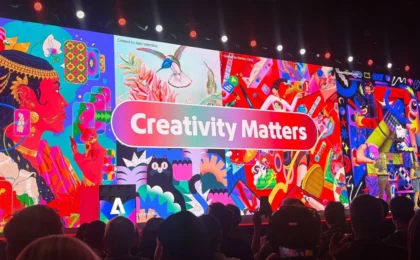
At the Adobe Max 2026 conference in Miami, the creative community gathered to witness the company’s most ambitious vision yet for the future of digital expression. While the keynote sessions detailed the immediate rollout of new features, the true heartbeat of the event remains the “Sneaks”—a high-energy showcase of experimental technologies that offer a glimpse into the next generation of creative software. This year, the focus was squarely on the evolution of generative AI, moving beyond simple image generation toward sophisticated, context-aware workflows that promise to redefine the boundaries of filmmaking, design, and digital art.
The Paradigm Shift: From Automation to Intuition
For years, Adobe’s Sneaks have served as a barometer for the industry. Many of the tools teased in previous years—such as advanced masking or object removal—have since become essential industry standards. This year, the ten featured innovations suggest that Adobe is pivoting from “AI as a generator” to “AI as an assistant.” The focus has shifted toward precision, consistency, and the preservation of the artist’s intent.
The core narrative of Adobe Max 2026 is that AI should not replace the creative, but rather handle the tedious, time-consuming aspects of production—allowing artists to spend more time on high-level conceptual work. Whether it is managing lighting consistency across a feature-length film or manipulating complex vector graphics with natural gestures, the underlying theme is the empowerment of the user through machine intelligence.
Chronology of the Reveal: The Ten Innovations
The presentation was a whirlwind tour of technological prowess, organized by discipline. The following breakdown highlights the primary advancements unveiled on the main stage:
1. Project Scene Sweep: The Holy Grail of Post-Production
Perhaps the most significant announcement for the film industry was Project Scene Sweep. Filmmakers have long struggled with the “continuity curse”—the difficulty of ensuring that edits, wardrobe, and environmental elements remain consistent across various camera angles and cuts.
Project Scene Sweep utilizes deep learning to interpret the 3D space of a scene. By understanding the characters and their environment, the tool allows a editor to make a change in one frame—such as removing a distracting prop or swapping a logo—and have that change propagate automatically across every shot in the sequence. This effectively eliminates the need for expensive reshoots, offering a transformative solution for clearance issues, product placement, and post-production polish.
2. Project Deep Brush: Redefining Digital Texture
For digital painters and graphic designers, Project Deep Brush represents a leap forward in how AI interacts with textures. By decomposing images into physically aware layers, the tool allows artists to apply digital “paint” that respects the underlying contours, lighting, and material properties of an object. Whether wrapping a logo around a curved bottle or applying graffiti to a textured brick wall, the software understands the geometry of the surface, ensuring the final result looks physically integrated rather than simply pasted on.
3. Project Hands On: Bringing Tactility to AI
AI image generation has historically been a game of “prompt engineering”—a repetitive process of refining text to get a desired result. Project Hands On seeks to replace this frustration with a more intuitive, graphical interface. By analyzing the composition of a generated image, the AI introduces control points that allow users to drag, pull, and reshape elements directly. This shift from text-based instructions to direct manipulation brings a sense of traditional “sculpting” back to the generative process.
4. Project Screen Test: The Auditioning AI
In a reveal that blurred the lines between technology and storytelling, Project Screen Test introduced the concept of the “conversational character.” Designed for game developers and filmmakers, this tool allows creators to build a character’s personality, voice, and backstory, then engage in a natural language dialogue with that creation. The goal is to allow the AI to “audition” for the creator, helping them understand how the character might react to different plot points or emotional stressors, thus deepening the narrative development process.
5. Project Sight Span: Immersive World Building
Project Sight Span transforms static 2D imagery into navigable, 3D-like environments. By inferring depth and perspective, the tool allows creators to “step inside” an image, reframe shots, and generate camera movements that weren’t present in the original photograph. This has profound implications for set design and pre-visualization, allowing creators to build entire worlds from a single source image.
6. Project Link Up: Semantic Fusion for Vectors
For vector artists, Project Link Up introduces the concept of “semantic fusion.” When dragging one asset onto another, the tool understands the relationship between the two, allowing for real-time interaction that maintains the integrity of the vector artwork. This is a massive boon for branding and typography, where merging elements while maintaining editability has historically been a complex, manual task.
Supporting Data and Industry Context
Adobe’s aggressive push into these technologies is backed by massive investment in their proprietary “Firefly” AI models. Unlike many open-source models, Adobe has positioned its AI as “commercially safe,” training on licensed or public-domain imagery.
Industry analysts at the event noted that the shift toward these specific, specialized tools—like Scene Sweep and Deep Brush—signals a transition from the “hype phase” of AI to a “productivity phase.” The market for creative software is no longer interested in generic, one-click generators; instead, professional users are demanding surgical tools that fit into established pipelines like Premiere Pro, After Effects, and Illustrator.
Official Responses and Strategic Vision
During the post-keynote press Q&A, Adobe executives emphasized that these Sneaks represent a roadmap, not a promise. “Our goal is to shorten the distance between the spark of an idea and its realization,” noted a senior product lead. While not every project will make it into a shipping product in its current form, the technologies developed for these prototypes are almost certain to be integrated into the Creative Cloud suite over the coming 12 to 24 months.
The company also addressed the ethical concerns surrounding AI. By providing tools that offer granular control (like the control points in Hands On), Adobe is effectively countering the argument that AI creates “black box” content where the artist loses agency. The overarching philosophy is that the human must remain the creative director, with the AI serving as a high-speed execution engine.
Implications for the Creative Economy
The integration of these tools into the professional workflow carries significant implications for the industry:
- Efficiency Gains: Tasks that previously required hours of rotoscoping or manual color correction could be reduced to minutes. This lowers the barrier to entry for high-end production but also raises the expectation for output quality.
- Skill Set Evolution: The role of the “editor” or “designer” is evolving into that of a “curator-operator.” The ability to provide clear, high-level direction to AI tools is becoming as important as technical proficiency in traditional software tools.
- New Revenue Streams: Agencies and studios that adopt these workflows early will be able to offer faster turnarounds and more iteration rounds, potentially increasing their project volume and profit margins.
Conclusion: The Path Forward
As Adobe Max 2026 concludes, the message is clear: the future of design is a collaborative dance between human creativity and machine intelligence. While the "wild" ideas like Project Screen Test may seem futuristic, they point toward a fundamental change in how we conceive and build digital content. For the professionals in attendance, the challenge now is not to fear the machine, but to master the interface. With these new tools, the canvas is no longer just a flat surface—it is a living, responsive environment, limited only by the imagination of the person behind the screen.
For those eager to experiment with the early manifestations of this tech, Adobe has opened the Adobe Labs Playground, where users can test select AI features in a browser-based environment. As these projects move from the stage to the software, the creative landscape will undoubtedly never be the same.