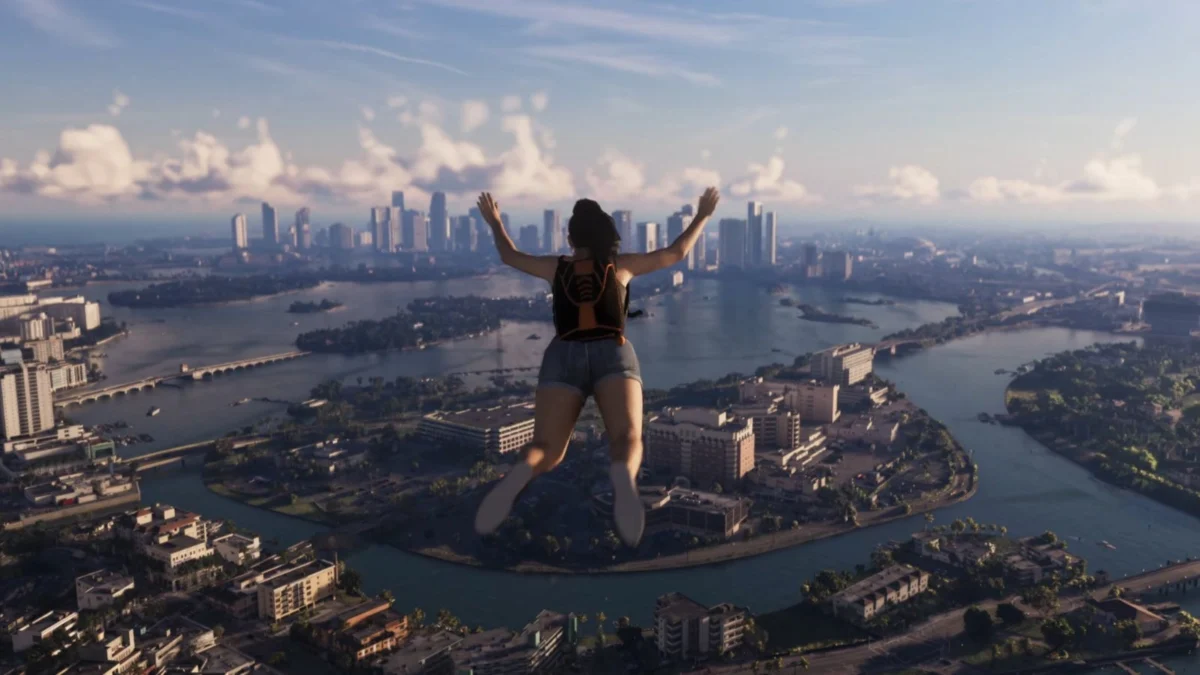
The boundary between digital simulation and reality has long been the "Holy Grail" of game development. For decades, players have chased the dream of total immersion, but a recent, fleeting 15-second clip of Grand Theft Auto VI has arguably moved that goalpost further than any title in history. As the release date for Rockstar Games’ highly anticipated sequel looms, a new piece of footage has left the internet in a state of collective shock, forcing many to reconsider the limitations of current-generation hardware and artistic design.
The footage, which captures a bustling street scene complete with customized vehicles and natural pedestrian movement, has gone viral not just for its graphical fidelity, but for its uncanny ability to pass as legitimate, real-world camera footage.
The Viral Moment: A Case of Mistaken Reality
On November 11, the popular Miami-based social media account "Only in Dade" shared a short, first-person perspective video. The clip showcased a lineup of high-end, customized supercars parked along a vibrant, sun-drenched street, with pedestrians milling about in the background. The visual language—the way light hit the asphalt, the specific color grading of the Florida sun, and the fluid, non-scripted appearance of the crowd—mimicked a candid street video perfectly.
The context of the clip was a recreation of a collaboration between West Coast Customs and the GTA 6 marketing team. Because of this, many viewers initially assumed the video was a promotional piece filmed on the actual streets of Miami. It was only when Rockstar Games shared the footage on its official Instagram story that the truth became clear: the entire sequence was captured entirely within the GTA 6 engine.
The reaction was instantaneous. Within hours, the clip had garnered millions of views across platforms like X (formerly Twitter) and Reddit, sparking a fervent debate about the intersection of ray tracing, physics engines, and artistic direction.
Chronology: The Road to Unprecedented Fidelity
To understand why this specific clip has triggered such a massive response, one must look at the developmental trajectory of Rockstar’s latest project.
- The Announcement (December 2023): The reveal trailer for GTA 6 introduced the world to the state of Leonida and a modernized, hyper-detailed Vice City. At the time, critics noted the density of the NPCs and the atmospheric lighting, but many assumed these were pre-rendered cinematic sequences.
- The Technical Demonstrations (2024–2025): Throughout the following year, Rockstar maintained a strict silence regarding technical specifications, allowing the community to speculate. Small leaks and teasers hinted at a "dynamic weather system" and "global illumination" that would rival film production standards.
- The "Only in Dade" Reveal (November 11, 2026): The viral clip acted as a final proof of concept. By mirroring a real-world event (the West Coast Customs crossover), Rockstar effectively challenged the audience to tell the difference between their product and the physical world.
- The Final Countdown (November 19, 2026): As of today, the industry stands just days away from the full launch, with preloads already active for players worldwide.
Supporting Data: The Anatomy of the "Look"
What exactly makes this clip so convincing? Experts in computer graphics point to three primary pillars of realism that Rockstar appears to have mastered:
1. Global Illumination and Ray Tracing
In previous iterations of the Grand Theft Auto series, lighting was often baked or applied in layers. GTA 6 utilizes advanced, real-time global illumination that simulates how light bounces off surfaces—be it the metallic sheen of a car fender or the matte texture of a sidewalk. This creates a cohesive color palette that feels "natural" rather than "calculated."
2. High-Density NPC AI
The "Uncanny Valley" is usually breached by rigid or repetitive character animations. The GTA 6 footage shows pedestrians moving with a sense of purpose and biological variety. They are not merely background "props" but entities with distinct walk cycles, varied clothing textures, and situational awareness that mimics the chaotic energy of a real city.
3. Micro-Detailing and Surface Imperfections
The secret to the "realism" in the viral clip is the inclusion of "imperfections." The street isn’t pristine; it has minor debris, varied textures in the concrete, and heat haze that suggests an oppressive Florida climate. By embracing these small, grounded details, Rockstar has bypassed the "over-polished" look that plagues many modern titles, opting instead for a gritty, lived-in aesthetic.
Official Responses and Industry Reaction
The discourse surrounding the clip has been overwhelmingly positive, though it has also sparked a necessary conversation about the hardware required to run such a masterpiece.
Rockstar Games has remained characteristically understated, letting the community-led discourse drive the hype. However, developers from other studios have weighed in on social media. "What you are seeing," one AAA engine programmer noted on X, "is the result of a decade-long refinement of streaming technology. They are loading more data into the cache in one second than we used to load in an entire minute during the PS3 era."
The community response has been a mix of awe and humor. One viral comment read, "OMG, I looked at this 100 times and I still can’t believe this is in-game. How on earth is this possible?" This sentiment has been echoed by thousands, with many admitting that they had to watch the clip at 0.25x speed to find the "tells" that it was digital.
Implications: The 30 FPS Debate and Beyond
Interestingly, the visual quality of the clip has effectively silenced a vocal segment of the gaming community. For months, rumors had swirled regarding the game’s performance targets, specifically the prospect of a 30 frames-per-second (FPS) cap on console.
Previously, a vocal group of players had expressed frustration, even threatening to cancel pre-orders, citing the 30 FPS target as "outdated." However, following the release of the high-fidelity street footage, the tide has turned. The prevailing logic among fans is now: "If the game looks this good, the frame rate is a secondary concern."
This shift highlights a broader implication for the industry: visual fidelity is once again the primary driver of consumer excitement. In an era where many games launch with performance issues or "service-game" bloat, GTA 6 is positioning itself as a premium, handcrafted experience that demands a slower, more cinematic pace.
A New Benchmark for Open-World Design
The implications for the open-world genre are profound. Rockstar Games has essentially created a "digital twin" of Miami. This level of environmental storytelling suggests that the game will not just be a playground for chaos, but a simulation of modern life. If the game maintains this level of visual consistency throughout its entire map—from the rural swamps of Leonida to the skyscraper-heavy urban centers—it will set a benchmark that will likely take the industry half a decade to match.
As we look toward the November 19 launch, the question is no longer whether GTA 6 will be a commercial success; that is a statistical certainty. The question is whether it will fundamentally change the way we perceive digital environments. For a generation of players who grew up with blocky, low-polygon cityscapes, this moment feels like the culmination of a long, arduous journey.
The streets of the new Vice City are waiting. And if the latest viral footage is any indication, they are indistinguishable from the world outside our own windows. The line has not just been blurred; it has been erased.