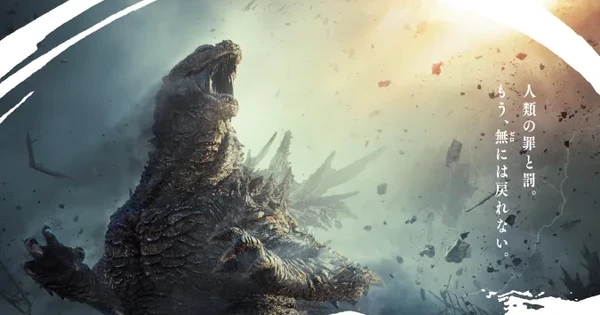
Tokyo, Japan – November 10, 2026 – The King of the Monsters has once again asserted his dominance, with Godzilla Minus Zero making a colossal debut at the Japanese box office. The highly anticipated sequel to the Oscar-winning Godzilla Minus One has not only secured the number one spot in its opening weekend but has also achieved unprecedented success, breaking records and signaling a powerful return for the iconic kaiju.
The film, helmed by the visionary Takashi Yamazaki, who also directed and wrote the critically acclaimed Godzilla Minus One, officially opened to thunderous applause and an overwhelming public response. Over its initial weekend of November 6-8, Godzilla Minus Zero captivated audiences, selling an astounding 699,000 tickets and amassing a staggering 1,130,171,300 yen, equivalent to approximately US$7.11 million. This remarkable performance underscores the enduring global appeal of Godzilla and the immense talent of Yamazaki’s creative team.
However, the true scale of the film’s impact becomes even more apparent when considering its unconventional yet strategically brilliant opening day. Instead of the typical Friday release, Godzilla Minus Zero premiered on Tuesday, November 3rd, a date of profound significance in Japanese pop culture: "Godzilla Day." This anniversary, commemorating the original film’s release on November 3, 1954, provided a thematic and celebratory launchpad for the new installment.
The decision to open on Godzilla Day proved to be a masterstroke. On its opening day alone, the film sold an extraordinary 590,000 tickets, generating a phenomenal 910 million yen (approximately US$5.75 million). This figure alone set a new benchmark, establishing Godzilla Minus Zero as the highest-earning opening day for any live-action film in Japan, surpassing both domestic and international releases. To put this into perspective, the film’s opening day earnings were a staggering 201% higher than those of its predecessor, Godzilla Minus One, in Japan. Within its first six days of release, the film had already sold an impressive 1.61 million tickets, grossing a colossal 2,539,531,100 yen (approximately US$15.98 million).
This phenomenal opening mirrors the triumphant debut of Godzilla Minus One, which also premiered on Godzilla Day, November 3, 2023. The convergence of a significant anniversary with a highly anticipated film release has clearly resonated with Japanese audiences, demonstrating a keen understanding of cultural touchstones by Toho Co., Ltd., the studio behind the Godzilla franchise.

A Glimpse into the Post-War Kaiju Landscape
Godzilla Minus Zero plunges audiences back into the harrowing world of post-World War II Japan, with its narrative unfolding in 1949, a mere two years after the events depicted in Godzilla Minus One. This temporal setting allows for a deeper exploration of the societal and psychological scars left by the war and the terrifying advent of Godzilla. The film promises to delve into the continued struggle for survival and recovery in a nation grappling with immense devastation.
The cast of Godzilla Minus Zero features a compelling blend of returning favorites and new talent, ensuring a familiar yet fresh cinematic experience. Reprising their iconic roles are Ryūnosuke Kamiki as Koichi Shikishima, Minami Hamabe as Noriko Ōishi, and Hidetaka Yoshioka as Noda. Their performances in Godzilla Minus One were instrumental in the film’s success, and their return is a welcome reassurance for fans.
Joining them are other beloved cast members from the previous installment, including Yūki Yamada as Shiro Mizushima, Kuranosuke Sasaki as Seiji Akitsu, Sakura Andō as Sumiko Ōta, and Miho Tanaka as Tatsuo Hotta. Their continued presence suggests a cohesive narrative and a deep understanding of the established characters and their place within the evolving Godzilla saga.
Adding a significant new presence to the film is Min Tanaka, known for his roles in 47 Ronin and the live-action Rurouni Kenshin films. Tanaka takes on the pivotal role of biologist Kanji Murakami, a character likely to play a crucial role in unraveling the scientific mysteries and ecological implications of Godzilla’s resurgence.
The creative powerhouse behind Godzilla Minus Zero remains largely intact. Takashi Yamazaki has once again assumed the mantle of director, screenwriter, and VFX supervisor, a testament to his singular vision for the franchise. His meticulous attention to detail and innovative approach to visual effects were key to Godzilla Minus One‘s groundbreaking success, and his continued involvement guarantees a visually stunning and emotionally resonant experience.

The musical landscape of the film is once again shaped by the returning composer Naoki Satō, whose evocative score for the previous film was widely praised. The visual effects, a cornerstone of any Godzilla film, are once again entrusted to Shirogumi Inc., the studio that delivered the breathtaking visuals for Godzilla Minus One.
A Competitive Box Office Landscape
While Godzilla Minus Zero commands the spotlight, the Japanese box office is a vibrant and competitive arena, with several other notable films vying for audience attention.
The live-action film adaptation of Yuu Nagira’s novel, Nanji, Hoshi no Gotoku (You Are Akin to the Stars), continues to draw audiences, though it has seen a slight dip in its rankings. After a strong opening, the film has moved from the second to the third position in its fifth weekend. From Friday to Sunday, it sold 72,000 tickets, earning 107,330,000 yen (approximately US$675,700). To date, the film has garnered a total of 1.32 million ticket sales, with cumulative earnings reaching 1,937,022,200 yen (approximately US$12.19 million). The film, which opened on October 9th, initially ranked fourth, selling 234,000 tickets and earning 350,531,400 yen (US$2.23 million) in its first three days. Starring Ryōsei Yokohama and Suzu Hirose, and directed by Michihito Fujii, Nanji, Hoshi no Gotoku explores a complex, co-dependent relationship over 15 years, set against the backdrop of an island in the Seto Inland Sea.
The Kamen Rider franchise continues to maintain a strong presence, with the Kamen Rider Kabuto Tūensū Ten o Tsugu Mono film opening at number four in its debut weekend. The film grossed 88,085,058 yen (approximately US$554,500) in its first three days, following its November 6th release in Japan.
In the realm of animation, Eiga Chiikawa: Ningyo no Shima no Himitsu (Chiikawa the Movie: The Secret of Mermaid Island), the first animated film adaptation of Nagano’s popular manga, has demonstrated remarkable staying power. In its 16th weekend, the film remained at the fifth position, earning 55,518,700 yen (approximately US$349,500) from Friday to Sunday. This film has achieved monumental success, selling a total of 12.86 million tickets and earning a cumulative 18,793,145,700 yen (approximately US$118 million). This makes it the highest-grossing film in Japan for the current year and the 12th highest-grossing film of all time in Japan. The film, which debuted on July 24th, initially claimed the number one spot, earning 990 million yen (US$6.05 million) on its opening day and a remarkable 2,240,333,500 yen (US$13.70 million) in its first three days. Directed by Kei Oikawa under Nagano’s supervision, the film adapts the popular "Siren Arc" or "Island Arc" from the manga.

The live-action reboot of CAPCOM’s Resident Evil survival horror game franchise has seen a gradual descent from its initial strong performance. In its fifth weekend, the film dropped from third to seventh place, earning 60,618,750 yen (approximately US$381,600) from Friday to Sunday. Its cumulative earnings now stand at 2,153,054,600 yen (approximately US$13.55 million). The film opened in Japan on October 9th at number two, with 356,000 tickets sold and 626,567,150 yen (US$3.97 million) in its first three days. Notably, the film achieved a significant global opening in the United States on September 18th, debuting at number one and grossing an estimated US$60 million. Directed by Zach Cregger, the film stars Austin Abrams, Zach Cherry, Kali Reis, and Paul Walter Hauser.
Atsushi Nishigori’s original anime omnibus film, Grotesqqque, has opened at number eight, earning 47,185,800 yen (approximately US$297,000) in its first three days. The film, which premiered on November 6th, is an anthology of three stories with distinct worldviews. Nishigori, known for his work on The Idolm@ster and Darling in the Franxx, directed, wrote the screenplay, and designed the characters. The film is produced by JOEN, a joint venture of Aniplex, CloverWorks, Wit Studio, and Shueisha.
Several other films have exited the top ten this week. In the Clear Moonlit Dusk, a live-action film based on Mika Yamamori’s manga, left the top ten in its third weekend. Similarly, Made in Abyss: Mezameru Shinpi (Made in Abyss: Awakening Mystery), the first film in a new series, dropped off the list in its third weekend.
The 4K restoration of Studio Ghibli’s beloved classic, Whisper of the Heart, has concluded its theatrical run, leaving the top ten in its third and final week. Despite its departure, the film managed to earn 42,232,800 yen (approximately US$265,800) from Friday to Sunday, bringing its cumulative total to 410,503,800 yen (US$2.58 million). The film initially ranked tenth in its opening weekend.
Nijiiro no Rinne (Rainbow-Colored Reincarnation), the seventh film in the Yamato yo Towa ni: Rebel 3199 (Star Blazers: Be Forever Yamato – Rebel 3199) project, has also left the charts in its second weekend.

Official Statements and Industry Reactions
While official statements from Toho Co., Ltd. regarding the monumental success of Godzilla Minus Zero are still emerging, the overwhelming box office numbers speak volumes. Industry analysts and film critics have widely lauded the film’s performance as a testament to the enduring power of the Godzilla franchise and the exceptional storytelling capabilities of Takashi Yamazaki.
"The return of Godzilla has been nothing short of spectacular," commented renowned film critic Kenji Tanaka. "Yamazaki has once again proven his mastery in blending spectacle with profound emotional depth. The choice to open on Godzilla Day was a stroke of genius, tapping into a deep well of nostalgia and cultural significance for Japanese audiences."
The success of Godzilla Minus Zero also highlights a broader trend in the Japanese film industry, where both established franchises and well-crafted original stories continue to resonate deeply with domestic audiences. The film’s performance is a significant boost to the Japanese film industry, demonstrating its resilience and capacity for producing globally appealing content.
Implications and Future Outlook
The unprecedented success of Godzilla Minus Zero has far-reaching implications for the future of the Godzilla franchise and the Japanese film industry as a whole. The film’s record-breaking opening weekend, particularly its performance on Godzilla Day, sets a new standard for major releases and reinforces the strategic value of leveraging cultural anniversaries.
The film’s strong narrative and character development, building upon the foundation laid by Godzilla Minus One, suggest a continued interest in exploring the human element within the kaiju genre. Yamazaki’s ability to balance colossal monster action with poignant human drama has clearly struck a chord, promising a rich and engaging narrative arc for the series.

Furthermore, the film’s success is likely to attract further international attention and investment in Japanese cinema. The global acclaim of Godzilla Minus One paved the way for renewed interest in Japanese filmmaking, and Godzilla Minus Zero‘s box office triumph will undoubtedly solidify this trend.
As Godzilla Minus Zero continues its reign at the box office, its impact will be closely watched by studios and filmmakers worldwide. Its success serves as a powerful reminder of the enduring appeal of iconic characters and the profound connection that compelling storytelling can forge with audiences, both domestically and internationally. The roar of Godzilla has never sounded so triumphant.