Neng Nana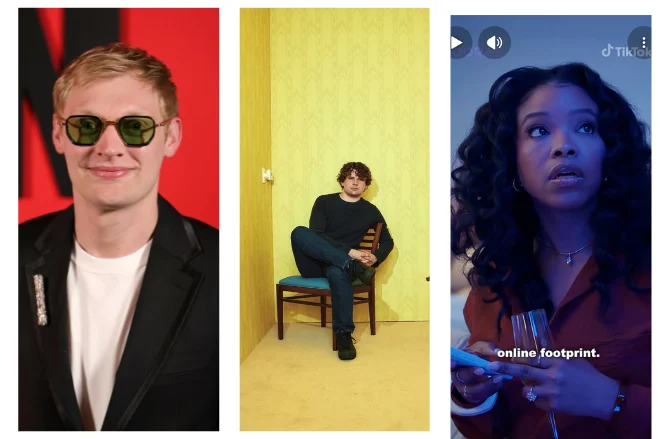
As the industry converges on Anaheim for next week’s VidCon, the air is thick with more than just Southern California heat. It is saturated with the frantic energy of development deals and the lingering buzz of "Backsession" fever—the viral success of creators like Curry Barker and Kane Parsons, whose projects, Backrooms and Obsession, have become the industry’s new gold standard for audience conversion.
While agents lurk behind the pillars of the Anaheim Convention Center, hoping to catch the next internet sensation before the ink dries on a studio contract, they are often looking at the wrong variable. The secret to these breakout hits isn’t merely the transition from YouTube to Hollywood. The invisible engine driving these cultural phenomena is "compression."
The Physics of Attention: Understanding Compression
In an era of infinite content, attention is the only scarce resource. Compression is the deliberate, strategic concentration of audience attention into a window short enough that a critical mass of people experiences the content simultaneously. It is the artificial manufacture of a "watercooler moment" in a fragmented digital landscape.
For creators like Barker and Parsons, this didn’t happen overnight. They built their audiences over years, nurturing digital tribes through incremental content drops. When the "release valve" finally opened—when the projects were officially launched—the pent-up pressure of years of anticipation was released all at once. This is homegrown compression, and it explains why the modern "YouTube-to-Hollywood" deal is such a strange, complex bargain. While studios pay for the creator’s output, what they are actually purchasing is the compression—the ability to focus a massive audience on a single point in time.
Chronology of a Paradigm Shift
The evolution of this strategy can be traced through the shift from traditional festival circuits to modern digital ecosystems.
- 2011: Issa Rae launches The Misadventures of Awkward Black Girl. It serves as a masterclass in organic audience building, setting the stage for what would become a formidable media empire.
- Early 2020s: The rise of vertical, short-form drama platforms begins to test the limits of algorithmic engagement.
- May 2026: Hoorae Media releases Screen Time, a vertical drama coproduction with TikTok.
- Present Day: Following four weeks of strategic distribution, Screen Time hits 350 million global views, proving that the principles of compression can be engineered as effectively as they can be grown organically.
This success wasn’t just a product of Rae’s loyal following. It was a victory of format. By eschewing the tropes of billionaire romances or supernatural fantasy, Screen Time focused on high-tech espionage, mastering the "beat-climax-beat" pacing required for the short-form vertical screen.

The Calculus of Distribution
"A hit is just distribution compressed into a finite period of time," says Ian Schafer, cofounder of Hoorae. This is the new mantra for media executives who have moved beyond the "if you build it, they will come" philosophy of the early streaming era.
To achieve this, marketers have adopted the mindset of nuclear physicists. They treat audience attention like fissionable material: if you spread it thin across an infinite library, you get nothing. If you concentrate it into a dense, high-pressure window, you achieve a chain reaction.
This strategy requires a departure from traditional metrics. For Hoorae, the value isn’t found in the total view count of the core show. It is found in the peripheral assets—the clips, the vignettes, and the cutdowns. By controlling the release of these assets, the production team controls the "when" and the "who" of the audience experience. When your primary content consists of 60-to-90-second episodes, the show is no longer the product; the compression is.
Official Perspectives: The Decline of the Sundance Model
For decades, the Sundance Film Festival served as the primary compression mechanism for independent film. It provided a dedicated window where buzz could be concentrated, resulting in acquisition deals that validated the filmmaker’s work.
However, that mechanism has weakened. The modern streaming landscape has largely opted out of this model in favor of "ubiquity." Streamers discovered that their subscribers are often just as satisfied watching a decades-old rerun of a procedural drama as they are a new, festival-anointed indie film. Because streamers offer massive catalogs with no expiration dates, they have effectively killed the "now." If a film is available forever, there is no urgency to watch it, and without urgency, there is no compression.
Supporting Data: The Library Problem
According to recent Luminate reports, catalog titles continue to dominate viewing hours on platforms like Disney+ and Hulu. Even at Netflix, where industrial-scale FOMO (Fear Of Missing Out) is still a priority, roughly 40 percent of viewership is driven by the library rather than new, compressed "event" releases. While Netflix possesses the infrastructure to manufacture hits, the cost of doing so is rising, leading to a business model where old episodes of shows like Southland are often more profitable than new, high-budget original programming.

Implications for the Future of Filmmaking
The "Backsession" moment is both a triumph and a warning. It proves that the human desire for shared, simultaneous experience has not vanished—it has simply migrated. The filmmakers and production companies that survive this transition will be those who stop viewing their work as "content" to be dumped into a database and start viewing it as an event to be engineered.
As the industry looks toward the future, the following pillars will likely define the new standard:
- Post-Production as Architecture: As explored in recent critiques, the technical quality of sound and visual post-production is no longer just "polishing." It is the difference between an amateur upload and a professional event. Bad sound is the primary killer of independent credibility.
- Digital-Native Box Office: The success of The Amazing Digital Circus in theatrical settings demonstrates that online audiences are eager to transition to physical venues, provided the event is treated with the same weight as a traditional studio film.
- The Independent Exit Strategy: The narrative that Hollywood is the only path to success is crumbling. Profiles of creators who generate millions without traditional gatekeepers suggest that the future of the industry is not consolidation, but autonomy.
Conclusion: The Resilience of the Art Form
Despite the pessimism surrounding the collapse of the independent film ecosystem, there is reason for cautious optimism. As industry veteran Ted Hope has noted, it is significantly easier to dismantle an industry’s business model than it is to kill an art form. The passion for cinema—in all its forms, from 60-second TikTok dramas to festival features—remains constant.
As we look toward the future, the focus must shift from the "gatekeepers" to the "architects." Whether through the sophisticated manipulation of social media algorithms or the creation of new, non-traditional distribution pathways, the next generation of filmmakers will succeed not by begging for a seat at the table, but by building their own table, compressing the attention of the world, and ensuring that when they speak, everyone is listening at the exact same time.
The industry is not dying; it is simply undergoing a period of intense, high-pressure, and—if the recent success of Backrooms is any indication—highly effective compression.

 Asro
Asro
 Basiran