Neng Nana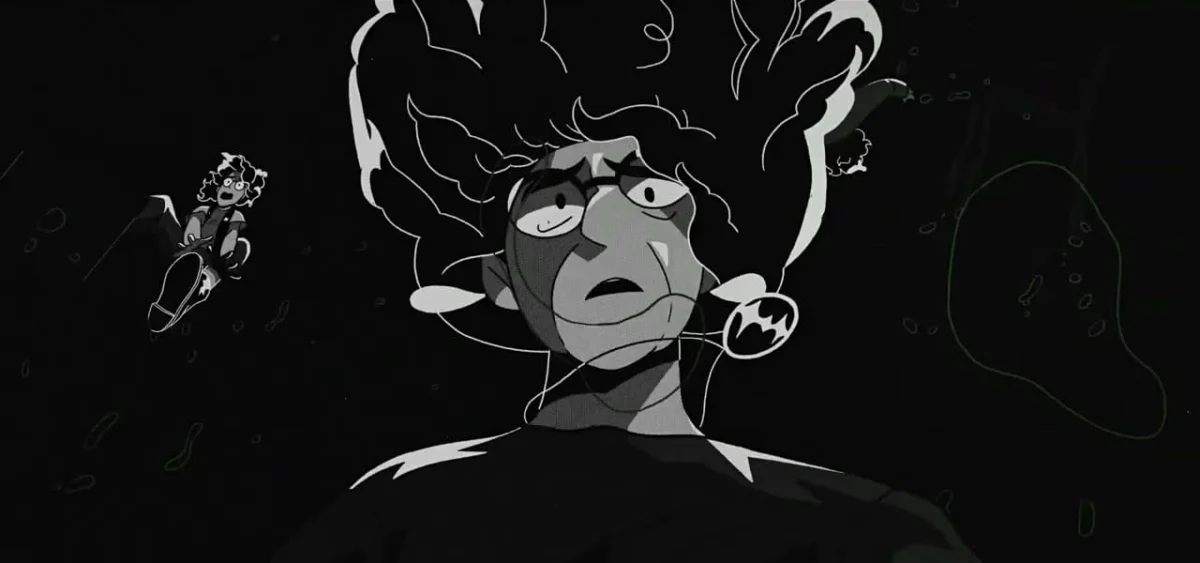
As the animation industry converges on the French Alps for the 2026 Annecy International Animation Film Festival, one title has emerged as a focal point for both critical anticipation and emotional resonance: Tangles. Competing in the festival’s prestigious Contrechamp category, the feature film serves as a poignant, hand-drawn adaptation of Sarah Leavitt’s acclaimed graphic memoir. It is a work that balances the brutal reality of Alzheimer’s disease with the unexpected, often messy humor of familial caregiving.
Directed by Leah Nelson, the film boasts a powerhouse ensemble cast, including Abbi Jacobson, Julia Louis-Dreyfus, Bryan Cranston, Seth Rogen, Sarah Silverman, and Pamela Adlon. Produced by a team that includes Louis-Dreyfus, Rogen, Evan Goldberg, and Lauren Miller Rogen, Tangles represents a significant evolution in adult-oriented animation—a medium increasingly capable of tackling the most profound aspects of the human experience.
The Genesis of a Memoir-to-Screen Journey
The path to Tangles began with a serendipitous act of "strategic matchmaking." Leah Nelson, the founder of the Vancouver-based animation studio Giant Ant, was introduced to Leavitt’s graphic novel by a mutual friend.
"She knew that I owned an animation company, but she didn’t know that I was dealing with dementia in my own family at the time," Nelson reflects. Reading the book was, by her own admission, a daunting task. The narrative, which documents the slow decline of Leavitt’s mother, Midge, offered an unflinching look at the erosion of identity. However, it was the specific tonality of the book—a mixture of raw grief and dark, sharp-edged comedy—that convinced Nelson that it belonged on the screen.
While the graphic novel provided a structural foundation, the adaptation process required a delicate touch. "In the beginning, we often got the note that the screenplay felt too ‘vignette-y,’" Nelson explains. Working alongside Leavitt and co-writer Trev Renney, the team sought to weave these disparate memories into a cohesive, linear narrative. The guidance of seasoned producers like Seth Rogen and the team at LYLAS (Lauren Miller Rogen’s production banner) proved vital in pushing the script toward a more cinematic rhythm while maintaining the "quirky, dynamic world" of the protagonist’s inner psyche.
Chronology of Production and Creative Intent
The development of Tangles was characterized by a commitment to authentic storytelling that prioritized the emotional truth of the source material over stylistic artifice.
- Early Development: The project began with the identification of the graphic novel as a candidate for adaptation, with a focus on capturing the "raw and uninhibited" voice of Sarah Leavitt.
- Script Refinement: Over several iterations, the writing team moved away from a strictly episodic format, focusing instead on the character arc of Sarah as she navigates the transition from daughter to caregiver.
- The Casting Process: A concerted effort was made to secure actors who could deliver naturalistic, improvisational performances. By utilizing a shared recording booth, Nelson facilitated a level of chemistry that is rare in contemporary animated features.
- The Animation Phase: Maintaining a stark, black-and-white visual language was a foundational choice. Influenced by the minimalist aesthetic of works like Persepolis, the animation team used monochrome to emphasize the gravity of the subject matter, reserving color only for moments of extreme emotional overflow.
Supporting Data: The Power of the Ensemble
The decision to cast high-profile comedic talent for a drama about dementia was a calculated artistic choice. Nelson notes that the inclusion of actors like Sarah Silverman and Pamela Adlon allowed for a "riffing" dynamic that brought an authentic, conversational flow to the family interactions.
"We made an effort to have the actors in the booth together," Nelson notes. "This is extremely rare and required a lot of ‘scheduling Tetris,’ but it was worth it." The result is a film that feels less like a scripted performance and more like a captured piece of reality.
The standout performance, however, remains that of Julia Louis-Dreyfus, who voices Midge. Balancing the character’s history as a sharp-witted, principled intellectual with her eventual cognitive decline, Louis-Dreyfus had to portray "many Midges." The animation team supported this through highly intentional movement, mapping the physical decline of the character in tandem with her vocal transformation.
Official Perspectives on Caregiving and Denial
A central theme of the film is the portrayal of Rob, Midge’s husband, and his struggle with denial. In the interview, Nelson highlights that this was never intended to be a critique of the character’s failings, but rather an exploration of the "heart’s method of self-preservation."
"It was hugely important to show that grief can present as anger," Nelson states. "Caregiving is hard and messy, and we may not always know the right thing to do." By showing the partners of those with Alzheimer’s in a state of complex, often contradictory emotion, Tangles avoids the trap of sentimentality, choosing instead to present the "cruel and unfair nature" of the disease as it truly is.
Furthermore, the film integrates a secondary thread: Sarah’s own coming-of-age story in the queer community of the late 90s. This serves as a vital reminder that life does not pause for tragedy. "Life has to go on when Alzheimer’s descends on your family," Nelson adds, noting that the juxtaposition of personal discovery and domestic loss creates a more accurate portrayal of the human condition.
Implications for the Future of Animated Drama
The success of Tangles in securing such a high-profile cast and a competition slot at Annecy signifies a shift in the animation landscape. Historically relegated to family-oriented content, the medium is increasingly being recognized as a sophisticated tool for memoir, documentary-style storytelling, and psychological drama.
- Breaking Genre Barriers: Tangles proves that audiences are hungry for "dark comedies" that tackle systemic and personal trauma without diluting the intensity of the subject.
- The Role of Adaptation: By staying true to the aesthetic and emotional core of a graphic novel, the film demonstrates how animation can provide a unique visual language for memory and subjectivity that live-action might struggle to replicate.
- Humanizing Clinical Realities: By focusing on the "messy lines between love and loss," the film serves as a resource for those currently experiencing the caregiving process, offering a mirror for their own feelings of guilt, humor, and isolation.
As Tangles prepares for its wide release, its impact is already being felt within the animation community. It is a testament to the fact that, when handled with nuance and empathy, the most painful corners of human experience can be illuminated, shared, and ultimately understood. "Caregiving is messy and hard, but you’re not alone," Nelson concludes. "With this film, we are trying to shine a light into those dark corners of grief."
Through its blend of stark, beautiful animation and profound, lived-in dialogue, Tangles does not just tell a story about Alzheimer’s; it tells a story about the resilience of the human spirit when faced with the slow, inexorable disappearance of a loved one. It is a vital, necessary, and deeply affecting addition to the canon of contemporary animated cinema.


 Laily UPN
 Ali Ikhwan