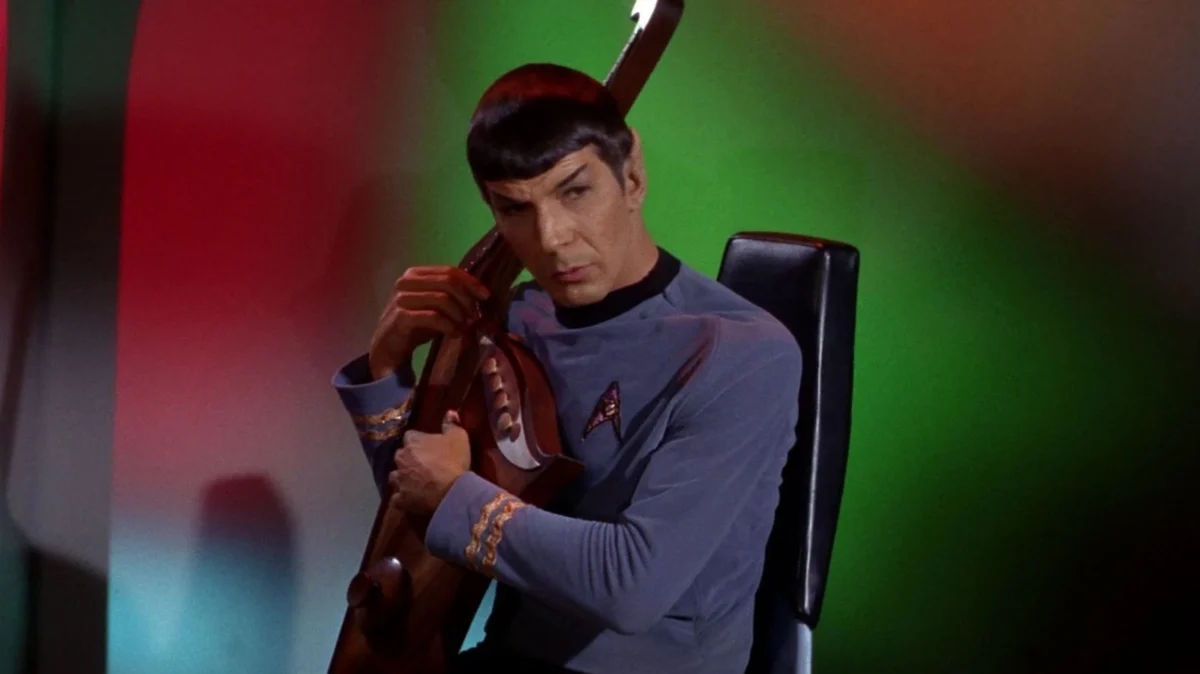
Arthur C. Clarke, the visionary mind behind 2001: A Space Odyssey and Childhood’s End, remains a towering figure in the annals of science fiction. His work was characterized by a rigorous commitment to scientific plausibility, an obsession with the vastness of deep time, and a philosophical curiosity about humanity’s inevitable evolution. Yet, despite his status as a pioneer, Clarke harbored a complex, often critical view of one of the genre’s most beloved institutions: Star Trek.
In a candid 1997 interview with Salon, the legendary author offered a critique that went beyond mere taste. He argued that Star Trek, for all its cultural significance and utopian idealism, served as a "counterproductive" force in the public’s understanding of the cosmos. By consistently presenting a universe teeming with anthropomorphic life, Clarke feared the franchise was setting humanity up for a profound, demoralizing disappointment when we finally took our first, solitary steps into the true, silent expanse of space.
The Philosophical Divide: Clarke vs. The Final Frontier
To understand Clarke’s criticism, one must first understand his vision of the universe. For Clarke, space was not a backdrop for human drama, but a terrifying, beautiful void that dwarfed human ambition. In 2001: A Space Odyssey, co-developed with director Stanley Kubrick, space travel is portrayed as a cold, technical, and lonely endeavor. It is the crucible in which humanity matures, leaving behind its terrestrial infancy to join the stars.
Star Trek, conversely, operates on the logic of the television procedural. It is a frontier myth, built on the premise that space is a wild, inhabited landscape waiting to be explored, negotiated, and occasionally colonized. When Gene Roddenberry created the series, he drew inspiration from the naval traditions of the past, transplanting the captain-and-crew dynamic into a high-tech future.
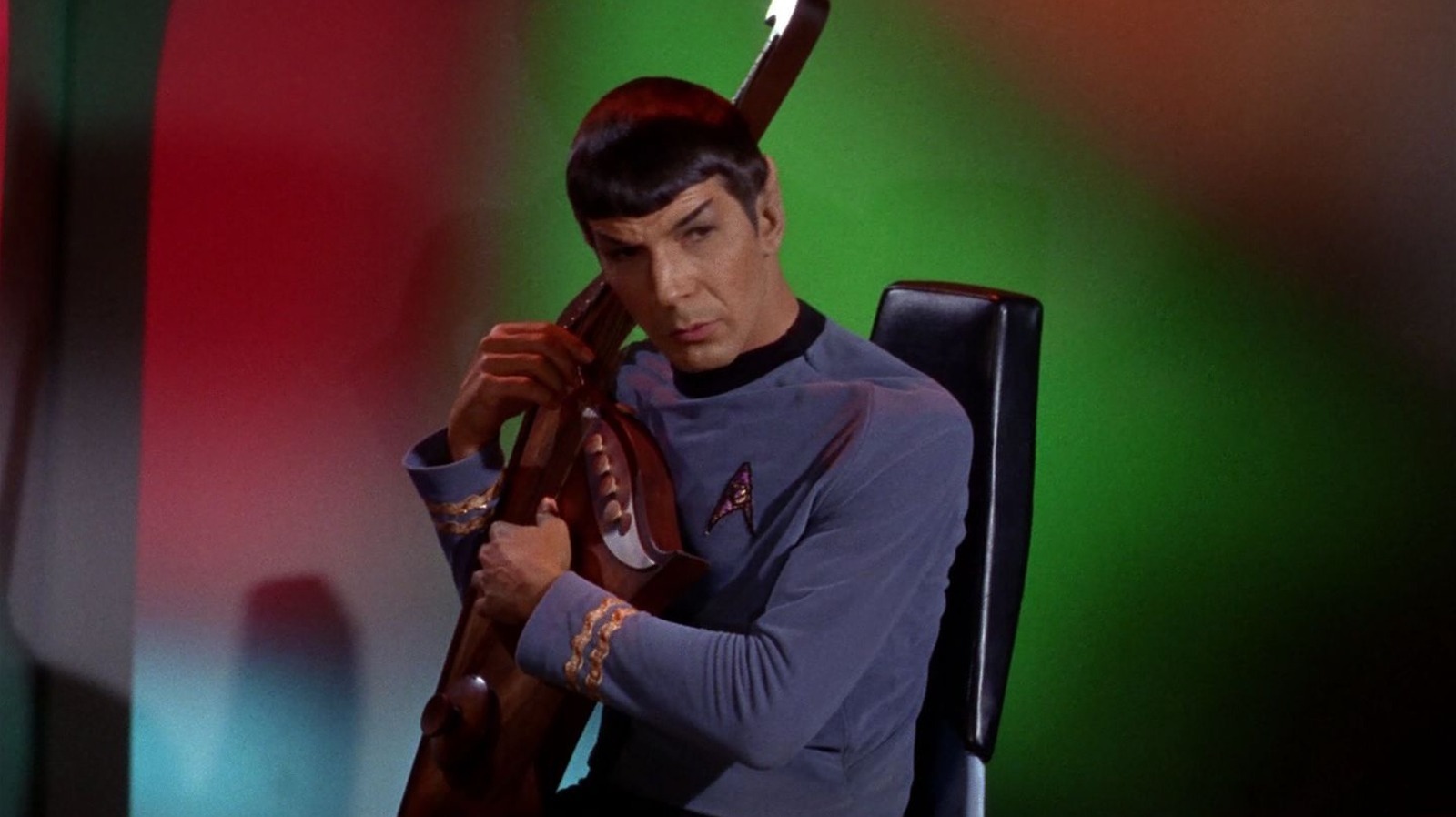
Clarke found this approach fundamentally flawed. His criticism was rooted in a desire for scientific literacy: he worried that by presenting alien civilizations as common, weekly occurrences, the show fostered a false expectation of "Martian princesses" and humanoid neighbors. He believed this distorted the public perception of the solar system, which he viewed as a largely sterile environment.
Chronology of a Critique: The 1997 Salon Assessment
The 1997 interview took place during a unique era for the franchise. Star Trek: The Next Generation had concluded, Deep Space Nine was mid-run, and the cultural footprint of the property was at an all-time high. Yet, Clarke’s assessment was grounded in the reality of the post-Apollo era.
1. The Disappointment of the Inner Solar System
Clarke noted that the initial fervor of the 1960s space race had largely evaporated. After humans walked on the moon, public interest in long-term manned missions waned. When asked if Star Trek might serve as a surrogate space program to reignite that passion, Clarke was unconvinced. He pointed to the "major disappointment" of our own solar system. "The inner solar system has been a major disappointment," he remarked. "Not a trace of life anywhere."
2. The Anthropocentric Trap
Perhaps his most stinging critique was directed at the visual medium of television itself. Clarke argued that Star Trek was inherently limited by "central casting." Because the show required human actors to portray aliens, it defaulted to the "humanoid with a forehead prosthetic" archetype. Clarke famously dismissed this as a failure of imagination, suggesting that true alien intelligence would likely be non-biological or fundamentally unrecognizable—what he often termed "silicon" life.
Supporting Data: Scientific Realism in the Age of Discovery
Clarke’s skepticism was not born of cynicism, but of his deep grounding in physics and astronomy. His fears regarding the "empty" nature of space have, in many ways, been validated by subsequent decades of planetary science.
- The Fermi Paradox: Clarke’s concern touches upon the Fermi Paradox—the discrepancy between the high probability of extraterrestrial life and the lack of evidence for it. Star Trek sidesteps the paradox by making aliens ubiquitous. Clarke insisted that if we are to be serious about space exploration, we must be prepared for the silence.
- The Biological Constraint: Modern astrobiology supports Clarke’s assertion that intelligence may not be carbon-based. While Star Trek focuses on "human-like" diplomatic relations, current scientific research focuses on the detection of biosignatures in microbial life—a far cry from the "new civilizations every week" that Clarke criticized.
- The Shift in Media: Interestingly, modern science fiction has begun to lean closer to Clarke’s vision. Works like Andy Weir’s Project Hail Mary or the Arrival adaptation (based on Ted Chiang’s work) emphasize the sheer difficulty of communicating with non-human intelligences, reflecting a growing cultural appetite for the kind of "hard" science fiction Clarke championed.
Official Responses and the Roddenberry Connection
The relationship between Clarke and Gene Roddenberry was one of mutual respect, despite their conflicting philosophies. It is well-documented that Roddenberry met with Clarke in the early stages of developing Star Trek. Roddenberry often cited Clarke’s influence on the concept of a post-capitalist, peaceful future for humanity.
However, where Roddenberry viewed this utopia as an achievable goal—a "starship" future where humanity has outgrown war and prejudice—Clarke was more cautious. When asked if a Star Trek-like utopia was possible, his response was tempered: "Well, it’s certainly possible… Whether it will be real, of course, depends on us. And looking at the evening news, it’s hard to be very optimistic."
This reveals the fundamental divergence: Roddenberry was a humanist optimist who used the future to critique the present; Clarke was a futurist pragmatist who used the future to test the limits of human evolution.
The Implications: Why Clarke’s Words Still Matter
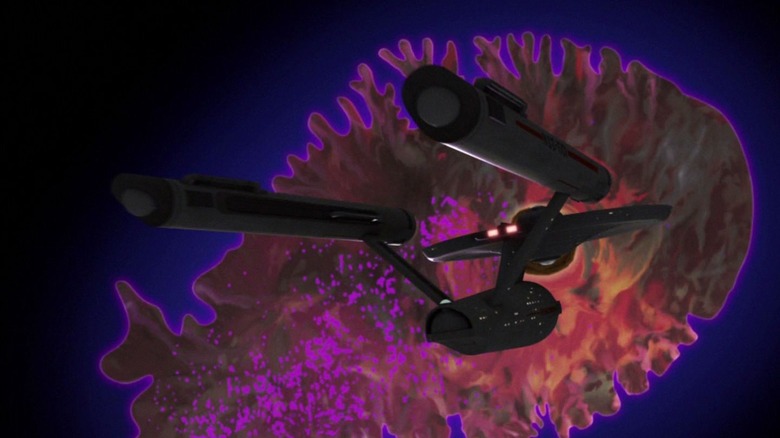
The implications of Clarke’s critique remain vital for the modern space age. As we look toward the Artemis missions and the potential for a return to the moon, the balance between "inspired storytelling" and "scientific reality" remains delicate.
- Managing Public Expectations: If we frame space exploration purely as a quest for alien interaction, we risk public apathy when the reality of scientific discovery turns out to be slower, more methodical, and less "theatrical" than television suggests.
- The Limits of Imagination: Clarke’s challenge to filmmakers—to represent the truly alien—is a benchmark for the next generation of sci-fi creators. As CGI and AI-driven animation evolve, the excuse of "central casting" is becoming obsolete. We are now capable of depicting non-human entities that challenge our anthropocentric biases.
- The Ethics of Exploration: Clarke’s critique reminds us that space exploration is an investment in our own future, not just a search for neighbors. Whether or not we find intelligent life, the act of venturing into the void is a defining moment for our species.
Arthur C. Clarke did not hate Star Trek; he simply held it to the same standard he held for himself—a requirement to look at the universe without the comfort of human-shaped mirrors. His words remain a poignant reminder that while fiction can inspire us to look up, it is the cold, hard, and often silent reality of space that will ultimately determine our future. As we continue to reach for the stars, perhaps it is time to embrace a little more of Clarke’s scientific rigor alongside the optimism of the Enterprise.