

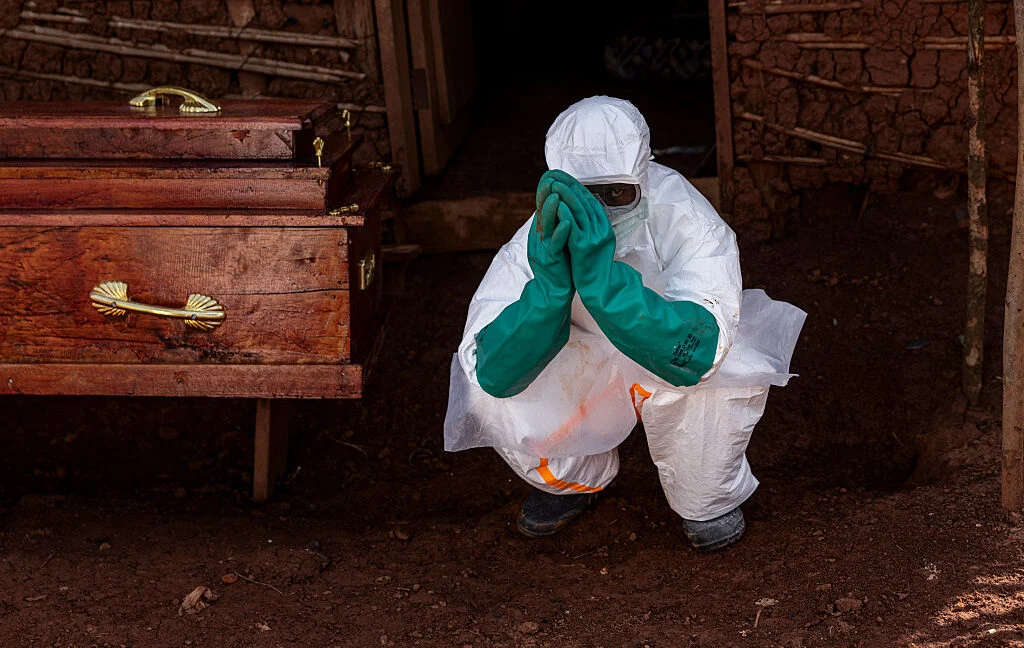
The Democratic Republic of the Congo (DRC) is currently grappling with a rapidly escalating health crisis as a virulent outbreak of the Bundibugyo virus tears through the region. As international aid agencies struggle to contain the pathogen, public health experts are pointing to a critical failure in diagnostic readiness. The primary hurdle? A lack of specialized testing reagents—a gap that was previously bridged by the Centers for Research in Emerging Infectious Diseases (CREID).
The absence of these diagnostic tools has led to a dangerous lag in case identification. Because standard surveillance protocols in the region were optimized for the Zaire strain of Ebola—the variant responsible for the majority of the DRC’s historical outbreaks—the Bundibugyo strain remained undetected for weeks, allowing it to gain a foothold in vulnerable populations. This oversight highlights a devastating irony: the very infrastructure designed to prevent such a scenario was dismantled just months before the crisis began, caught in the crossfire of American domestic political maneuvering.
The Collapse of a Global Defense Shield
The CREID network was established by the National Institute of Allergy and Infectious Diseases (NIAID) to function as an early-warning system for pathogens with pandemic potential. By fostering deep collaborations between US-based scientists and local researchers in Africa, Asia, and Latin America, the program aimed to provide "boots-on-the-ground" surveillance.
However, the program became a casualty of the escalating political scrutiny surrounding the origins of COVID-19. The EcoHealth Alliance, a nonprofit organization that once managed a major CREID site, became a central target for Republican lawmakers and the Trump administration due to its historical research ties with the Wuhan Institute of Virology.
In January 2025, the Department of Health and Human Services (HHS) permanently debarred EcoHealth Alliance from receiving federal funding. This move, accompanied by the White House’s decision to dissolve the US Agency for International Development (USAID) amid allegations of "waste and abuse," effectively signaled the death knell for the broader CREID network.
Critics argue that the move was less about fiscal responsibility and more about political retribution. By folding the program, the administration effectively severed the diagnostic lifelines that allowed local labs to pivot quickly when a new strain—like the Bundibugyo virus—emerged.
Chronology of a Disappearing Network
The erosion of these health partnerships did not happen overnight. To understand the current crisis, one must look at the timeline of the systematic dismantling of these collaborative research hubs:
- 2020–2022: CREID centers establish vital infrastructure across Eastern and Central Africa, proving their worth during the 2022 Ebola outbreak in Uganda. Rapid genomic sequencing and diagnostic deployment helped end that outbreak in just four months.
- 2023–2024: Political pressure intensifies in Washington regarding the "lab-leak" theory of COVID-19. EcoHealth Alliance is repeatedly subpoenaed and scrutinized by the House Select Subcommittee on the Coronavirus Pandemic.
- January 2025: HHS officially debars EcoHealth Alliance from all federal contracting.
- February 2025: The White House moves to dissolve USAID, citing ties to foreign research institutions as a justification for withdrawing from international health development projects.
- March 2025: The current Bundibugyo Ebola outbreak gains momentum in the DRC. With CREID funding evaporated, the logistical support for testing reagents and local training is found to be non-existent.
Supporting Data: A Growing Epidemic
The epidemiological statistics are stark. While the 2022 Uganda outbreak resulted in 164 infections and 55 deaths, the current situation in the DRC is already significantly worse. Public health authorities are currently tracking at least 1,000 suspected cases and 238 suspected deaths within the DRC. The virus has already crossed borders, with seven confirmed cases—including one fatality—recorded in Uganda.
Dr. M. Kariuki Njenga, a virologist at Washington State University who formerly led the CREID center for Eastern and Central Africa, remains deeply concerned about the lost opportunity for containment. "We had active studies there. We were covering Eastern and Central Africa. We would have been there," Njenga noted.
According to Njenga, the network was built on a model of "integrated surveillance." This meant that when an outbreak occurred, local labs were not starting from scratch; they were already equipped with the reagents, the logistical supply chains, and the established relationships with regional health ministries to act within days, not weeks.
The Vacuum of Leadership and Official Responses
Despite the worsening crisis, the response from Washington has been characterized by silence. Both the Department of Health and Human Services and the White House have declined to comment on the direct correlation between the defunding of CREID and the current diagnostic failures in the DRC.
This silence stands in contrast to the urgent alarm raised by the World Health Organization (WHO). Dr. Tedros Adhanom Ghebreyesus, the WHO’s director-general, recently issued a somber update to the African Union. "We are urgently scaling up operations," Dr. Tedros stated, "but at the moment the epidemic is outpacing us."
The WHO’s inability to keep pace is largely attributed to the lack of local testing capacity. Without the CREID network to provide decentralized, rapid diagnostic kits, samples must be shipped to centralized facilities, creating a bottleneck that keeps public health officials perpetually one step behind the virus’s transmission path.
Implications for Global Health Security
The dissolution of the CREID network raises profound questions about the future of global health security. The "America First" approach to international aid—which prioritizes the immediate political optics of funding cuts over the long-term benefit of preventing pandemics—creates a dangerous power vacuum.
1. The Death of Localized Expertise
By dismantling these programs, the US has lost more than just data; it has lost institutional trust. Local collaborators who spent years building laboratory capacity in the DRC and Kenya now find themselves without the resources to maintain their equipment or staff. Rebuilding these relationships will take years, if it is possible at all.
2. The Danger of Diagnostic Myopia
The failure to detect the Bundibugyo virus early serves as a textbook example of why generic surveillance is insufficient. Public health infrastructure must be modular and adaptable. The CREID model was specifically designed to handle the "unknown unknowns" of emerging infectious diseases. By forcing research to fit into a narrow, politically acceptable framework, the US has hampered the ability of global health workers to identify variations in pathogens that do not conform to previous outbreak patterns.
3. A Precedent for Future Crises
The current outbreak in the DRC is a harbinger of what happens when international health cooperation is subordinated to domestic political agendas. As pathogens evolve and spread with increasing speed due to globalization and climate change, the lack of a robust, cross-border surveillance network is not merely an inconvenience—it is a systemic vulnerability.
The world is now watching to see if the international community can cobble together a response fast enough to stem the tide in the DRC. However, for many public health experts, the lesson is already clear: when you dismantle the fire department to save on costs, you should not be surprised when the house burns down. The tragedy in the Congo is that the fire was not only preventable, but the tools to extinguish it were sitting in a warehouse, discarded in the name of political expediency.
As the death toll rises and the virus continues to migrate across porous borders, the global community is left with a stark reminder of the interconnectedness of human health. When we stop investing in the health of our neighbors, we are, by definition, compromising our own.












No comments yet. Be the first to join the conversation!