Siti Muinah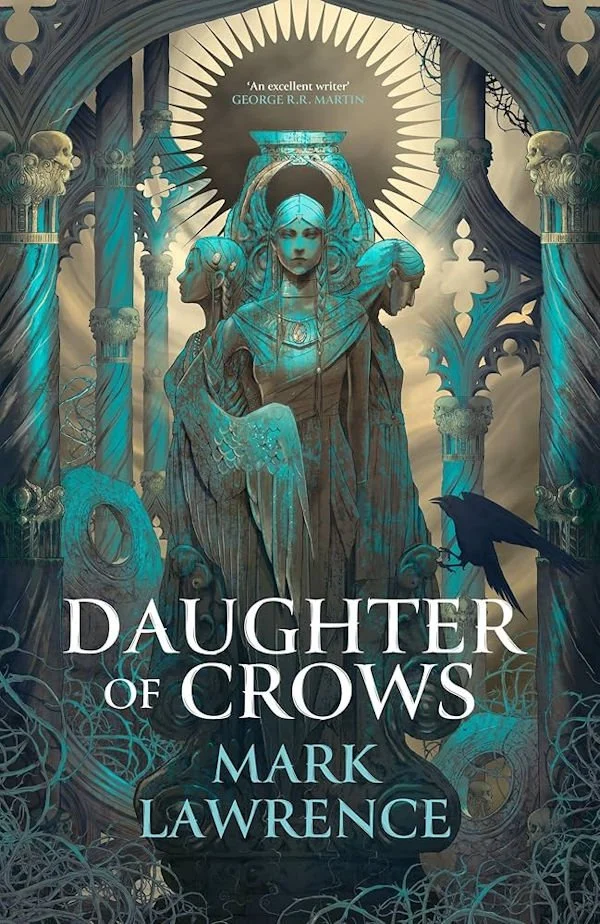
In the landscape of modern grimdark fantasy, few authors possess the surgical precision of Mark Lawrence. With his latest release, Daughter of Crows, the first installment in a new trilogy, Lawrence pivots away from the coming-of-age tropes that define much of the genre. Instead, he offers a visceral, non-linear character study of Rue—a woman who has already survived the worst the world has to offer, only to find herself dragged back into the fray.
Daughter of Crows is not merely a fantasy novel; it is a meditation on the permanence of trauma, the elasticity of identity, and the quiet, lethal resilience of the elderly.
The Anatomy of the Academy: Core Narrative Facts
At the heart of the story lies the "Academy of Kindness," a chillingly named institution that serves as a factory for vengeance. Drawing on the mythology of the Furies—the "Kindly Ones" of antiquity—the Academy operates on a singular, brutal premise: one hundred girls are admitted, but only three survive the decade-long regimen to graduate as avatars of retribution.
The institution is a place where innocence is stripped away, replaced by the skills required to enforce the oldest laws of a blood-soaked world. The survivors are forged in the "Wound Garden" and conditioned amidst the necrotic fumes of the "Bone Garden." It is a narrative of survival where alliances are fleeting, violence is mandatory, and the cost of graduation is the total dissolution of one’s former self.
A Life in Three Movements: The Chronological Structure
Lawrence abandons a linear path, instead weaving three distinct timelines that converge to form the mosaic of Rue’s life.
1. The Present: The Bitter Twilight
We meet Rue in her twilight years. She is a woman who has earned a hard-won peace, only to have it shattered by the massacre of her village. Here, Lawrence subverts the "retired hero" trope. Rue is physically failing; her joints ache, and her vitality is waning. Yet, her mind remains a razor-sharp instrument of survival. Watching an older protagonist navigate a world that expects her to be frail creates a unique, tension-filled dynamic.
2. The Indoctrination: The Academy Years
The most harrowing timeline follows Rue—then known as Mollandra—during her tenure at the Academy. This is the narrative anchor of the book. As one of the one hundred, we witness the psychological and physical attrition required to produce a "Kindness." Lawrence manages to elevate these scenes above standard genre fare through his eloquent, blunt prose, capturing the raw desperation of children forced to treat their peers as both siblings and targets.
3. The Shadow Years: The Eldest
Perhaps the most unsettling segment of the novel involves Rue’s life before the Academy, serving as the "Eldest" in a twisted household of abused children. This timeline leans heavily into psychological horror, exposing the darkest corners of human depravity. It provides the necessary context for why a person would willingly sell themselves to a place like the Academy, framing Rue’s entire journey as a series of impossible choices made under extreme duress.
Supporting Data: Themes and Literary Mechanics
What distinguishes Daughter of Crows from Lawrence’s previous works is the sheer psychological weight of the narrative. The book functions as a study of the "identity-memory" feedback loop.
- The Weight of Memory: The novel asks how we choose to curate our own histories. Rue is a character defined not by her successes, but by the memories she attempts to suppress versus those that haunt her.
- The Social Fabric: Lawrence explores the role of companionship in extreme environments. He argues that even in a pit of vipers, the human need for connection is not just a vulnerability, but a fundamental survival mechanism.
- Pacing and Atmosphere: Despite the complexity of jumping between three distinct eras, the pacing remains remarkably steady. Lawrence avoids the "fatigue of constant pressure" by allowing for lulls in action, which serve to ground the reader in the internal world of the protagonist.
An Interview with the Architect: Official Responses
In a recent discussion regarding the release, Mark Lawrence provided insight into the creative philosophy behind Rue and her world.
On the Choice of an Older Protagonist
"The idea to show her old came from forums and social media where the desire to see older female main characters is frequently voiced," Lawrence explained. When asked if this allowed for a different exploration of character, he noted, "Primarily [it explores] what the difference between young people and old people is… Growing old, physically, mentally, and in terms of acquiring experience and memories, is a complex thing with many subtleties."
On the Non-Linear Narrative
Lawrence revealed that the book’s complex structure was not pre-planned. "I don’t plan my books. They just happen as I write them," he stated. While he has utilized multiple time periods in past works, the sheer span of decades in Daughter of Crows represents a significant evolution in his approach to character depth.
On Moral Ambiguity
When asked why he gravitates toward morally compromised protagonists, Lawrence was pragmatic. "They just have to be interesting. That can be as simple as being entertaining—a sense of humor, outrageous behavior, a dedicated focus on murder… We don’t worry too much that John Wick kills a hundred gunmen because someone killed his dog."
On the Future of the Trilogy
Regarding the arc of the series, Lawrence remains tight-lipped about the specifics of Rue’s future. When asked if the trilogy is about uncovering her past or determining her future, he offered a succinct: "Yes."
Implications for the Genre
The arrival of Daughter of Crows carries significant implications for the future of grimdark fantasy. By centering a narrative on an elderly woman who is defined by a lifetime of systemic abuse, Lawrence is pushing the boundaries of what is considered "heroic" in fantasy literature.
The book challenges the reader to grapple with the "terrible cost of becoming who you are." It posits that trauma is not merely an obstacle to be overcome, but a formative process that reshapes the architecture of the soul. By refusing to soften the edges of his world, Lawrence forces the reader to confront the reality that for some, the only path to survival is to become the very thing that the world fears.
Furthermore, the "Academy of Kindness" serves as a masterclass in world-building through contrast. By wrapping extreme, visceral violence in the language of mercy and duty, Lawrence creates a conceptual dissonance that stays with the reader long after the final page.
Conclusion
Daughter of Crows is an unrelenting, naked depiction of humanity at its worst, tempered by the fierce reminder of what manages to survive. It is a work of "grimdark with a pulse"—intimate, bloody, and emotionally ruthless.
For readers who have grown weary of the "chosen one" trope or the predictable trajectory of young heroes, Rue offers a refreshing, albeit harrowing, alternative. She is a reminder that being old is not the end of a story, but perhaps the most dangerous chapter yet. As the first book of a new trilogy, it successfully establishes a world that feels both expansive and claustrophobic, leaving the reader with only one major criticism: the agonizing wait for the next volume.
Whether it is the haunting prose, the intricate weaving of three timelines, or the sheer force of Rue’s character, Daughter of Crows cements Mark Lawrence’s position as a vital, uncompromising voice in modern literature.


 Raul Delapena Setiawan
 Nila Kartika Wati